




Resource Recycling
  • The Latest
  • Analysis
    • All
    • Certification Scorecard
    • Industry Announcements
    • Opinion

    ITAD is moving past its adolescent phase: beyond end-of-life

    Rainforest

    Inside the Circle: What the rainforest can teach us about EPR

    Closeup of a printed circuitboard

    Hardware demand puts new focus on parts harvesting

    Rare look inside the world’s largest plastics recycler

    Mass balance matters: Why different rules can lead to different outcomes 

    Certification Scorecard — Week of June 1, 2026

    IT asset disposition and electronics recycling: Now and then

    $60 billion in AI servers will create an ITAD challenge

  • Conferences
    • Resource Recycling Conference
    • Plastics Recycling Conference
    • E-Scrap: The Longevity Conference
    • Textiles Recovery Summit
  • Publications
    • E-Scrap News
    • Plastics Recycling Update
    • Policy Now
    • Resource Recycling
    • Other Topics
      • All Topics
      • Brand Owners
      • Critical Minerals
      • Glass
      • Grant Watch / RFPs
      • Markets
      • Organics
      • Packaging
      • Research
      • Technology
      • Textiles
Subscribe
No Result
View All Result
Resource Recycling
  • The Latest
  • Analysis
    • All
    • Certification Scorecard
    • Industry Announcements
    • Opinion

    ITAD is moving past its adolescent phase: beyond end-of-life

    Rainforest

    Inside the Circle: What the rainforest can teach us about EPR

    Closeup of a printed circuitboard

    Hardware demand puts new focus on parts harvesting

    Rare look inside the world’s largest plastics recycler

    Mass balance matters: Why different rules can lead to different outcomes 

    Certification Scorecard — Week of June 1, 2026

    IT asset disposition and electronics recycling: Now and then

    $60 billion in AI servers will create an ITAD challenge

  • Conferences
    • Resource Recycling Conference
    • Plastics Recycling Conference
    • E-Scrap: The Longevity Conference
    • Textiles Recovery Summit
  • Publications
    • E-Scrap News
    • Plastics Recycling Update
    • Policy Now
    • Resource Recycling
    • Other Topics
      • All Topics
      • Brand Owners
      • Critical Minerals
      • Glass
      • Grant Watch / RFPs
      • Markets
      • Organics
      • Packaging
      • Research
      • Technology
      • Textiles
Subscribe
No Result
View All Result
Resource Recycling
No Result
View All Result
Home E-Scrap

Europe’s recyclers miss most of the critical materials

byDavid Daoud
May 29, 2026
in Analysis, E-Scrap
Europe’s recyclers miss most of the critical materials

Photographee.eu / Shutterstock

Europe is sitting on a growing stockpile of cobalt, lithium, rare earths, and other critical materials. Most of it is being lost.

A major Horizon Europe-funded research project has just put numbers to that problem. The Future Availability of Secondary Raw Materials project, which spent four years modeling how much critical raw material value is embedded in Europe’s waste streams and how much could realistically be recovered by 2050, has published its final report. The conclusions are uncomfortable reading for an industry that has long known collection and processing rates are poor, but has lacked the data to show just how poor.

The scale of the miss

FutuRaM examined six waste streams: batteries, electronics, vehicles, mining residues, slags and ashes, and construction materials. Waste electrical and electronic equipment came out as one of the most material-rich and most poorly recovered of the group.

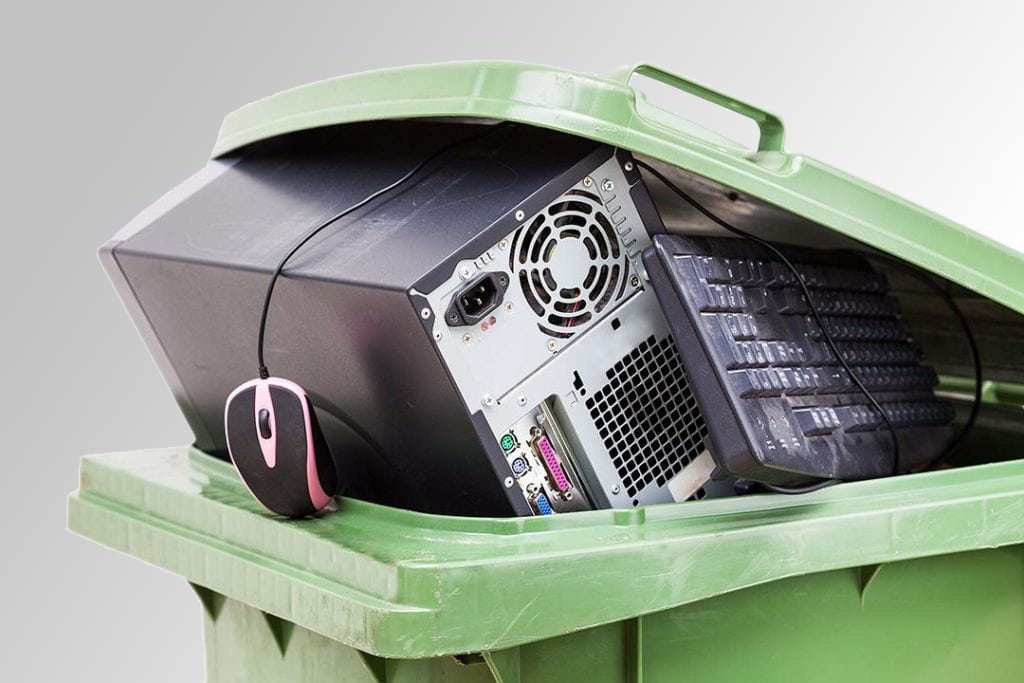
Printed circuit boards, lithium-ion batteries, and rare-earth-bearing magnets concentrate more critical materials per kilogram than most primary ores. Yet a significant share of that equipment never reaches a formal recycler. Devices get stockpiled in drawers, sold into grey markets, or exported before European refineries ever see them. Even when WEEE does enter the formal system, it is not always processed by facilities equipped to recover the full range of metals present.

The report presents scenarios rather than a single recovery figure, showing how outcomes shift depending on collection rates, processing technology, and regulatory enforcement—but the gap between current practice and the high-recovery scenarios is wide enough to constitute a strategic problem, not just an operational one.

What it means for the business case

One of FutuRaM’s more useful contributions is borrowing a classification framework from the mining industry and applying it to secondary materials. Under the United Nations Framework Classification for Resources, a primary ore deposit gets rated on economic feasibility, technical maturity, and environmental and social factors before anyone sinks capital into developing it. FutuRaM applies the same logic to urban deposits, including stockpiles of WEEE.

The practical effect is that a pile of circuit-board-rich shred or magnet-containing components now has a rating that reflects why it is or isn’t being recovered. Low rating? That means insufficient processing scale, missing refining steps, uncertain buyers, or regulatory friction. The classification doesn’t solve those problems, but it names them in language that works in a boardroom or a policy meeting.

For recyclers and ITAD operators, that framing has a direct commercial application. Investors and project financiers don’t fund vague ambitions to recover more material. They fund projects with identified bottlenecks, costed solutions, and a credible path to returns. A classification system that names the specific barriers to recovery gives industry something to build a capital case around.

The policy pressure building behind it

FutuRaM lands at a moment when European supply-chain policy is moving fast. The Critical Raw Materials Act sets domestic sourcing and recycling targets for materials the EU considers strategically important. FutuRaM’s data gives regulators a cleaner line of sight into where the gaps are, and that is likely to translate into pressure on collection rules, export enforcement, and refining investment.

For industry stakeholders this means recovering critical materials from e-scrap is not framed primarily as an environmental obligation. It is increasingly treated as a supply-security issue, which brings different budgets, different political will, and different consequences for non-compliance.

What to watch

The report’s underlying logic is that material that leaves the formal system cannot be counted, and material that cannot be counted cannot contribute to Europe’s secondary supply targets. Business models that keep assets traceable, through data wiping records, chain-of-custody documentation, and verified downstream processing, are better positioned as that scrutiny increases.

As enforcement tightens around illegal exports and uncontrolled material flows, the audit trail becomes less of a differentiator and more of a baseline requirement.

FutuRaM’s full report is available at futuram.eu.
Tags: Critical MineralsElectronicsEurope
TweetShare
David Daoud

David Daoud

David Daoud is a contributor to Resource Recycling and E-Scrap News, covering IT asset disposition, electronics recycling, and circular IT governance. He is the founder of and current Principal Analyst at Compliance Standards LLC, where he conducts independent research and advisory work on ITAD markets, sustainability and ESG compliance, data security, and lifecycle risk management. Daoud has analyzed enterprise IT trends since the late 1990s and was among the first analysts to examine ITAD as a distinct market segment during his time at IDC. He advises operators, OEMs, and investment teams on regulatory, technology, and market developments affecting the electronics lifecycle.

Related Posts

ITAD is moving past its adolescent phase: beyond end-of-life

byDavid Daoud
June 10, 2026

Some leading providers are starting to treat AI-era hardware, lifecycle data and sustainable IT strategy as part of a single,...

Battery fires still a major risk to recyclers: report

byPaul Lane
June 9, 2026

The June fire report from Ryan Fogelman shows there were 40 incidents in May at facilities in the United States...

How electronics legislation fared this legislative season

NY sends repairability labeling bill to governor

byPaul Lane
June 8, 2026

New York would become the first state in the US with an electronic device repairability labeling requirement law.

Rare earth processor lands $5.1M in Defense funds

IonicRE partnership supports recycled rare earth supply chain for defense magnets

byIsabella Burke
June 8, 2026

The Australian company is joining with Florida-based Advanced Magnet Lab in a new MOU.

Closeup of a printed circuitboard

Hardware demand puts new focus on parts harvesting

byDavid Daoud
June 5, 2026

Several key electronics parts are seeing tight supplies, potentially making for opportunities for the ITAD sector.

IT asset disposition and electronics recycling: Now and then

$60 billion in AI servers will create an ITAD challenge

byDavid Daoud
June 3, 2026

An AI growth boom suggests that a large number of devices will reach end-of-life around 2029-2031.

Load More
Next Post
California extends compostable labeling law

California bills crack down on false recycling, compostable claims

More Posts

House resolution aims to make recyclability central to product design

NY EPR bill fails to advance after third try

June 8, 2026
CalRecycle withdraws proposed regs for SB 54

Oceana, NRDC, CAW sue CalRecycle over SB 54 regs

June 5, 2026
Rainforest

Inside the Circle: What the rainforest can teach us about EPR

June 8, 2026
Circular Materials to supply PlasCred chem recycling plant

Circular Materials to supply PlasCred chem recycling plant

June 4, 2026
Rare look inside the world’s largest plastics recycler

Mass balance matters: Why different rules can lead to different outcomes 

June 5, 2026
Recycling industry addresses Beyond Plastics report

Recycling industry addresses Beyond Plastics report

May 26, 2026
GP Recycling offers on-ramp for smaller recyclers

GP Recycling offers on-ramp for smaller recyclers

June 9, 2026

Three-bill package aims to revamp Michigan’s bottle return system

June 9, 2026
Rare earth processor lands $5.1M in Defense funds

IonicRE partnership supports recycled rare earth supply chain for defense magnets

June 8, 2026
How electronics legislation fared this legislative season

NY sends repairability labeling bill to governor

June 8, 2026
Load More

About & Publications

About Us

Staff

Archive

Magazine

Work With Us

Advertise
Jobs
Contact
Terms and Privacy

Newsletter

Get the latest recycling news and analysis delivered to your inbox every week. Stay ahead on industry trends, policy updates, and insights from programs, processors, and innovators.

Subscribe

Welcome Back!

Login to your account below

Forgotten Password?

Retrieve your password

Please enter your username or email address to reset your password.

Log In

Add New Playlist

No Result
View All Result
  • The Latest
  • Analysis
  • Recycling
  • E-Scrap
  • Plastics
  • Policy Now
  • Conferences
    • E-Scrap Conference
    • Plastics Recycling Conference
    • Resource Recycling Conference
    • Textiles Recovery Summit
  • Magazine
  • About Us
  • Advertise
  • Archive
  • Jobs
  • Staff
Subscribe
This website uses cookies. By continuing to use this website you are giving consent to cookies being used. Visit our Privacy and Cookie Policy.