




Resource Recycling
  • The Latest
  • Analysis
    • All
    • Certification Scorecard
    • Industry Announcements
    • Opinion
    Intel sign outside of company building.

    Intel’s CapEx tops $20B on server demand while PC volume shrinks

    Google sign on company building with blue sky and clouds above.

    Inside Alphabet’s Q2 results: More capital spending and cloud backlog

    Alpek closing Pennsylvania RPET plant

    Alpek seizing on war-related opportunity 

    Our top stories from March 2023

    Iron Mountain’s data center report: Strong on power, quiet on hardware

    Dow touts US PE advantage amid Iran war

    Dow bullish on August PE pricing

    Certification Scorecard — Week of July 20, 2026

  • Conferences
    • Resource Recycling Conference
    • Plastics Recycling Conference
    • E-Scrap: The Longevity Conference
    • Textiles Recovery Summit
  • Publications
    • E-Scrap News
    • Plastics Recycling Update
    • Policy Now
    • Resource Recycling
    • Other Topics
      • All Topics
      • Brand Owners
      • Critical Minerals
      • Glass
      • Grant Watch / RFPs
      • Markets
      • Organics
      • Packaging
      • Research
      • Technology
      • Textiles
Subscribe
No Result
View All Result
Resource Recycling
  • The Latest
  • Analysis
    • All
    • Certification Scorecard
    • Industry Announcements
    • Opinion
    Intel sign outside of company building.

    Intel’s CapEx tops $20B on server demand while PC volume shrinks

    Google sign on company building with blue sky and clouds above.

    Inside Alphabet’s Q2 results: More capital spending and cloud backlog

    Alpek closing Pennsylvania RPET plant

    Alpek seizing on war-related opportunity 

    Our top stories from March 2023

    Iron Mountain’s data center report: Strong on power, quiet on hardware

    Dow touts US PE advantage amid Iran war

    Dow bullish on August PE pricing

    Certification Scorecard — Week of July 20, 2026

  • Conferences
    • Resource Recycling Conference
    • Plastics Recycling Conference
    • E-Scrap: The Longevity Conference
    • Textiles Recovery Summit
  • Publications
    • E-Scrap News
    • Plastics Recycling Update
    • Policy Now
    • Resource Recycling
    • Other Topics
      • All Topics
      • Brand Owners
      • Critical Minerals
      • Glass
      • Grant Watch / RFPs
      • Markets
      • Organics
      • Packaging
      • Research
      • Technology
      • Textiles
Subscribe
No Result
View All Result
Resource Recycling
No Result
View All Result
Home Plastics

Key curbside plastics no longer ‘widely’ recyclable

Colin StaubbyColin Staub
February 5, 2020
in Plastics
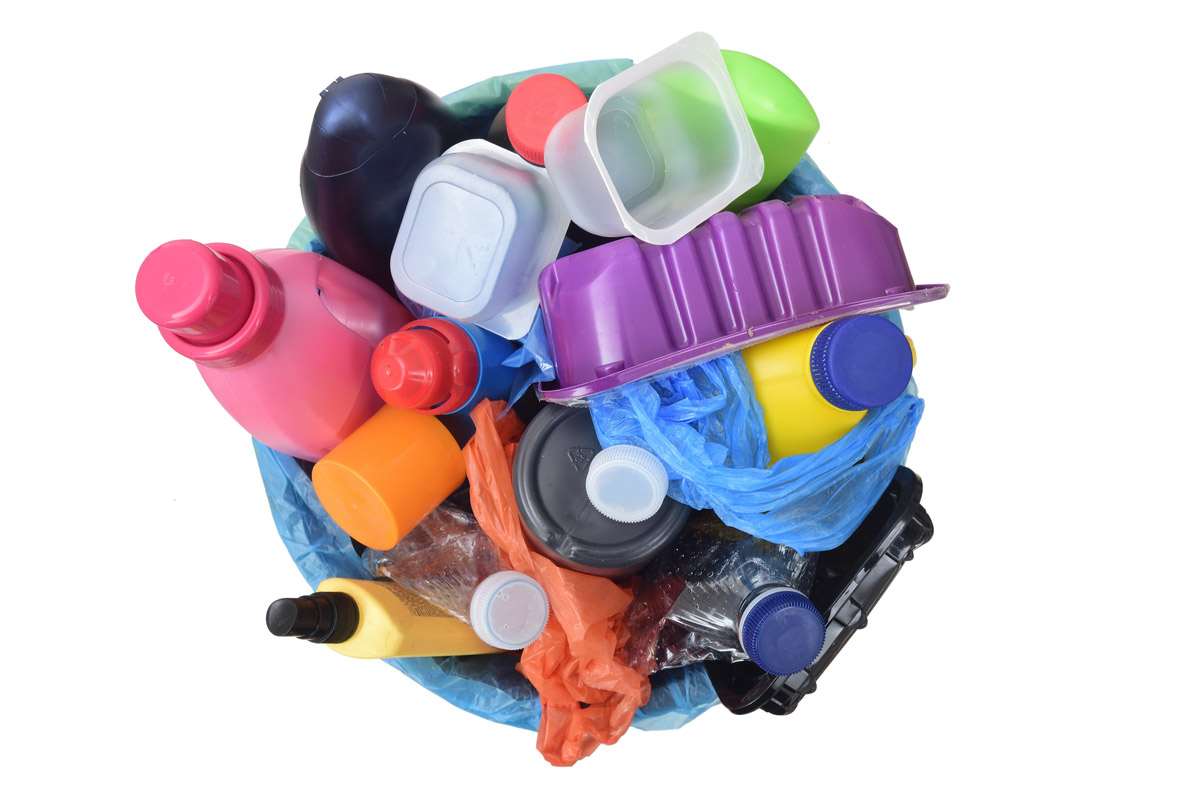
How2Recycle announced that all PP tubs, trays, bottles and cups will now be labeled with the organization’s “check locally” label. | Josep Curto/Shutterstock

Changes in U.S. recycling programs led the How2Recycle labeling initiative to downgrade recyclability classifications for non-bottle rigid PET containers and certain PP products, potentially impacting recovery of those materials.

How2Recycle, a project of the Sustainable Packaging Coalition, on Jan. 31 announced that all PP tubs, trays, bottles and cups will be labeled with the organization’s “check locally” label, a change from the “widely recycled” classification. Non-bottle rigid PET containers will receive the same labeling change.

Although the labels still indicate the products may be recyclable, the change has significant implications. Brands generally want the “widely recycled” label as opposed to the “check locally” indication, explained Kelly Cramer, who leads How2Recycle, because most brands don’t count the qualified label toward their sustainability goals.

How2Recycle, which issues packaging labels that are voluntarily adopted by brands, ensures its labels are in line with the Federal Trade Commission’s (FTC) Green Guides, which regulate environmental marketing claims. How2Recycle periodically evaluates recyclability across all the products that carry its labels. In 2016, the exercise led to the addition of new materials in the “widely recycled” category.

Recent findings led to the labeling downgrades.

“When we do the recyclability assessment, we take into consideration all the key elements of the recycling system,” Cramer explained. That means looking at collection availability, materials recovery facility (MRF) sortation practices, product design components that may impede recovery, and end markets.

Sortation strife for PP containers

Nina Goodrich, director of the Sustainable Packaging Coalition, said there is still enough PP collection availability to keep it in line with the FTC guidelines. The problem, she said, is in the sortation step, with communities landfilling or otherwise not sorting out the PP from the stream.

“There’s certainly reprocessing capacity,” Goodrich said. “There is excess capacity for reprocessing and there is an end market.”

But a sizable portion of PP does not make it past the MRF level to be processed, she explained. And under FTC guidelines, when there is uncertainty about how a material is being handled, the commission recommends making “qualified claims.”

“It’s not that all communities are landfilling and incinerating,” Cramer said. “It’s that some of them are or may be and it’s on a significant enough scale that there’s this margin of uncertainty.”

“It is a tough decision, but we have to meet the standards of the law,” Goodrich said. “We’re hoping that this is fixable and that PP will move back.”

Fewer programs accepting non-bottle rigid PET

For non-bottle rigid PET containers, on the other hand, the issue is on the collection side. This category includes thermoforms, egg cartons, trays in paper boxes and more.

Previously, some of these materials could carry a “widely recycled” How2Recycle label, provided they didn’t include problematic labels or adhesives. But in recent years, particularly in the wake of overseas import restrictions that upheaved U.S. recycling markets, numerous municipal recycling programs across the country have revised the list of materials they accept. Often, they choose to remove lower-grade plastics that end up in a mixed bale, focusing instead on the PET bottles and HDPE containers.

Non-bottle PET rigids recently dropped below a key threshold.

“The number of communities messaging that they accept those dipped below 60%,” Cramer said, which means the materials no longer meet the FTC guidelines for an “unqualified recyclability” claim.

“I would say it’s directly related to communities changing their messaging to just accept bottles,” Goodrich added.

How2Recycle anticipates non-bottle rigid PET containers will qualify for the “widely recycled” label again in the future, Cramer said, so the organization urges manufacturers to continue to design for recyclability.

Other recent How2Recycle changes

Beyond the downgrades, the labeling organization recently made a few additional adjustments to its labeling guidelines.

Packaging that contains intentionally added per- and polyfluoroalkyl substances (PFAS) will carry a “not yet recycled” label, How2Recycle recently decided. These chemicals are introduced to a variety of plastic products and have come under stronger scrutiny in recent years for their impact on human health. They are found in some limited plastic packaging, Cramer noted, but are more commonly found in fiber products. According to the U.S. EPA, PFAS “are very persistent in the environment and in the human body – meaning they don’t break down and they can accumulate over time. There is evidence that exposure to PFAS can lead to adverse human health effects.” Goodrich said the organization felt it didn’t make sense to describe products containing a “forever chemical” as “widely recycled.” Cramer noted this is the first time How2Recycle has made a recyclability decision related to a health concern.

For clear PET bottles with oxygen barriers, How2Recycle will only give a “widely recycled” label to those that meet the “preferred” criteria in the Association of Plastic Recyclers’ (APR) Design Guide or have passed APR Critical Guidance Testing. (APR owns Resource Recycling, Inc., publisher of Plastics Recycling Update.)
 

Tags: CollectionIndustry GroupsPETPP
TweetShare
Colin Staub

Colin Staub

Colin Staub was a reporter and associate editor at Resource Recycling until August 2025.

Related Posts

Arca stresses investment amid headwinds

Arca stresses investment amid headwinds

byAntoinette Smith
July 29, 2026

As the second-biggest Coca-Cola bottler in Latin America, Arca Continental is taking the long view during challenging conditions.

Wisconsin opens e-recycling grant process

byPaul Lane
July 28, 2026

Funds are available for collection programs as the state touts growth in electronic recycling in its latest annual report.

Alpek closing Pennsylvania RPET plant

Alpek seizing on war-related opportunity 

byAntoinette Smith
July 27, 2026

The world's largest PET producer saw a big increase in spot volumes during Q2 thanks to supply chain disruptions, and...

Dow touts US PE advantage amid Iran war

Dow bullish on August PE pricing

byAntoinette Smith
July 24, 2026

Executives made the case for higher prices during a Q2 investor call, pointing to planned maintenance and a throttled supply...

MTA loses track of recycling, costing NYC Transit $800,000

byStefanie Valentic
July 23, 2026

A new MTA inspector general report finds NYC Transit lost nearly $800,000 after years of mishandled recycling and the contractor...

Amazon plastic use flat despite shift to paper

Amazon plastic use flat despite shift to paper

byAntoinette Smith
July 22, 2026

In its latest sustainability report, the e-commerce giant noted a decrease of less than 1% for volumes of single-use plastic...

Load More
Next Post

Bag producers sign voluntary recycled content pledge

2026 Buyers’ Guide

Equipment, services and technology suppliers serving the recycling industry.

Browse the Guide

More Posts

CarbonLite to open $60 million Pennsylvania plant

Federal judge blocks CA ‘Truth in Recycling’ (SB 343) law

July 15, 2026
Alpek closing Pennsylvania RPET plant

Alpek seizing on war-related opportunity 

July 27, 2026

MTA loses track of recycling, costing NYC Transit $800,000

July 23, 2026
California releases deposit system update draft rules

Groups move to intervene in SB 343 lawsuit

July 27, 2026
Women in Circularity: Christine Nikander

Women in Circularity: Christine Nikander

July 28, 2026
Ivan Rangel of Happen Ventures speaks at the PROP conference in Lancaster, PA July 24, 2026.

Making reuse as easy as possible

July 27, 2026
Industry announcements for January 2026

Industry announcements for July 2026

July 1, 2026
Waste Connections company truck on an urban street.

Waste Connections sees Q2 lift on recycled commodity values

July 24, 2026
Greyparrot positions waste intel as key to effective EPR

Greyparrot secures $27m for growing AI waste data

July 28, 2026
Dow touts US PE advantage amid Iran war

Dow bullish on August PE pricing

July 24, 2026
Load More

About & Publications

About Us

Staff

Archive

Magazine

Work With Us

Advertise
Jobs
Contact
Terms and Privacy

Newsletter

Get the latest recycling news and analysis delivered to your inbox every week. Stay ahead on industry trends, policy updates, and insights from programs, processors, and innovators.

Subscribe

Welcome Back!

Login to your account below

Forgotten Password?

Retrieve your password

Please enter your username or email address to reset your password.

Log In

Add New Playlist

No Result
View All Result
  • The Latest
  • Analysis
  • Recycling
  • E-Scrap
  • Plastics
  • Policy Now
  • Conferences
    • E-Scrap Conference
    • Plastics Recycling Conference
    • Resource Recycling Conference
    • Textiles Recovery Summit
  • Magazine
  • About Us
  • Advertise
  • Archive
  • Jobs
  • Staff
Subscribe
This website uses cookies. By continuing to use this website you are giving consent to cookies being used. Visit our Privacy and Cookie Policy.