




Resource Recycling
  • The Latest
  • Analysis
    • All
    • Certification Scorecard
    • Industry Announcements
    • Opinion
    Apple Watch on product box.

    Wearables are coming and ITAD isn’t ready

    Certification Scorecard — Week of April 13, 2026

    EV Battery Pack - Sergii Chernov-Shutterstock

    Redwood, Rivian deal fuels US infrastructure plans

    Bloom ESG and e-Stewards roll out critical metals metric

    Colorado regulators suggest mid-range EPR scenario

    Why collaboration on plastic waste still matters

    Battery recycler Ascend Elements files for bankruptcy

    Battery recycler Ascend Elements files for bankruptcy

    EPR fees are a market signal. Here’s what they’re telling you.

    EPR fees are a market signal. Here’s what they’re telling you.

    Wolframite ore, the primary ore of tungsten from Altai, Russia

    Tungsten scrap export controls draw industry attention

    Certification Scorecard — Week of April 6, 2026

  • Conferences
  • Publications
    • E-Scrap News
    • Plastics Recycling Update
    • Policy Now
    • Resource Recycling
    • Other Topics
      • Brand Owners
      • Grant Watch
      • Markets
      • Organics
      • Packaging
      • Research
      • Technology
      • Textiles
      • All Topics
Subscribe
No Result
View All Result
Resource Recycling
  • The Latest
  • Analysis
    • All
    • Certification Scorecard
    • Industry Announcements
    • Opinion
    Apple Watch on product box.

    Wearables are coming and ITAD isn’t ready

    Certification Scorecard — Week of April 13, 2026

    EV Battery Pack - Sergii Chernov-Shutterstock

    Redwood, Rivian deal fuels US infrastructure plans

    Bloom ESG and e-Stewards roll out critical metals metric

    Colorado regulators suggest mid-range EPR scenario

    Why collaboration on plastic waste still matters

    Battery recycler Ascend Elements files for bankruptcy

    Battery recycler Ascend Elements files for bankruptcy

    EPR fees are a market signal. Here’s what they’re telling you.

    EPR fees are a market signal. Here’s what they’re telling you.

    Wolframite ore, the primary ore of tungsten from Altai, Russia

    Tungsten scrap export controls draw industry attention

    Certification Scorecard — Week of April 6, 2026

  • Conferences
  • Publications
    • E-Scrap News
    • Plastics Recycling Update
    • Policy Now
    • Resource Recycling
    • Other Topics
      • Brand Owners
      • Grant Watch
      • Markets
      • Organics
      • Packaging
      • Research
      • Technology
      • Textiles
      • All Topics
Subscribe
No Result
View All Result
Resource Recycling
No Result
View All Result
Home Plastics

Multiple factors constraining food-contact PCR supply

Colin StaubbyColin Staub
December 8, 2021
in Plastics
Avangard to supply Dow with PCR pellets
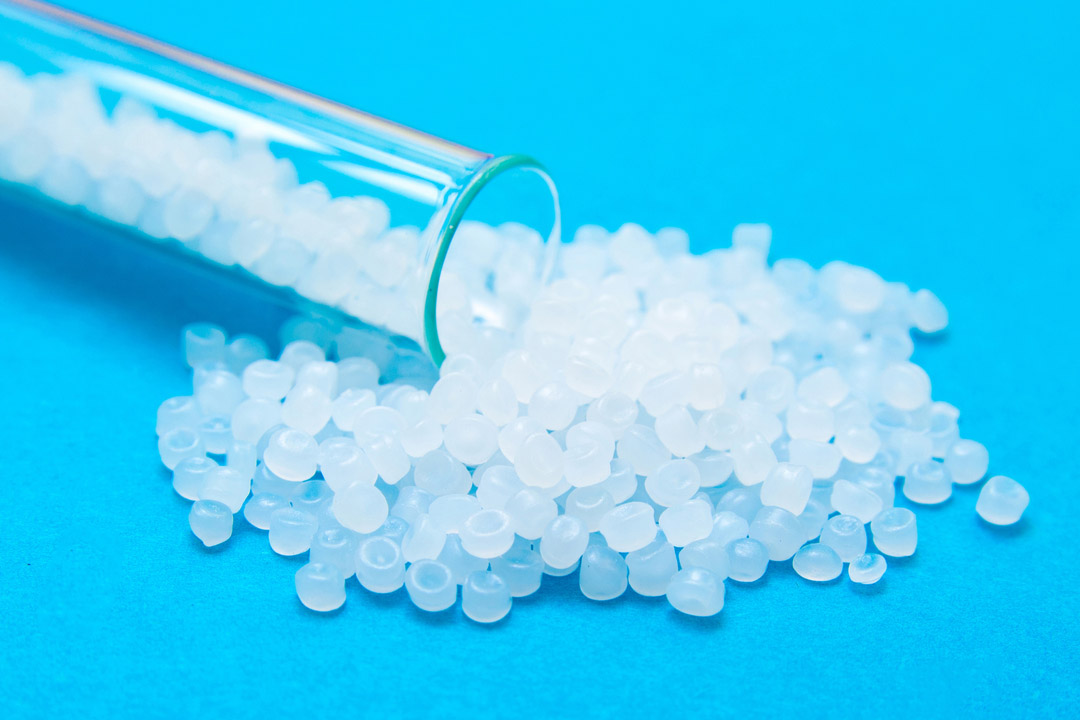
A newly published study set out to explore the barriers and possible solutions to growing the use of recycled plastic in food-contact-suitable applications. | StanislauV/Shutterstock

Contaminating additives and declining recycling rates for food packaging are limiting growth in production of food-grade recycled resin, according to research from a consulting firm.

Stina Inc., formerly known as More Recycling, recently published “Assessing the state of food grade recycled resin in Canada and the United States.” The report, commissioned by Environment and Climate Change Canada, set out to explore the barriers and possible solutions to growing the use of recycled plastic in food-contact-suitable applications.

The report focused on PET, HDPE and PP. It examined current and potential sources of food-contact-suitable recycled material, collection and processing capacity, and current end uses.

Stina completed 16 interviews of stakeholders from companies that produce or consume a large quantity of food-contact resin in North America.

The research found a limited supply of recycled plastic that can be used in food contact applications. This was identified as the “biggest challenge” among the interviewed stakeholders.

“In Canada and the United States, the vast majority of plastic products and packaging produced each year and placed on the market is not suitable for processing into food grade PCR,” the report found. 

Three factors lead to a package not being recycled into a food-contact application, the report found. These include the package being initially produced using resin that’s not suitable for food contact, a converter using additives that render the package not suitable for food contact, or the packaged product leaching contaminants into the package.

There are a few solutions that could address these challenges, Stina found. These include creating greater transparency about the chemical composition of packaging, reducing use of additives that render a material not suitable for food contact, and more general recyclability measures such as promoting design for recycling.

One interviewed converter told the researchers that “design for recycling is critical” to increasing the quantity of material suitable for food-contact applications, because “the way a package starts its life impacts what it could be used for next.”

The researchers also noted that improving collection systems specifically for food-contact recycled plastic would help with the supply challenges.

For example, some interviewees “acknowledged that more deposit systems in the U.S. and Canada would improve the recycling rate for bottles significantly and provide more readily recyclable high-quality material for reclaimers that could be suitable for both food-contact and other applications that require high quality PCR,” the report states.

The research also probed North American processing infrastructure for food-contact recycled resin. Food-contact RPET processing capacity made up about 60% of the total RPET processing capacity in 2019, Stina reported. For natural HDPE, food-grade made up about 20% of the bottle processing capacity that year. Stina did not report the capacity for food-contact PP, looking to “protect the confidentiality of the small number of polypropylene recyclers.”

The study found the food-contact resin processing sector has been constrained by the feedstock shortage.

“All recyclers interviewed said that their capacity to process more food grade PCR is limited by available supply,” Stina found. “Many noted they would expand their capacity to meet additional demand for food grade PCR if there were more guaranteed suppliers of recycled material from the right sources.”

Interviewed stakeholders stressed the importance of sourcing when it comes to food-contact recycled resin.

“Knowing what a bottle contained or what it may be exposed to along its journey of use, collection, sorting, and storage is important and must be factored into the recycling process,” the report found.

The research also touched on the importance of investing sooner rather than later, before the supply gap gets even worse.

“As more policy and legislation and brand commitments come into play to drive the use of PCR in PET bottles, there will be more pull on the supply leading up to 2030,” the report states. “In an already tight supply market, RPET prices will likely rise. Investments are urgently needed in collection and then processing infrastructure to increase supply of bottles to be reclaimed and converted to PCR.”

Beyond the food-contact resin research, Stina completes a broader yearly survey of North American plastics recycling, examining processing capacity and infrastructure.
 

FIMIC

Tags: Research
TweetShare
Colin Staub

Colin Staub

Colin Staub was a reporter and associate editor at Resource Recycling until August 2025.

Related Posts

Amazon, DOE partner on critical materials recovery

byScott Snowden
April 13, 2026

DOE and Amazon will study recovery of graphite from textiles and gallium from IT hardware, aiming to strengthen US supply...

Rice researchers use lemon juice to boost battery recycling

byScott Snowden
April 9, 2026

Rice researchers reported a battery recycling process that uses plasma and mild solvents to recover most metals from black mass...

Packaging sector sees shift from AI pilots to wider use

byScott Snowden
April 1, 2026

AI adoption is expanding across packaging operations as costs fall and use cases widen, though concerns around accountability, ROI and...

Report pegs fire losses at $2.5b in US and Canada recycling industry

byScott Snowden
March 27, 2026

A new fire report estimates $2.5b in damage across US and Canadian recycling facilities in 2025, with lithium-ion batteries still...

Australia battery recycling sector could reach A$6.9bn by 2050

Australia battery recycling sector could reach A$6.9bn by 2050

byScott Snowden
March 20, 2026

The country's battery recycling industry already contributes A$2.1 billion today, according to a new industry-funded report that calls for extended...

APR honors recycling leaders during PRC

APR honors recycling leaders during PRC

byScott Snowden
March 19, 2026

Conference awards honored researchers, companies and policymakers for advances in plastics recycling as speakers highlighted technical progress despite difficult market...

Load More
Next Post
Still a top priority

Still a top priority

Leading the Charge in Safe Battery Recycling
Sponsored

Leading the Charge in Safe Battery Recycling

byThe Battery Network
April 13, 2026

We’re connecting people, brands, and communities through one nationwide network built to make battery recycling safer, simpler, and more accessible...

Read moreDetails

More Posts

Policy Now | December 2025 – Year-end nears, policy talks continue

Policy Now | December 2025 – Year-end nears, policy talks continue

December 1, 2025

Quebec PRO reflects on first year of packaging EPR

March 30, 2026

Certification scorecard – Week of March 23, 2026

March 24, 2026
Bottle cap design: No need to ‘reinvent the wheel’

Bottle cap design: No need to ‘reinvent the wheel’

June 25, 2025
MRF equipment firm Machinex wins patent fight with rival

Judge blocks four groups from joining Oregon Recycling Act injunction

April 7, 2026

Diversion Dynamics: Secondhand exports slow down fast fashion

March 5, 2026
Basel e-scrap rules disrupt larger metal sector

Basel e-scrap rules disrupt larger metal sector

June 26, 2025

Here’s what is (and isn’t) becoming law in California

October 16, 2019

Full plastic bag ban passes California Senate

June 4, 2024
Aduro losses nearly double on year

Aduro losses nearly double on year

April 15, 2026
Load More

About & Publications

About Us

Staff

Archive

Magazine

Work With Us

Advertise
Jobs
Contact
Terms and Privacy

Newsletter

Get the latest recycling news and analysis delivered to your inbox every week. Stay ahead on industry trends, policy updates, and insights from programs, processors, and innovators.

Subscribe

Welcome Back!

Login to your account below

Forgotten Password?

Retrieve your password

Please enter your username or email address to reset your password.

Log In

Add New Playlist

No Result
View All Result
  • The Latest
  • Analysis
  • Recycling
  • E-Scrap
  • Plastics
  • Policy Now
  • Conferences
    • E-Scrap Conference
    • Plastics Recycling Conference
    • Resource Recycling Conference
    • Textiles Recovery Summit
  • Magazine
  • About Us
  • Advertise
  • Archive
  • Jobs
  • Staff
Subscribe
This website uses cookies. By continuing to use this website you are giving consent to cookies being used. Visit our Privacy and Cookie Policy.