





Resource Recycling
  • The Latest
  • Analysis
    • All
    • Certification Scorecard
    • Industry Announcements
    • Opinion
    NJ’s PCR delay risks making its own excuse permanently true

    NJ’s PCR delay risks making its own excuse permanently true

    E-scrap magnet recycling company scales up

    Why only some rare-earth sources are economically viable

    e-Stewards to develop an ITAD-specific standard

    Certification scorecard — week of Sept. 21

    Who should pay for lithium-ion battery fire damage?

    America’s critical-materials buildout has a feedstock problem

    Certification scorecard – week of Sept. 14

  • Conferences
    • Resource Recycling Conference
    • Plastics Recycling Conference
    • E-Scrap: The Longevity Conference
    • Textiles Recovery Summit
  • Publications
    • E-Scrap News
    • Plastics Recycling Update
    • Policy Now
    • Resource Recycling
    • Other Topics
      • All Topics
      • Brand Owners
      • Critical Minerals
      • Glass
      • Grant Watch / RFPs
      • Markets
      • Organics
      • Packaging
      • Research
      • Technology
      • Textiles
Subscribe
No Result
View All Result
Resource Recycling
  • The Latest
  • Analysis
    • All
    • Certification Scorecard
    • Industry Announcements
    • Opinion
    NJ’s PCR delay risks making its own excuse permanently true

    NJ’s PCR delay risks making its own excuse permanently true

    E-scrap magnet recycling company scales up

    Why only some rare-earth sources are economically viable

    e-Stewards to develop an ITAD-specific standard

    Certification scorecard — week of Sept. 21

    Who should pay for lithium-ion battery fire damage?

    America’s critical-materials buildout has a feedstock problem

    Certification scorecard – week of Sept. 14

  • Conferences
    • Resource Recycling Conference
    • Plastics Recycling Conference
    • E-Scrap: The Longevity Conference
    • Textiles Recovery Summit
  • Publications
    • E-Scrap News
    • Plastics Recycling Update
    • Policy Now
    • Resource Recycling
    • Other Topics
      • All Topics
      • Brand Owners
      • Critical Minerals
      • Glass
      • Grant Watch / RFPs
      • Markets
      • Organics
      • Packaging
      • Research
      • Technology
      • Textiles
Subscribe
No Result
View All Result
Resource Recycling
No Result
View All Result
Home Plastics

Building demand for recycled flexibles

Brian Clark HowardbyBrian Clark Howard
August 25, 2026
in Plastics, Recycling
Canada seeks recycled-content mandates feedback

Nextcreative / Shutterstock

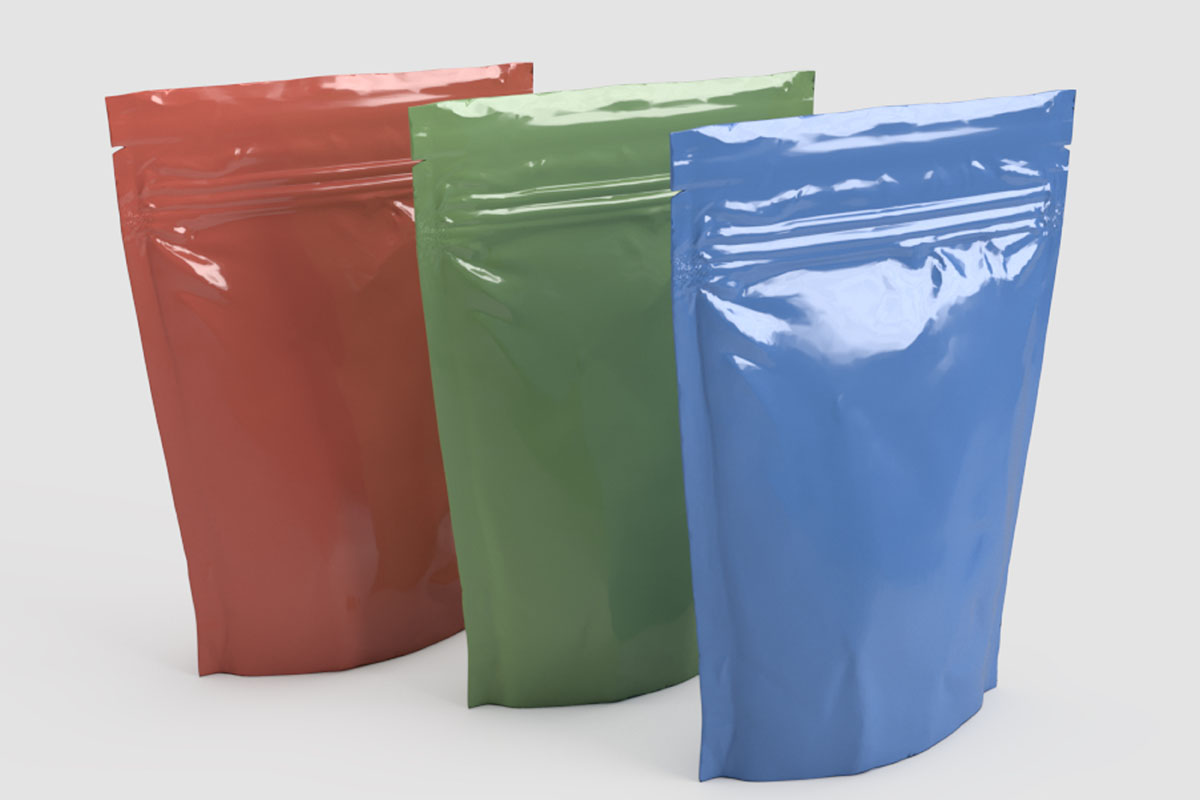
Flexible plastics, including food packaging, are among the largest and fastest-growing types of plastic waste, yet less than 5% are currently recycled, according to Delterra and Eunomia. The environmental nonprofit and global sustainability consultancy, respectively, are releasing a new report Wednesday that seeks to bolster that recycling rate.

The report found that companies could readily create demand for up to 800,000 tons of recycled household flexible plastics annually across eight applications. The team found that three uses in particular — industrial liners, impermeable construction membranes and dark-colored trash bags — could account for approximately 600,000 tons per year, or 75% of the total potential of the eight products.

Titled “Building Markets for Recycled Household Flexible Plastics: Identifying the End Uses Needed to Meet EPR Goals,” the report was funded by Amcor and Kraft Heinz.

Shannon Bouton, president and CEO of Delterra and one of the report’s authors, said, “You have to have demand for that material in order to create the incentive for all the rest of it to happen — the collection, the sortation, and so on.”

Bouton said the rapid rise of extended producer responsibility (EPR) around the world presents an opportunity and a challenge for flexible plastics. EPR can provide funding to help offset the costs of recycling. But it can also end up with a lot more material collected — material that needs some place to go.

In the case of California, Senate Bill 54 sets out a 65% recycling rate target by 2032 for single-use plastics, yet less than 5% of flexible plastics in the state are recycled today. “Closing this gap over the coming five years will require not only expanded collection and sorting, but also robust demand to use the recycled material in new applications,” the report authors wrote.

Bouton explained that flexibles have been particularly challenging to recycle because they are often contaminated with food or have paints or dyes on them. Flexibles can be made up of different resins and are often mixed with other materials like metals or fiber. Many recyclers have long said films and other flexibles can gum up their machinery. In part because of the challenges, Delterra and Eunomia found that there are fewer than 30 North American reclaimers that can mechanically recycle PE film.

“There’s no reason for those recyclers to exist because there just hasn’t been a lot of that material flowing through the system, and there hasn’t been a lot of demand for it,” said Bouton. “That is going to be a significant bottleneck when you start to see EPR come into play in places like California and other states.”

In order to assess the potential demand, Bouton and colleagues interviewed recyclers in Europe and other countries. They evaluated more than 40 potential applications for recycled household polyethylene film, from flower pots to car parts, from shrink film to buckets. They looked for technical feasibility and uses that aren’t already robust in the market (omitting plastic lumber, asphalt additives and roof coverboard).

They found these eight uses to be the most promising:

-Horticulture liners, trays and plastic pots

-Rigid consumables (e.g. housewares)

-Transit packaging pallets

-Rotational-molded items (e.g. consumer goods, large containers, trash bins)

-Industrial liners (e.g. pond liners, landfill liners)

-Impermeable construction membranes

-Agricultural heavy-duty covers

-Dark-colored trash bags

These eight identified uses share some similarities: they are generally not food-contact-sensitive, they can tolerate color variation and imperfections, and they are more forgiving of variability in resin composition. They include a mix of injection-molded rigid products and thicker-gauge, mixed-color film applications.

Bouton said the next step is to test how these recycled products perform in the real world, and in particular, in North America, where there might be subtle differences with Europe or other markets.

She added that one misconception she often encounters is that the recycled product needs to have price parity with virgin material. “Actually it needs to be significantly cheaper than virgin in order to generate that demand for it,” she said.

“The hardest part of building markets for recycled materials isn’t ambition – it’s honestly assessing what’s technically and economically feasible and being willing to follow the evidence where it leads,” said Sarah Edwards, North America director and private lead for Eunomia, in a statement.

“Recycling only happens really in truth if the material makes it back into a new product,” said Bouton.


Tags: Film & FlexiblesResearch
TweetShare
Brian Clark Howard

Brian Clark Howard

Brian Clark Howard is managing editor of Resource Recycling and an award-winning journalist with 25 years of experience. He is the co-author of several books and previously served as an editor and writer at The Hill, National Geographic, The Daily Green, E/The Environmental Magazine and The Daily Mail. He has covered a wide range of topics, from the environment to politics.

Related Posts

trash bags

Sorted: Should we use recycled trash bags?

byBrian Clark Howard
September 28, 2026

Manufacturers’ resistance is rooted in performance and cost, but the products may have an important role to play.

SB 54 plan for cartons, film draws warning

byStefanie Valentic
September 15, 2026

The new law's cartons and film targets could add 100,000 tons of plastic contamination to California's paper exports annually, a...

SB 54 Unpacked: Can film catch up to cartons?

byStefanie Valentic
September 4, 2026

Flexible film, generating 550,000 tons/year of waste, has end markets for only about 10% of it, panelists said at a...

Hefty ending Orange Bag program

Hefty ending Orange Bag program

byAntoinette Smith
August 25, 2026

Although the Hefty ReNew program is ending, an Omaha recycler will continue accepting the bags as feedstock for plastic lumber.

Two pilot programs in CA recycle commercial film

byIsabella Burke
August 10, 2026

Two new pilot programs are testing different approaches to collecting and recycling commercial plastic film.

Europe’s recyclers miss most of the critical materials

Market surge expected for plastic from e-scrap

byPaul Lane
August 10, 2026

A report from QY Research found that market growth will likely be fueled by increased demand for recycled plastic, which...

Load More
Next Post

Bob's Red Mill meets 92% waste diversion rate

2026 Buyers’ Guide

Equipment, services and technology suppliers serving the recycling industry.

Browse the Guide

More Posts

Recyclers reeling from NJ PCR extension

Recyclers reeling from NJ PCR extension

September 23, 2026
Oregon state capitol building with state flag and blue sky.

NAW appeals Oregon EPR ruling

September 25, 2026
Colorado’s EPR programs move from planning to practice

Colorado’s EPR programs move from planning to practice

September 17, 2026
Bin to Better gets students involved in reuse, recycling

Bin to Better gets students involved in reuse, recycling

September 24, 2026

Who should pay for lithium-ion battery fire damage?

September 21, 2026

SB 54 plan for cartons, film draws warning

September 15, 2026
Industry announcements for January 2026

Industry announcements for September 2026

August 31, 2026
Calif. Governor Gavin Newsom at podium.

Newsom signs battery EPR expansion, vetoes SB 54 fund bill

September 24, 2026
Bipartisan reps introduce bill on recycling claims

House passes bill to ease lithium-ion battery storage rules

September 24, 2026
US packaging is evolving. The recycling system isn’t ready

US packaging is evolving. The recycling system isn’t ready

September 16, 2026
Load More

About & Publications

About Us

Staff

Archive

Magazines

Work With Us

Advertise
Jobs
Contact
Terms and Privacy

Newsletters

Get the latest recycling news and analysis delivered to your inbox every week. Stay ahead on industry trends, policy updates, and insights from programs, processors, and innovators.

Subscribe

Welcome Back!

Login to your account below

Forgotten Password?

Retrieve your password

Please enter your username or email address to reset your password.

Log In

Add New Playlist

No Result
View All Result
  • The Latest
  • Analysis
  • Recycling
  • E-Scrap
  • Plastics
  • Policy Now
  • Conferences
    • E-Scrap Conference
    • Plastics Recycling Conference
    • Resource Recycling Conference
    • Textiles Recovery Summit
  • Magazines
  • About Us
  • Advertise
  • Archive
  • Jobs
  • Staff
Subscribe
This website uses cookies. By continuing to use this website you are giving consent to cookies being used. Visit our Privacy and Cookie Policy.