




Resource Recycling
  • The Latest
  • Analysis
    • All
    • Certification Scorecard
    • Industry Announcements
    • Opinion
    MP Materials breaks ground on rare earth magnet campus in North Texas

    How critical mineral alliances aim to shape the future of e-scrap metals

    Certification Scorecard — Week of May 18, 2026

    Aurubis: Thefts involved scrap sample manipulation

    Metals and electronics recyclers report growth

    Plastic packaging

    Why SB 54 source reduction planning is becoming the industry’s most challenging EPR test

    Recycler cites market pressure in short-term closure

    AI, data anxiety push enterprises to destroy working devices: report

    Before the Bin: America’s textile waste problem starts in your closet

  • Conferences
    • Resource Recycling Conference
    • Plastics Recycling Conference
    • E-Scrap: The Longevity Conference
    • Textiles Recovery Summit
  • Publications
    • E-Scrap News
    • Plastics Recycling Update
    • Policy Now
    • Resource Recycling
    • Other Topics
      • Brand Owners
      • Critical Minerals
      • Glass
      • Grant Watch
      • Markets
      • Organics
      • Packaging
      • Research
      • Technology
      • Textiles
      • All Topics
Subscribe
No Result
View All Result
Resource Recycling
  • The Latest
  • Analysis
    • All
    • Certification Scorecard
    • Industry Announcements
    • Opinion
    MP Materials breaks ground on rare earth magnet campus in North Texas

    How critical mineral alliances aim to shape the future of e-scrap metals

    Certification Scorecard — Week of May 18, 2026

    Aurubis: Thefts involved scrap sample manipulation

    Metals and electronics recyclers report growth

    Plastic packaging

    Why SB 54 source reduction planning is becoming the industry’s most challenging EPR test

    Recycler cites market pressure in short-term closure

    AI, data anxiety push enterprises to destroy working devices: report

    Before the Bin: America’s textile waste problem starts in your closet

  • Conferences
    • Resource Recycling Conference
    • Plastics Recycling Conference
    • E-Scrap: The Longevity Conference
    • Textiles Recovery Summit
  • Publications
    • E-Scrap News
    • Plastics Recycling Update
    • Policy Now
    • Resource Recycling
    • Other Topics
      • Brand Owners
      • Critical Minerals
      • Glass
      • Grant Watch
      • Markets
      • Organics
      • Packaging
      • Research
      • Technology
      • Textiles
      • All Topics
Subscribe
No Result
View All Result
Resource Recycling
No Result
View All Result
Home Plastics

National bottle bill likely to land in Congress soon

Marissa HeffernanbyMarissa Heffernan
February 9, 2022
in Plastics
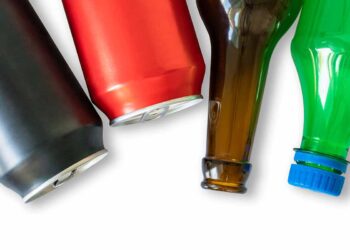
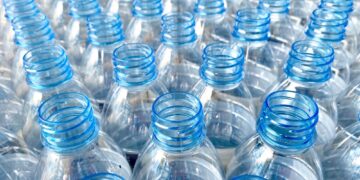
In the draft bill, deposits are set at at least 10 cents for containers under 24 fluid ounces and 15 cents for containers larger than that. | Veja/Shutterstock

West Coast lawmakers plan to introduce a national container deposit bill that one advocate says has a better chance of passing than past proposals because of wide “industry engagement.”

The draft bill, which was developed in large part by advocacy group Texans for Clean Water, would create a standardized bottle deposit system for the country. It would also require minimum recycled content percentages in certain plastic container types.

U.S. Rep. Alan Lowenthal and U.S. Sen. Jeff Merkley, both Democrats, plan to introduce the legislation by mid-March, though supporters are working to get a bipartisan introduction. 

The bill language is still undergoing revision during bipartisan talks and is subject to change, according to Maia Corbitt, president of Texans for Clean Water and former head of the State of Texas Alliance for Recycling. 

“This language has a really good coalition of folks working on it – major environmental groups, like Greenpeace and the National Stewardship Action Council, the U.S. Public Interest Research Group – and more industry engagement than ever before,” she said. 

While the draft bill language was originally taken from the Break Free from Plastic Pollution Act, it has been changed to be more moderate and “very different,” Corbitt said, due to input from stakeholders nationwide as well as bipartisan collaboration. 

“It’s good news,” she said. “The big takeaway is that it’s now becoming probable and not just possible and that’s pretty good.” 

If passed, the bill would take effect Feb. 1, 2023, but Corbitt said that’s subject to negotiation, and there are other target dates for different provisions of the bill. 

Texans for Clean Water pushed for legislation in Texas last year that aimed to develop a deposit-like system for a range of plastic products in the Lone Star State.

National beverage container program 

The bill would cover beer, wine, liquor, carbonated soft drinks, coffee drinks, dairy products derived from animal milk, milk alternatives, energy and sports drinks, fruit juices, kombucha, tea and different types of water, such as flavored, mineral, soda and tonic waters. It would not include medications, infant formula or meal replacement liquids.

The bill also does not count using containers as fuel, energy production, building materials or landfill cover as “recycling,” nor any form of chemical recycling. Chemical recycling refers to processes that use heat, pressure and/or solvents to break down the molecular chains of plastic, creating chemicals that can be used to produce fuels, waxes or new plastics.

Corbitt said the chemical recycling language is a current sticking point in negotiations, as “there are certainly those who don’t want a blanket moratorium put in a bill before the technology has been borne out.” 

Containers collected through deposit systems are typically recycled mechanically, but with the expanded product list comes some items that may be sold in harder-to-recycle pouches or laminates, Corbitt said. 

Deposits are set at at least 10 cents for containers under 24 fluid ounces and 15 cents for containers larger than that. 

“The recycling preclusions for chemical recycling I think will be something that will continue to be negotiated, along with that product list,” Corbitt said, but she added that this is “closer than we’ve ever been.”  

Minimum-recycled-content targets

Corbitt said research from a variety of sources has shown that bottle bills work to both substantially reduce litter and increase recycling rates in the jurisdictions in which they are implemented. Strategies to bring more recycled material into the manufacturing pipeline are growing in importance as more brands set recycled-content targets.“We’re looking at really needing to jump-start that capture and essentially bottle bills are the only things at this point proven to do that,” she said. 

To recycle the container, consumers should not be required to remove anything, such as a cap, label or filter, the proposed legislation reads. 

The bill also sets out minimum post-consumer resin (PCR) requirements for new plastic beverage containers, specifying that the PCR supplies must be in the U.S. The minimum starts at 25% by 2025, then 50% by 2030, 70% by 2035 and 80% by 2040.

For refillable or reusable containers, the bill calls for a study to determine technical and safe minimum post-consumer requirements for glass, metal or other beverage containers, as well as minimum reuse and refill requirements. 

Corbitt said refillable containers are one of the larger sticking points that different parties are still negotiating. While environmental groups are pushing for this section to be included, Corbitt acknowledged that developing required infrastructure for refills would “be a heavy lift” for producers. 

Learn more in person

The upcoming Plastics Recycling Conference outside Washington, D.C. is set to include a two-part “Policy Perspectives” session on Monday, March 7. It will feature a number of leading voices who will break down lawmakers’ recycling focus at the state and national level, and what it all means for plastics processors and others. See complete details on the conference site and register today.

Producer responsibility 

Under the bill, responsible parties would have to provide for the cleanup of beverage containers that become litter and use unredeemed deposits to invest in collection, recycling and reuse infrastructure in the state or region.

The bill calls for the creation of producer responsibility organizations (PROs) to carry out producers’ responsibilities. The organizations would be required to provide outreach and education to consumers on proper end-of-life management of containers, inform consumers of collection locations, and offer recycling instructions in multiple languages.

The PROs would also be required to provide 100% reimbursement to the entity managing the containers, including administrative costs, sorting and reprocessing, and to pay the entity that collects curbside recycling the value of the applicable refund value.

Allowing MRFs to recoup the redemption value of what goes through their facilities is an important part of the bill, Corbitt said.

An annual report is also required from the organizations with data on volumes, recycling rates, final destinations of containers, contamination levels and collection services.

Designing for the environment and labeling

The bill also includes a provision requiring containers to be designed to minimize environmental and health impacts and to have clear, honest labels about the container’s recyclability.

Two years after enactment, the bill would also bring into a play a standardized label for each category of container.

Corbitt said as more individual states eye bottle bills, a federal harmonization of the system is attractive to the industry.

Texans for Clean Water is working closely with Rep. Lowenthal of California and Sen. Merkley of Oregon. Bill backers are in the process of getting Republican support from federal lawmakers in several other states, Corbitt said.

A version of this story appeared in Resource Recycling on February 8.
Shred-Tech

Tags: Container DepositsEPRLegislation & Enforcement
TweetShare
Marissa Heffernan

Marissa Heffernan

Marissa Heffernan worked at Resource Recycling from January 2022 through June 2025, first as staff reporter and then as associate editor. Marissa Heffernan started working for Resource Recycling in January 2022 after spending several years as a reporter at a daily newspaper in Southwest Washington. After developing a special focus on recycling policy, they were also the editor of the monthly newsletter Policy Now.

Related Posts

EPR rules take shape in Oregon, as first test

Oregon OKs end-market verification from CAA

byStefanie Valentic
May 20, 2026

The state's Department of Environmental Quality has given the stamp of approval on CAA's Responsible End Markets program plan amendment.

Revised CA budget includes $200m for recycling

Revised CA budget includes $200m for recycling

byAntoinette Smith
May 20, 2026

Stakeholders applauded the additional allocations proposed, but would like to see distribution re-formulated to more effectively address market realities.

Plastic packaging

Why SB 54 source reduction planning is becoming the industry’s most challenging EPR test

byDave Ford
May 19, 2026

Ahead of critical August deadlines, producers, packaging manufacturers and experts must decode SB 54's toughest requirement.

NJ e-scrap legislation

NJ qualifies PureCycle PP for minimum PCR law

byAntoinette Smith
May 14, 2026

The one-year conditional approval allows resin processed via the company's dissolution method to count toward the state's minimum recycled content...

Retail aisle with paper and plastic packaging.

Loblaw’s recyclability push could reshape packaging design across North America

byKeith Loria
May 14, 2026

The retailer is pursuing aggressive plans to ensure all packaging on its shelves is recyclable or reusable.

Industry descends on DC to fight for PET

Industry descends on DC to fight for PET

byAntoinette Smith
May 13, 2026

Amid numerous recent hits to the common packaging plastic, a stakeholder coalition is engaging with policy makers to encourage policy...

Load More
Next Post
Eastman unveils plans for $1B polyester depolymerization plant

Evergreen acquires two more PET recycling plants

More Posts

Revised CA budget includes $200m for recycling

Revised CA budget includes $200m for recycling

May 20, 2026
Bottle bill backers see opportunity for action

PET collapse exposes gaps in US recycling infrastructure

May 15, 2026
Plastic packaging

Why SB 54 source reduction planning is becoming the industry’s most challenging EPR test

May 19, 2026
Aurubis: Thefts involved scrap sample manipulation

Metals and electronics recyclers report growth

May 20, 2026
Industry descends on DC to fight for PET

Industry descends on DC to fight for PET

May 13, 2026

Price increases help end user offset higher OCC

December 10, 2024
Recycler cites market pressure in short-term closure

AI, data anxiety push enterprises to destroy working devices: report

May 19, 2026
Study quantifies lithium battery threat to infrastructure

Battery fires remain elevated in early 2026: report

May 1, 2026
Niagara acquires rPlanet Earth assets in California

Niagara acquires rPlanet Earth assets in California

May 15, 2026

How a pyrolysis firm handles EnergyBag plastics

January 27, 2021
Load More

About & Publications

About Us

Staff

Archive

Magazine

Work With Us

Advertise
Jobs
Contact
Terms and Privacy

Newsletter

Get the latest recycling news and analysis delivered to your inbox every week. Stay ahead on industry trends, policy updates, and insights from programs, processors, and innovators.

Subscribe

Welcome Back!

Login to your account below

Forgotten Password?

Retrieve your password

Please enter your username or email address to reset your password.

Log In

Add New Playlist

No Result
View All Result
  • The Latest
  • Analysis
  • Recycling
  • E-Scrap
  • Plastics
  • Policy Now
  • Conferences
    • E-Scrap Conference
    • Plastics Recycling Conference
    • Resource Recycling Conference
    • Textiles Recovery Summit
  • Magazine
  • About Us
  • Advertise
  • Archive
  • Jobs
  • Staff
Subscribe
This website uses cookies. By continuing to use this website you are giving consent to cookies being used. Visit our Privacy and Cookie Policy.