





Resource Recycling
  • The Latest
  • Analysis
    • All
    • Certification Scorecard
    • Industry Announcements
    • Opinion
    NJ’s PCR delay risks making its own excuse permanently true

    NJ’s PCR delay risks making its own excuse permanently true

    E-scrap magnet recycling company scales up

    Why only some rare-earth sources are economically viable

    e-Stewards to develop an ITAD-specific standard

    Certification scorecard — week of Sept. 21

    Who should pay for lithium-ion battery fire damage?

    America’s critical-materials buildout has a feedstock problem

    Certification scorecard – week of Sept. 14

  • Conferences
    • Resource Recycling Conference
    • Plastics Recycling Conference
    • E-Scrap: The Longevity Conference
    • Textiles Recovery Summit
  • Publications
    • E-Scrap News
    • Plastics Recycling Update
    • Policy Now
    • Resource Recycling
    • Other Topics
      • All Topics
      • Brand Owners
      • Critical Minerals
      • Glass
      • Grant Watch / RFPs
      • Markets
      • Organics
      • Packaging
      • Research
      • Technology
      • Textiles
Subscribe
No Result
View All Result
Resource Recycling
  • The Latest
  • Analysis
    • All
    • Certification Scorecard
    • Industry Announcements
    • Opinion
    NJ’s PCR delay risks making its own excuse permanently true

    NJ’s PCR delay risks making its own excuse permanently true

    E-scrap magnet recycling company scales up

    Why only some rare-earth sources are economically viable

    e-Stewards to develop an ITAD-specific standard

    Certification scorecard — week of Sept. 21

    Who should pay for lithium-ion battery fire damage?

    America’s critical-materials buildout has a feedstock problem

    Certification scorecard – week of Sept. 14

  • Conferences
    • Resource Recycling Conference
    • Plastics Recycling Conference
    • E-Scrap: The Longevity Conference
    • Textiles Recovery Summit
  • Publications
    • E-Scrap News
    • Plastics Recycling Update
    • Policy Now
    • Resource Recycling
    • Other Topics
      • All Topics
      • Brand Owners
      • Critical Minerals
      • Glass
      • Grant Watch / RFPs
      • Markets
      • Organics
      • Packaging
      • Research
      • Technology
      • Textiles
Subscribe
No Result
View All Result
Resource Recycling
No Result
View All Result
Home Plastics

What are current policy priorities at national and state levels?

Marissa HeffernanbyMarissa Heffernan
November 8, 2022
in Plastics
What are current policy priorities at national and state levels?
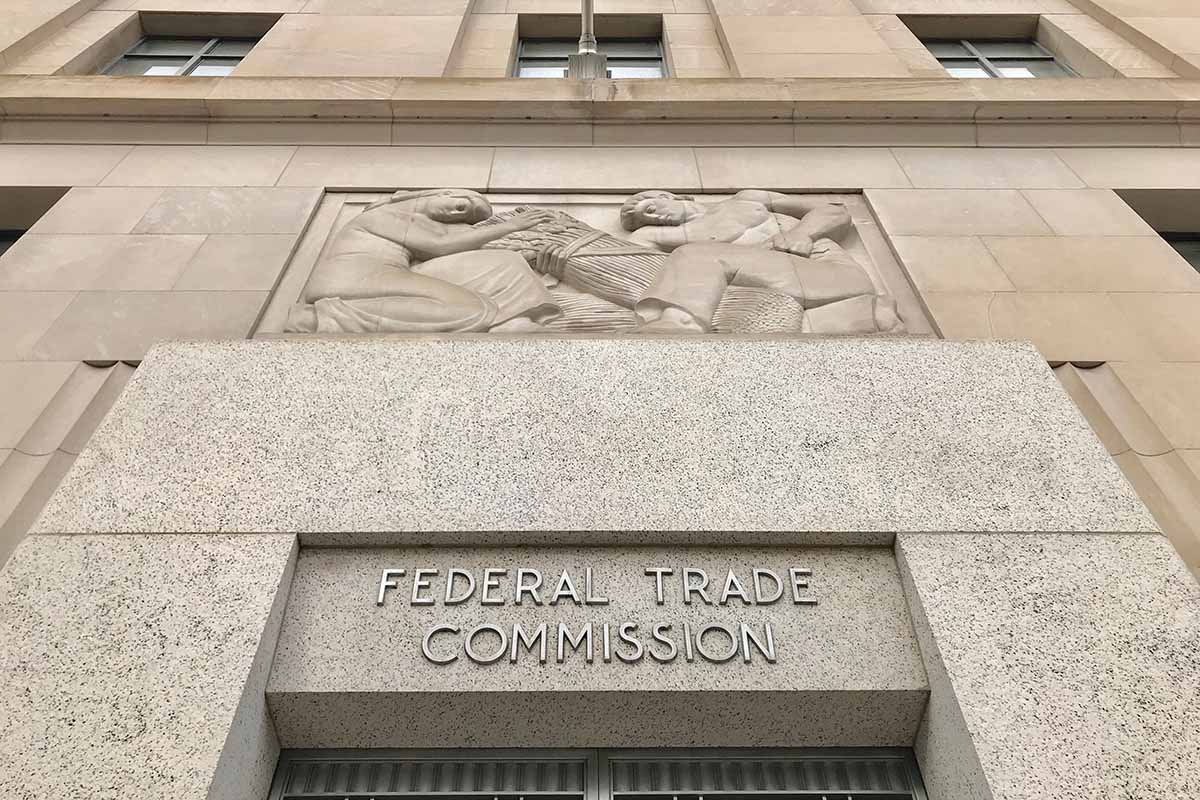
As part of its effort to harmonize legislation and industry practices, APR has urged the Federal Trade Commission to update its so-called “Green Guides.” | DCStockPhotography/Shutterstock

A federal bottle bill, more extended producer responsibility bills and pressure on single-use plastics are all in the future of plastics legislation, industry policy experts predicted. 

The insights came during the “Plastics Recycling Legislative Update,” an Association of Plastic Recyclers (APR) webinar held on Oct. 19. Panelists were Anna Karakitsos, a principal on the policy resolution group at Bracewell; Bruce Magnani, vice president and partner at Houston Magnani and Associates; and Kate Eagles, program director at APR. 

Federal updates

Karakitsos is APR’s legislative representation at the federal level, and she said for the past several months most recycling activity has been coming from federal agencies as Congress has turned its attention to elections. 

For example, the Department of State is working on the United Nations’ proposed treaty on plastic pollution, which would be a legally binding instrument, and the U.S. EPA has been developing a national recycling strategy and fleshing out two new grant programs, the Solid Waste Infrastructure for Recycling program and the Recycling Education and Outreach program. 

Karakitsos said she’s also been tracking moves by the General Services Administration and the Department of the Interior to reduce the purchase and distribution of single-use plastics within the governmental systems. 

“This was an important advance notice for APR to be involved in because the general premise of the proposal assumed that banning certain plastic products from the government writ large was a no-brainer,” Karakitsos said. “Obviously, it is not a no-brainer, so we made sure that our comments focused on the need for recovered plastic material to be introduced into the mainstream in order to promote a successful, robust recycling system.”

In addition, APR has been encouraging the Federal Trade Commission to update its “Green Guides,” she added. 

As far as bills introduced in the first half of 2022, Karakitsos said she’s been watching two bills that passed the Senate on July 28: S 3742, the Recycling Infrastructure and Accessibility Act of 2022, a pilot grant program to improve recycling accessibility, and S 3743, the Recycling and Composting Accountability Act, which would require the EPA administrator to improve recycling and composting programs. 

Both received bipartisan support but have not moved forward, and Karakitsos said if they continue to languish, they will need to be reintroduced in the new legislative session next year. 

Finally, Karakitsos said that Oregon Senator Jeff Merkley is in the process of drafting a national bottle bill, which will likely be introduced in the first 100 days of the next congressional session. 

California updates

Magnani is APR’s legislative representation in California, and he’s been focusing on rulemaking, he said, particularly the Extended Producer Responsibility Bill, SB 54, and the bottle return expansion, SB 1013. 

“There are great opportunities within SB 54. It shouldn’t all be viewed as a hurdle or a difficulty,” he said. 

Overall, he tracked upwards of 70 bills in 2022, and some stand-outs along with SB 54 and SB 1013 were the failed AB 2026, which would have enacted an e-retailer packaging/bags ban, the vetoed AB 2784 on thermoforms and AB 1046, which requires pre-checkout bags at grocery stores be home compostable or paper by 2025. 

Magnani said he was also “very happy with our advocacy efforts in this state’s budget,” as the expiring plastic market development payment was reinstated and allocated $10 million in the next cycle of funding and $3 million for each of the next two cycles, “to continue to help cover costs of recycling.” 

He predicted that chemical recycling will continue to be a hot topic, and said he’s heard rumors that the vetoed thermoform bill will be reintroduced. He’s also heard of a potential ban on PVC packaging, PS packaging, PETG (a form of PET modified with glycol), oxo-degradable additives, non-detectable pigments, and problematic labels, adhesives and inks. 

The legislative landscape in California is also in flux, Magnani noted, because there’s going to be “a massive turnover in legislators over the next six years.” 

Over 30 sitting legislators will be leaving at the end of this year due to redistricting or resigning, he said. By 2028, all legislators from 2021 will be replaced, Magnani said, changing the players in the game. 

“Stating the obvious here, California can be a challenging environment for business,” he said. “It’s basically a one-party state.” 

Pacific Northwest updates

Eagles, from APR, highlighted Washington state’s recycling, waste and litter reduction law and the Oregon Recycling Modernization Act. 

Washington state’s recycling, waste and litter Reduction law, SB 5022, passed in 2021 and is now in the rulemaking phase. APR has been very involved on the rulemaking advisory committee, Eagles said, and some of the topics being hashed out are terms and definitions, how producer fees will be set, how the state will certify PCR content/compliance and technical feasibility. 

Washington also looks likely to reintroduce an EPR bill next year, she added, after previous failed attempts.

The Oregon Recycling Modernization Act was also enacted in 2021 and is in the rulemaking stage. Eagles noted that part of the act requires the state Department of Environmental Quality to identify by rule two lists of material: one of materials that are collected curbside and one of materials managed by producer responsibility organizations through depots or mobile collection events. 

DEQ has been “very receptive” to APR’s input, Eagles noted. 

There are four categories of items that the state committee is trying to decide where to place, Eagles said, including bulky plastics, nursery packaging such as pots and trays, expanded polystyrene and PET thermoforms. 

She said for now, the state seemed to be leaning toward leaving thermoforms off both lists and waiting for domestic markets to grow. 

“I’ll be honest, this was a disappointing result for us,” Eagles said. “This is good, clear material, but there are challenges with it that we don’t deny, so we’re really looking closely at this.” 

The rulemaking committee has until September 2023 to put forth rules for state consideration.

 

Tags: EPRIndustry GroupsLegislation & Enforcement
TweetShare
Marissa Heffernan

Marissa Heffernan

Marissa Heffernan worked at Resource Recycling from January 2022 through June 2025, first as staff reporter and then as associate editor. Marissa Heffernan started working for Resource Recycling in January 2022 after spending several years as a reporter at a daily newspaper in Southwest Washington. After developing a special focus on recycling policy, they were also the editor of the monthly newsletter Policy Now.

Related Posts

Newsom nixes recycled content claims bill

Newsom nixes recycled content claims bill

byAntoinette Smith
September 28, 2026

Supporters of AB 2253 said the bill would address greenwashing, while opponents said it demonized mass-balance accounting and didn't reflect...

NJ’s PCR delay risks making its own excuse permanently true

NJ’s PCR delay risks making its own excuse permanently true

byEdward Kosior
September 28, 2026

In this editorial, Prof. Edward Kosior explores how policy uncertainty discourages investment and risks destroying existing recycling capacity.

Analysis: Undersupply of PCR is ‘stifling’ brand goals

US lawmakers urge protection of domestic RPET

byAntoinette Smith
September 25, 2026

In a letter to the US Trade Representative, five representatives asked the USTR to consider trade remedies and support verification...

Oregon state capitol building with state flag and blue sky.

NAW appeals Oregon EPR ruling

byStefanie Valentic
September 25, 2026

NAW is challenging an Oregon judge's ruling in favor of the state's extended producer responsibility law.

Bipartisan reps introduce bill on recycling claims

House passes bill to ease lithium-ion battery storage rules

byStefanie Valentic
September 24, 2026

The BRACE Act would let lithium-ion battery recyclers store batteries on site under universal waste rules and give EPA 18...

Calif. Governor Gavin Newsom at podium.

Newsom signs battery EPR expansion, vetoes SB 54 fund bill

byStefanie Valentic
September 24, 2026

Newsom signed a battery EPR expansion and a nitrous oxide sales ban but vetoed a bill setting spending rules for...

Load More
Next Post
The details on LyondellBasell and Envision’s supply deal

The details on LyondellBasell and Envision's supply deal

2026 Buyers’ Guide

Equipment, services and technology suppliers serving the recycling industry.

Browse the Guide

More Posts

Oregon state capitol building with state flag and blue sky.

NAW appeals Oregon EPR ruling

September 25, 2026
Bin to Better gets students involved in reuse, recycling

Bin to Better gets students involved in reuse, recycling

September 24, 2026
Analysis: Undersupply of PCR is ‘stifling’ brand goals

US lawmakers urge protection of domestic RPET

September 25, 2026
Bipartisan reps introduce bill on recycling claims

House passes bill to ease lithium-ion battery storage rules

September 24, 2026
Calif. Governor Gavin Newsom at podium.

Newsom signs battery EPR expansion, vetoes SB 54 fund bill

September 24, 2026
Recyclers reeling from NJ PCR extension

Recyclers reeling from NJ PCR extension

September 23, 2026
Cutting healthcare plastics could save $18B

Report provides path to reduce medical e-scrap

September 25, 2026
Alpek closing Pennsylvania RPET plant

Alpek seizing on war-related opportunity 

July 27, 2026
Jeff Fielkow and the startup that’s building the US packaging EPR system

Jeff Fielkow and the startup that’s building the US packaging EPR system

September 10, 2026
E-scrap magnet recycling company scales up

Why only some rare-earth sources are economically viable

September 24, 2026
Load More

About & Publications

About Us

Staff

Archive

Magazines

Work With Us

Advertise
Jobs
Contact
Terms and Privacy

Newsletters

Get the latest recycling news and analysis delivered to your inbox every week. Stay ahead on industry trends, policy updates, and insights from programs, processors, and innovators.

Subscribe

Welcome Back!

Login to your account below

Forgotten Password?

Retrieve your password

Please enter your username or email address to reset your password.

Log In

Add New Playlist

No Result
View All Result
  • The Latest
  • Analysis
  • Recycling
  • E-Scrap
  • Plastics
  • Policy Now
  • Conferences
    • E-Scrap Conference
    • Plastics Recycling Conference
    • Resource Recycling Conference
    • Textiles Recovery Summit
  • Magazines
  • About Us
  • Advertise
  • Archive
  • Jobs
  • Staff
Subscribe
This website uses cookies. By continuing to use this website you are giving consent to cookies being used. Visit our Privacy and Cookie Policy.