






Resource Recycling
  • The Latest
  • Analysis
    • All
    • Certification Scorecard
    • Industry Announcements
    • Opinion
    NJ’s PCR delay risks making its own excuse permanently true

    NJ’s PCR delay risks making its own excuse permanently true

    E-scrap magnet recycling company scales up

    Why only some rare-earth sources are economically viable

    e-Stewards to develop an ITAD-specific standard

    Certification scorecard — week of Sept. 21

    Who should pay for lithium-ion battery fire damage?

    America’s critical-materials buildout has a feedstock problem

    Certification scorecard – week of Sept. 14

  • Conferences
    • Resource Recycling Conference
    • Plastics Recycling Conference
    • E-Scrap: The Longevity Conference
    • Textiles Recovery Summit
  • Publications
    • E-Scrap News
    • Plastics Recycling Update
    • Policy Now
    • Resource Recycling
    • Other Topics
      • All Topics
      • Brand Owners
      • Critical Minerals
      • Glass
      • Grant Watch / RFPs
      • Markets
      • Organics
      • Packaging
      • Research
      • Technology
      • Textiles
Subscribe
No Result
View All Result
Resource Recycling
  • The Latest
  • Analysis
    • All
    • Certification Scorecard
    • Industry Announcements
    • Opinion
    NJ’s PCR delay risks making its own excuse permanently true

    NJ’s PCR delay risks making its own excuse permanently true

    E-scrap magnet recycling company scales up

    Why only some rare-earth sources are economically viable

    e-Stewards to develop an ITAD-specific standard

    Certification scorecard — week of Sept. 21

    Who should pay for lithium-ion battery fire damage?

    America’s critical-materials buildout has a feedstock problem

    Certification scorecard – week of Sept. 14

  • Conferences
    • Resource Recycling Conference
    • Plastics Recycling Conference
    • E-Scrap: The Longevity Conference
    • Textiles Recovery Summit
  • Publications
    • E-Scrap News
    • Plastics Recycling Update
    • Policy Now
    • Resource Recycling
    • Other Topics
      • All Topics
      • Brand Owners
      • Critical Minerals
      • Glass
      • Grant Watch / RFPs
      • Markets
      • Organics
      • Packaging
      • Research
      • Technology
      • Textiles
Subscribe
No Result
View All Result
Resource Recycling
No Result
View All Result
Home Plastics

APR applies pressure on PET imports, tariffs

Antoinette SmithbyAntoinette Smith
October 23, 2025
in Plastics
APR applies pressure on PET imports, tariffs
Nick Laneville, senior associate at Hogan Lovells in Washington, DC, at the APR fall member meeting Oct. 22, 2025 | Photo courtesy Tan Sackett/APR

As pressure builds and the recycling industry faces an existential crisis, speakers at the fall member meeting for the Association of Plastic Recyclers highlighted mounting efforts that focused on finding trade remedies.

“Before we get into specifics, I want to start with the reality in this room,” said Steve Alexander, CEO of APR, during the opening session in Salt Lake City. “Many of you are in the trenches every single day. When mandates shift overnight, when cheap imports undercut your contracts, when the headlines cast doubt on recycling itself – it can feel isolating, frustrating and exhausting. But hear me clearly: You are not in this fight alone. APR is shoulder-to-shoulder with you.” 

APR owns Resource Recycling, Inc., publisher of Plastics Recycling Update. 

The organization summarized the pillars of its regulatory advocacy work in an April statement:

  • Stronger verification systems for imported content
  • Transparent reporting on the country of origin of imported materials
  • Regulatory action, including an anti-dumping investigation
  • Incentives and policy tools that give preference to North American PCR
  • Integration of North American PCR standards into state extended producer responsibility programs

Central to these and other efforts within industry is to first develop a mechanism to quantify the issue. “What we have now is a bunch of anecdotes and we need data,” Alexander said. 

PET imports

APR continues to pursue a tariff code to differentiate recycled PET from virgin resin, said Nick Laneville, senior associate at Hogan Lovells in Washington, DC. That effort started by appealing to the US International Trade Commission (USITC). 

“We asked that the USITC break out recycled versus non-recycled material within each of those [PET] product categories, so that we could get a sense on a country-specific basis what’s coming across,” Laneville said. The ITC received feedback from US Customs that border agents would not be able to distinguish between virgin and recycled resin at a chemical level, he said. 

“So as a stand-in for that, what we’ve decided to do is to go back to the agency with a proposal for a breakout between pelletized material and flaked material. It’s an imperfect alternative, but we’re expecting to see, once the data is broken out, that the values and volumes of those two categories are going to be quite different from country to country.”

The data gained from this distinction would help inform which trade measure APR could choose to pursue, Laneville said. 

He added that while HTS codes are uniform globally to six digits, individual countries are allowed to create more granular 10-digit codes. For example, Canada has a 10-digit code intended for recycled PET. And it does provide a level of clarity the US lacks, Laneville said although “it’s not super well defined, as far as I can tell.”

“It’s quite frustrating that the US says that they are unable to administer” a similar code, Laneville said adding, “But unfortunately, it’s US Customs’ prerogative to determine how well they can administer a breakout.” 

He said that while legal action was an option to address any disagreement with the assessment, “I don’t know that that would be fruitful … that’s why we’re going for flake versus pellet, because that seems like a reasonable answer,” adding that it’s more easily understood than the nuances of viscosity, for example.

Amid such setbacks, APR is moving on using a linear approach to navigate a complex and long-established trade bureaucracy. “We are asking an embedded process to contemplate something they’ve never contemplated,” Alexander said, referring to granular polymer specifications. As such, the educational component of APR’s pursuits is significant, he added.

Once APR has data to support the need for trade-related remedies, it could pursue a remedy it felt would be most effective to protect the domestic recycling industry. In addition, Canada recently finalized anti-dumping measures against Chinese and Pakistani PET, which also helps deter imports that go through Canada before heading to the US, Laneville said. 

PET is unique from other common packaging polymers in that imports from Asia present the biggest threat. The US is structurally short for PET production and as a net importer has an uneasy relationship with imported resin.

In contrast, domestic overproduction of polyethylene is the biggest threat to recycled PE markets in the US. The explosion of North American PE capacity to take advantage of vast shale gas reserves, which provide cheap and efficient feedstock ethane, has contributed to global oversupply, which combined with an extended downturn in demand has pushed down pricing for virgin resin to levels that are impossible for recyclers to compete with. 

In an Oct. 23 earnings call, Dow CEO Jim Fitterling noted that even amid closures of older, less efficient plants in Europe, operating rates are increasing at newer, more efficient plants, including the company’s brand-new plant in Texas. Dow is the world’s largest PE producer. 

Tariffs and other trade remedies

Once APR has data in hand, whenever that may be, it will consider next steps. 

“We’re considering whether or not a trade remedy is due, whether one would be useful to this industry and what that trade revenue might look like,” Laneville said, as he explained several tools available to the domestic industry.

Of course, any discussion of trade remedies will involve tariffs, particularly this year. Although the September inclusion of PET resin into affected imports is a tailwind for the domestic recycling industry, many are not, whether they increase costs or discourage trade activity and subdue demand.

“Tariffs have been more readily used in this administration than any prior administration,” Laneville said. He added that the immediate impact of tariffs was the ripple effect of costs to US stakeholders, particularly for new equipment and finished goods. 

“My call to all of you is to consider what your potential tariff liability is. Even if you didn’t pay the tariffs directly, the tariffs will affect your costs in some form.” 

In September, the US Supreme Court agreed to expedite a hearing on the Trump administration’s tariffs, indicating the court wants to express its opinion, Laneville said. But even if the tariffs are invalidated, “we can expect that this administration will look to impose tariffs under other measures. That’s not the end of the tariffs,” he said, adding that future tariffs likely would be narrower in scope. 

Tags: Industry GroupsPET
TweetShare
Antoinette Smith

Antoinette Smith

Antoinette Smith has covered commodity plastics and supply chains for more than a decade, with a special focus on economic impacts and consumer behavior. She brings a balanced, thoughtful view to recycling stories, and isn't afraid to ask "why?" Contact Antoinette at antoinette@dev.resource-recycling.com.

Related Posts

Analysis: Undersupply of PCR is ‘stifling’ brand goals

US lawmakers urge protection of domestic RPET

byAntoinette Smith
September 25, 2026

In a letter to the US Trade Representative, five representatives asked the USTR to consider trade remedies and support verification...

Oregon state capitol building with state flag and blue sky.

NAW appeals Oregon EPR ruling

byStefanie Valentic
September 25, 2026

NAW is challenging an Oregon judge's ruling in favor of the state's extended producer responsibility law.

APR reports success for 2026 recycling tours 

APR reports success for 2026 recycling tours 

byAntoinette Smith
September 23, 2026

In May, more than 2,500 visitors toured 41 facilities in the US and Mexico, during APR's second annual Recycling in...

Recyclers reeling from NJ PCR extension

Recyclers reeling from NJ PCR extension

byAntoinette Smith
September 23, 2026

The recent three-year extension for exemptions to the state's PCR mandates elicited frustration and confusion among recyclers.

Textile EPR and the definition of recycling

Textile Exchange reports progress in production

byPaul Lane
September 22, 2026

The organization said the industry has made some sustainability progress, but there’s much room for improvement.

ALPLA’s holistic approach to packaging design

ALPLA’s holistic approach to packaging design

byAntoinette Smith
September 18, 2026

The packaging and recycling company's North American design lead explains why recyclability goals can't exist in isolation.

Load More
Next Post
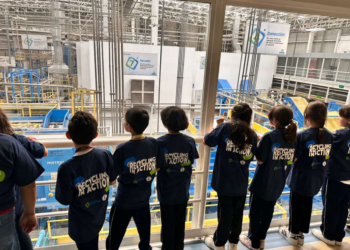
Packaging policies require collaboration, harmonization

Packaging policies require collaboration, harmonization

2026 Buyers’ Guide

Equipment, services and technology suppliers serving the recycling industry.

Browse the Guide

More Posts

Oregon state capitol building with state flag and blue sky.

NAW appeals Oregon EPR ruling

September 25, 2026
Recyclers reeling from NJ PCR extension

Recyclers reeling from NJ PCR extension

September 23, 2026
Bin to Better gets students involved in reuse, recycling

Bin to Better gets students involved in reuse, recycling

September 24, 2026
Calif. Governor Gavin Newsom at podium.

Newsom signs battery EPR expansion, vetoes SB 54 fund bill

September 24, 2026
Bipartisan reps introduce bill on recycling claims

House passes bill to ease lithium-ion battery storage rules

September 24, 2026

Who should pay for lithium-ion battery fire damage?

September 21, 2026
Analysis: Undersupply of PCR is ‘stifling’ brand goals

US lawmakers urge protection of domestic RPET

September 25, 2026
E-scrap magnet recycling company scales up

Why only some rare-earth sources are economically viable

September 24, 2026
Bridge Green, Hartree partner on mineral processing deal

Bridge Green, Hartree partner on mineral processing deal

September 21, 2026
Industry announcements for January 2026

Industry announcements for September 2026

August 31, 2026
Load More

About & Publications

About Us

Staff

Archive

Magazines

Work With Us

Advertise
Jobs
Contact
Terms and Privacy

Newsletters

Get the latest recycling news and analysis delivered to your inbox every week. Stay ahead on industry trends, policy updates, and insights from programs, processors, and innovators.

Subscribe

Welcome Back!

Login to your account below

Forgotten Password?

Retrieve your password

Please enter your username or email address to reset your password.

Log In

Add New Playlist

No Result
View All Result
  • The Latest
  • Analysis
  • Recycling
  • E-Scrap
  • Plastics
  • Policy Now
  • Conferences
    • E-Scrap Conference
    • Plastics Recycling Conference
    • Resource Recycling Conference
    • Textiles Recovery Summit
  • Magazines
  • About Us
  • Advertise
  • Archive
  • Jobs
  • Staff
Subscribe
This website uses cookies. By continuing to use this website you are giving consent to cookies being used. Visit our Privacy and Cookie Policy.