





Resource Recycling
  • The Latest
  • Analysis
    • All
    • Certification Scorecard
    • Industry Announcements
    • Opinion
    MP Materials breaks ground on rare earth magnet campus in North Texas

    How critical mineral alliances aim to shape the future of e-scrap metals

    Certification Scorecard — Week of May 18, 2026

    Aurubis: Thefts involved scrap sample manipulation

    Metals and electronics recyclers report growth

    Plastic packaging

    Why SB 54 source reduction planning is becoming the industry’s most challenging EPR test

    Recycler cites market pressure in short-term closure

    AI, data anxiety push enterprises to destroy working devices: report

    Before the Bin: America’s textile waste problem starts in your closet

  • Conferences
    • Resource Recycling Conference
    • Plastics Recycling Conference
    • E-Scrap: The Longevity Conference
    • Textiles Recovery Summit
  • Publications
    • E-Scrap News
    • Plastics Recycling Update
    • Policy Now
    • Resource Recycling
    • Other Topics
      • Brand Owners
      • Critical Minerals
      • Glass
      • Grant Watch
      • Markets
      • Organics
      • Packaging
      • Research
      • Technology
      • Textiles
      • All Topics
Subscribe
No Result
View All Result
Resource Recycling
  • The Latest
  • Analysis
    • All
    • Certification Scorecard
    • Industry Announcements
    • Opinion
    MP Materials breaks ground on rare earth magnet campus in North Texas

    How critical mineral alliances aim to shape the future of e-scrap metals

    Certification Scorecard — Week of May 18, 2026

    Aurubis: Thefts involved scrap sample manipulation

    Metals and electronics recyclers report growth

    Plastic packaging

    Why SB 54 source reduction planning is becoming the industry’s most challenging EPR test

    Recycler cites market pressure in short-term closure

    AI, data anxiety push enterprises to destroy working devices: report

    Before the Bin: America’s textile waste problem starts in your closet

  • Conferences
    • Resource Recycling Conference
    • Plastics Recycling Conference
    • E-Scrap: The Longevity Conference
    • Textiles Recovery Summit
  • Publications
    • E-Scrap News
    • Plastics Recycling Update
    • Policy Now
    • Resource Recycling
    • Other Topics
      • Brand Owners
      • Critical Minerals
      • Glass
      • Grant Watch
      • Markets
      • Organics
      • Packaging
      • Research
      • Technology
      • Textiles
      • All Topics
Subscribe
No Result
View All Result
Resource Recycling
No Result
View All Result
Home Plastics

Bale pricing for recycled plastics diverges

Antoinette SmithbyAntoinette Smith
March 17, 2026
in Analysis, Plastics, Recycling
Groups identify recovered plastics users in the Northeast

Huguette Roe / Shutterstock

Editor’s note: Due to the sensitive nature of industry relationships, market sources may be granted anonymity to provide candid assessments. If you would like your views to be reflected, please contact [email protected], and note whether you would like identifying information to be anonymized.

  • PET bale prices effectively negative
  • Landfilling questions arise
  • HDPE, PP bale pricing firms

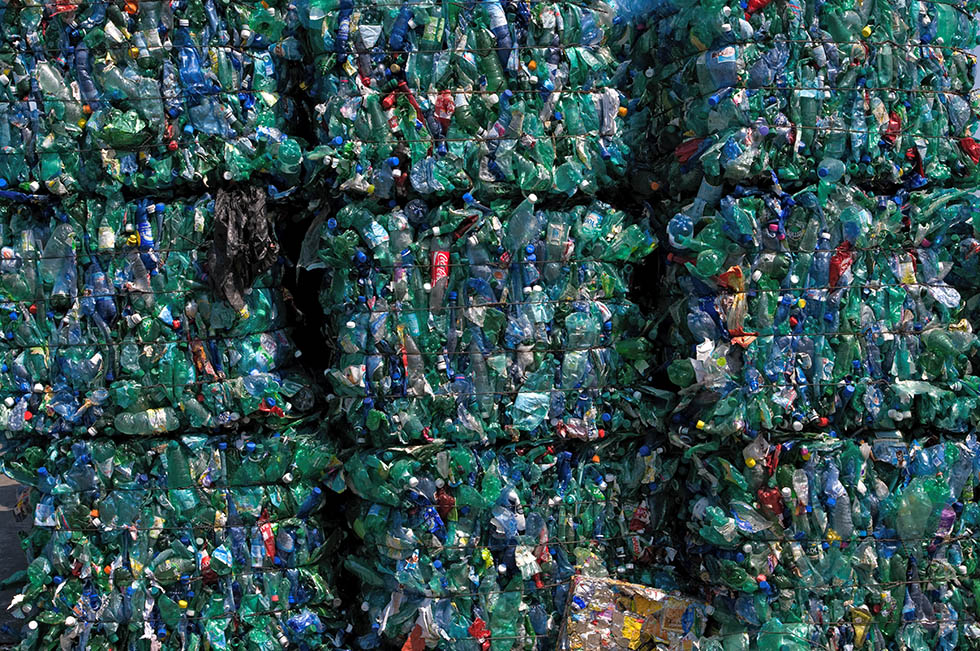
In mid-March, when pricing for post-consumer plastics bales typically starts ticking up with seasonal demand, several grades are seeing divergent trends, with PET bales searching for a bottom and polyolefins on the rise. 

Even as freight costs soar, curbside PET bottle bale values have plummeted in recent weeks, with the national average under 2 cents/lb picked up (ex-works), and the average for the Northeastern US moving close to zero, according to RecyclingMarkets.Net data. 

To start the year, bale prices for Northeast PET bales were at 6-7 cents/lb after several weeks of stability. But Alpek’s late January announcement that it would close its Pennsylvania RPET plant sent prices falling even further from historic lows. 

“With fewer end markets and rising logistics challenges, PET is under severe pressure,” said Sanjay Bhura, of exporter Sigma Recycling.

In early March, regional PET bale prices were lowest in the Northeast and Midwest, reflecting capacity closures from reclaimers including Evergreen Recycling in Ohio and New York, a Phoenix Technologies facility in Ohio, and Alpek in Pennsylvania.  

MRFs that sort and sell most bales have finite storage space, and recycling volumes continue arriving regardless of offtake. Unlike virgin plastics producers, municipal sorting facilities cannot simply reduce operating rates. 

“For many MRFs and recyclers, the biggest priority has become creating space in their facilities,” Bhura said. “That means selling material at the lowest possible prices — and in some cases even at negative values — just to keep material moving.”

Availability of cargo ships for exports also may be constrained, cutting off another avenue for US material. On March 13, global shipping company Maersk suspended bookings to and from the United Arab Emirates, Iraq, Kuwait, Qatar, Salalah in Oman, and Bahrain. 

The company is accepting bookings from Sohar in Oman, Jeddah and King Abdullah ports in Saudi Arabia, Khor Fakkan in UAE, Lebanon and Israel, however.

Will domestic production increase?

Negative bale pricing could ultimately benefit recyclers, as pricing for virgin PET as well as imported RPET is pressured up with increases in crude oil and freight rates.

“I think bales will be competitive pretty quickly, as flake, virgin and repro is going up quickly,” said James Derrico, vice president of new business at distributor Cellmark. “You’re also going to see increased steamship line rates, making domestic PET a better value proposition for domestic consumers.” He added that most shipping lines have nominated general rate increases (GRIs) for April, and “some are pretty significant.”

Alexandra Tennant, executive director of global recycled plastics at Chemical Market Analytics from OPIS, a Dow Jones company, said the question is really what it would take to restart idled RPET capacity — or more likely, increase utilization at plants that are still operational.

She said that a sharp increase in demand for domestic RPET would likely require a global supply disruption for PET resin in tandem with the ability for RPET to be cost-competitive with virgin and/or imported resin. 

The landfill conundrum

While some municipal contracts restrict landfilling of recycled commodities, in other cases landfill fees may be less expensive than paying buyers to take bales. The challenge may be in deciding which is the better of two unattractive options: negative values that may or may not allow domestic reclaimers to compete with importers, or landfill the material for less. 

“I haven’t seen anyone landfilling yet but we are certainly seeing large volumes getting backed up in less desirable freight locations,” Derrico said.

However, with oil prices increasing quickly, virgin PET made with oil derivatives could become more expensive as well, and imports would be subject to rising deep-sea freight rates and delays. This could make rPET more attractive and economical for converters who can quickly and easily make the substitution.

Polyolefins on the rise

The late February winter storm in the Northeastern US has caused supply interruptions for HDPE natural bales, due to delays in collecting curbside recycling after 1 to 3 feet of snow dumped over the region. 

The national average pricing for HDPE natural bales rose by 15% over the past month, buoyed by significant increases in the Northeast, Midwest and Southern US, according to RecyclingMarkets.Net data.

Polypropylene bale prices continued to climb upward east of the Rocky Mountains, in regions closest to most PP recyclers. Drivers for the higher pricing were heard to be upcoming capacity increases in the southern tier of the country, as well as the inconsistent presence of a major buyer. 

Tags: HDPEMarketsPET
TweetShare
Antoinette Smith

Antoinette Smith

Antoinette Smith has been at Resource Recycling Inc., since June 2024, after several years of covering commodity plastics and supply chains, with a special focus on economic impacts. She can be contacted at [email protected].

Related Posts

EPR rules take shape in Oregon, as first test

Oregon OKs end-market verification from CAA

byStefanie Valentic
May 20, 2026

The state's Department of Environmental Quality has given the stamp of approval on CAA's Responsible End Markets program plan amendment.

Aurubis smelter pipe system and chimney.

Aurubis sends positive signal for metals recovery markets

byDavid Daoud
May 18, 2026

The company’s performance is often seen as a bellwether for downstream appetite for complex electronic scrap and industrial recycling feedstock.

Niagara acquires rPlanet Earth assets in California

Niagara acquires rPlanet Earth assets in California

byAntoinette Smith
May 15, 2026

Adding the Southern California facility to its operations, Niagara is expanding its beverage manufacturing operations and pursuing vertical integration.

Bottle bill backers see opportunity for action

PET collapse exposes gaps in US recycling infrastructure

byStefanie Valentic
May 15, 2026

Joaquin Mariel, Circular Services president, broke down why recycling infrastructure is so hard to scale and used PET's rapid market...

Industry descends on DC to fight for PET

Industry descends on DC to fight for PET

byAntoinette Smith
May 13, 2026

Amid numerous recent hits to the common packaging plastic, a stakeholder coalition is engaging with policy makers to encourage policy...

Extruder pushes out natural HDPE pellets at KW Plastics in Troy, Alabama.

Rare look inside the world’s largest plastics recycler

byBrian Clark Howard
May 13, 2026

KW Plastics in Troy, Alabama is a leading recycler of PP and HDPE—here’s a glimpse behind the gates.

Load More
Next Post
Minnesota EPR program advances in budget bill

AF&PA seeks injunction on Oregon EPR, defends paper recycling

More Posts

Bottle bill backers see opportunity for action

PET collapse exposes gaps in US recycling infrastructure

May 15, 2026
Revised CA budget includes $200m for recycling

Revised CA budget includes $200m for recycling

May 20, 2026
Plastic packaging

Why SB 54 source reduction planning is becoming the industry’s most challenging EPR test

May 19, 2026

Before the Bin: America’s textile waste problem starts in your closet

May 19, 2026
Aurubis: Thefts involved scrap sample manipulation

Metals and electronics recyclers report growth

May 20, 2026
Niagara acquires rPlanet Earth assets in California

Niagara acquires rPlanet Earth assets in California

May 15, 2026
Industry descends on DC to fight for PET

Industry descends on DC to fight for PET

May 13, 2026
Recycler cites market pressure in short-term closure

AI, data anxiety push enterprises to destroy working devices: report

May 19, 2026
Retail aisle with paper and plastic packaging.

Loblaw’s recyclability push could reshape packaging design across North America

May 14, 2026

Price increases help end user offset higher OCC

December 10, 2024
Load More

About & Publications

About Us

Staff

Archive

Magazine

Work With Us

Advertise
Jobs
Contact
Terms and Privacy

Newsletter

Get the latest recycling news and analysis delivered to your inbox every week. Stay ahead on industry trends, policy updates, and insights from programs, processors, and innovators.

Subscribe

Welcome Back!

Login to your account below

Forgotten Password?

Retrieve your password

Please enter your username or email address to reset your password.

Log In

Add New Playlist

No Result
View All Result
  • The Latest
  • Analysis
  • Recycling
  • E-Scrap
  • Plastics
  • Policy Now
  • Conferences
    • E-Scrap Conference
    • Plastics Recycling Conference
    • Resource Recycling Conference
    • Textiles Recovery Summit
  • Magazine
  • About Us
  • Advertise
  • Archive
  • Jobs
  • Staff
Subscribe
This website uses cookies. By continuing to use this website you are giving consent to cookies being used. Visit our Privacy and Cookie Policy.