




Resource Recycling
  • The Latest
  • Analysis
    • All
    • Certification Scorecard
    • Industry Announcements
    • Opinion
    Rainforest

    Inside the Circle: What the rainforest can teach us about EPR

    Closeup of a printed circuitboard

    Hardware demand puts new focus on parts harvesting

    Rare look inside the world’s largest plastics recycler

    Mass balance matters: Why different rules can lead to different outcomes 

    Certification Scorecard — Week of June 1, 2026

    IT asset disposition and electronics recycling: Now and then

    $60 billion in AI servers will create an ITAD challenge

    The independent ITAD at a crossroads

    DMD acquires ITAD firm Lifespan, outlines acquisition strategy

  • Conferences
    • Resource Recycling Conference
    • Plastics Recycling Conference
    • E-Scrap: The Longevity Conference
    • Textiles Recovery Summit
  • Publications
    • E-Scrap News
    • Plastics Recycling Update
    • Policy Now
    • Resource Recycling
    • Other Topics
      • All Topics
      • Brand Owners
      • Critical Minerals
      • Glass
      • Grant Watch / RFPs
      • Markets
      • Organics
      • Packaging
      • Research
      • Technology
      • Textiles
Subscribe
No Result
View All Result
Resource Recycling
  • The Latest
  • Analysis
    • All
    • Certification Scorecard
    • Industry Announcements
    • Opinion
    Rainforest

    Inside the Circle: What the rainforest can teach us about EPR

    Closeup of a printed circuitboard

    Hardware demand puts new focus on parts harvesting

    Rare look inside the world’s largest plastics recycler

    Mass balance matters: Why different rules can lead to different outcomes 

    Certification Scorecard — Week of June 1, 2026

    IT asset disposition and electronics recycling: Now and then

    $60 billion in AI servers will create an ITAD challenge

    The independent ITAD at a crossroads

    DMD acquires ITAD firm Lifespan, outlines acquisition strategy

  • Conferences
    • Resource Recycling Conference
    • Plastics Recycling Conference
    • E-Scrap: The Longevity Conference
    • Textiles Recovery Summit
  • Publications
    • E-Scrap News
    • Plastics Recycling Update
    • Policy Now
    • Resource Recycling
    • Other Topics
      • All Topics
      • Brand Owners
      • Critical Minerals
      • Glass
      • Grant Watch / RFPs
      • Markets
      • Organics
      • Packaging
      • Research
      • Technology
      • Textiles
Subscribe
No Result
View All Result
Resource Recycling
No Result
View All Result
Home Recycling

Safety in focus: Rising fire risks complicate safety gains

byPaul Lane
March 23, 2026
in Recycling
Safety in focus: Rising fire risks complicate safety gains

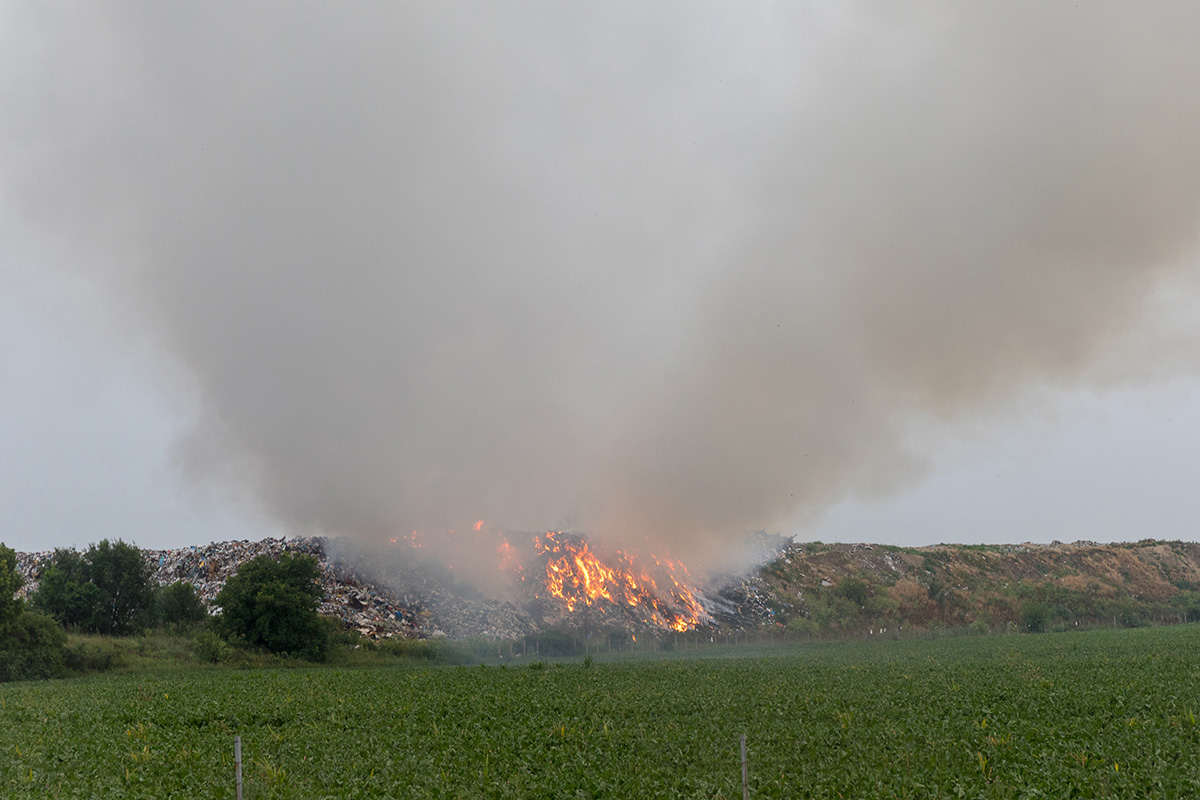
Baloncici / Shutterstock

Editor’s note: This article is the second installment in a three-part series on evolving safety threats facing waste and recycling industry workers. Read part one here. Read part two here.

Global researchers seem to agree that waste pickers in developing countries face hardships not seen in first-world countries, but support mechanisms to keep them safer have been slow to develop.

Numerous studies have been done on the subject. Among them:

●  The National Institutes of Health (NIH) found waste pickers in South Africa had far more dermatological and gastrointestinal issues than their non-picking countrymen, and more than half had visited a hospital within the past year.

●  A study published in Sustainability Science, Practice and Policy found a lack of formalized collection methods in Chile led to haphazard safety standards and labor practices that were inconsistent, at best.

●  One of numerous reports from the International Labour Organization (ILO) found that, among other things, waste workers in developing nations such as Zimbabwe, Indonesia and Honduras are much more likely to be self-employed than working for a company or person, leading to a lack of regulation and social protection.

The industry isn’t slowing down; global waste collection is expected to grow 70% by 2050 to 3.4 billion tons, according to the World Bank. But the efforts of companies and governments to adequately train and protect these workers isn’t keeping pace, according to Valentina Stoevska, senior statistician in the ILO’s Department of Statistics.

“The average person may underestimate the cumulative health risks associated with waste collection in developing countries,” she said. “Beyond immediate physical injuries, workers face long-term exposure to hazardous chemicals, smoke from open burning and unsanitary conditions that can lead to chronic respiratory illnesses, infections and musculoskeletal disorders. The lack of access to health care exacerbates these risks, making even minor injuries potentially life-threatening.”

Regulatory intervention could help mitigate the risk, but leaders in developing countries often don’t prioritize it. In a brief written by Stoevska’s ILO colleagues, Anna Barford and Annabel Beales found recycling workers in these nations lack access to organized, formal training.

A lack of infrastructure investment contributed to a more informal network, with individuals learning the trade from and then working with family members rather than a proper organization. That, in turn, contributes to a lack of safety compliance – which often lacks sufficient government enforcement even when it’s monitored – and puts recycling enterprises at a disadvantage.

“Competition with the informal economy and the shortage of skilled labor may constrain their ability to expand operations and meet higher environmental and labor standards,” the authors wrote.

So can a lack of access to even basic supplies. The NIH found many waste pickers in developing nations don’t have adequate support, collection infrastructure or personal protective equipment. NIH investigators found numerous landfill sites where no workers wore eye goggles, as one example.

Governments and companies can do their part for formally recognizing waste pickers and integrating them into public waste management systems, Stoevska said. The Fair Circularity Initiative estimates 80% of waste pickers in developing nations operate informally, leaving them without the protections and privileges that come with formal employment.

“As the workforce grows, governments and companies can play a key role by formally recognizing waste pickers, integrating them into public waste management systems and enforcing minimum (occupational safety and health) standards,” Stoevska said. “Practical measures include equipment, training, access to health care and fair remuneration, as well as investing in safer collection infrastructure.”

Such an infrastructure could help the estimated 15 million waste pickers in developing nations (according to the World Bank) achieve a better, safer future. Stoevska said people on both sides can take steps for improvement – workers by organizing and governments by recognizing and supporting those who help clean their streets.

“Successful initiatives often involve cooperative models, capacity-building and inclusion in extended producer responsibility schemes,” she said.


Tags: CollectionSafety
TweetShare
Paul Lane

Paul Lane

Paul Lane joined Resource Recycling in June 2026 after working for several years in corporate communications and at various local news outlets. He can be reached at [email protected].

Related Posts

Three-bill package aims to revamp Michigan’s bottle return system

byStefanie Valentic
June 9, 2026

Michigan lawmakers introduced a bipartisan three-bill package aimed at strengthening consumer access to bottle deposit refunds and clarifying retailer obligations...

Battery fires still a major risk to recyclers: report

byPaul Lane
June 9, 2026

The June fire report from Ryan Fogelman shows there were 40 incidents in May at facilities in the United States...

NYC, Mack Trucks unveil winning artwork

NYC, Mack Trucks unveil winning artwork

byAntoinette Smith
June 4, 2026

The five new hand-painted waste collection trucks feature themes of honor, resilience and care, and will operate in the city's...

Fire at an EMR recycling facility in Camden, New Jersey May 29, 2026.

EMR faces shutdown calls after numerous fires

byBrian Clark Howard
June 2, 2026

A fire at a facility in Camden, New Jersey, has raised fresh questions on recycler safety and lithium ion batteries.

Q1 containerboard exports drop by 19%

What SB 54 looks like from the packaging floor

byStefanie Valentic
June 1, 2026

With compliance deadlines coming on quickly, smaller companies are struggling to absorb changes and stay on the right side of...

Machinex

Longview mill tragedy raises broader questions for fiber, recycling sectors

byKeith Loria
May 29, 2026

A deadly explosion at Nippon Dynawave Packaging’s Longview, Washington plant prompts new questions for the pulp, paper and packaging industries.

Load More
Next Post
Envela reports stronger Q3 ITAD revenues

Top 5 reasons for the rise of US e-scrap recycling

More Posts

Recycling industry addresses Beyond Plastics report

Recycling industry addresses Beyond Plastics report

May 26, 2026
Fire at an EMR recycling facility in Camden, New Jersey May 29, 2026.

EMR faces shutdown calls after numerous fires

June 2, 2026
House resolution aims to make recyclability central to product design

NY EPR bill fails to advance after third try

June 8, 2026
IT asset disposition and electronics recycling: Now and then

$60 billion in AI servers will create an ITAD challenge

June 3, 2026
CalRecycle withdraws proposed regs for SB 54

Oceana, NRDC, CAW sue CalRecycle over SB 54 regs

June 5, 2026
The independent ITAD at a crossroads

DMD acquires ITAD firm Lifespan, outlines acquisition strategy

June 2, 2026
Our top stories from June 2021

Colorado advances EV battery EPR law

June 3, 2026
In My Opinion: Comparing the nation’s first packaging EPR laws

What Maine’s vape EPR law means for recyclers

June 4, 2026
Circular Materials to supply PlasCred chem recycling plant

Circular Materials to supply PlasCred chem recycling plant

June 4, 2026
Rare look inside the world’s largest plastics recycler

Mass balance matters: Why different rules can lead to different outcomes 

June 5, 2026
Load More

About & Publications

About Us

Staff

Archive

Magazine

Work With Us

Advertise
Jobs
Contact
Terms and Privacy

Newsletter

Get the latest recycling news and analysis delivered to your inbox every week. Stay ahead on industry trends, policy updates, and insights from programs, processors, and innovators.

Subscribe

Welcome Back!

Login to your account below

Forgotten Password?

Retrieve your password

Please enter your username or email address to reset your password.

Log In

Add New Playlist

No Result
View All Result
  • The Latest
  • Analysis
  • Recycling
  • E-Scrap
  • Plastics
  • Policy Now
  • Conferences
    • E-Scrap Conference
    • Plastics Recycling Conference
    • Resource Recycling Conference
    • Textiles Recovery Summit
  • Magazine
  • About Us
  • Advertise
  • Archive
  • Jobs
  • Staff
Subscribe
This website uses cookies. By continuing to use this website you are giving consent to cookies being used. Visit our Privacy and Cookie Policy.