





Resource Recycling
  • The Latest
  • Analysis
    • All
    • Certification Scorecard
    • Industry Announcements
    • Opinion
    NJ’s PCR delay risks making its own excuse permanently true

    NJ’s PCR delay risks making its own excuse permanently true

    E-scrap magnet recycling company scales up

    Why only some rare-earth sources are economically viable

    e-Stewards to develop an ITAD-specific standard

    Certification scorecard — week of Sept. 21

    Who should pay for lithium-ion battery fire damage?

    America’s critical-materials buildout has a feedstock problem

    Certification scorecard – week of Sept. 14

  • Conferences
    • Resource Recycling Conference
    • Plastics Recycling Conference
    • E-Scrap: The Longevity Conference
    • Textiles Recovery Summit
  • Publications
    • E-Scrap News
    • Plastics Recycling Update
    • Policy Now
    • Resource Recycling
    • Other Topics
      • All Topics
      • Brand Owners
      • Critical Minerals
      • Glass
      • Grant Watch / RFPs
      • Markets
      • Organics
      • Packaging
      • Research
      • Technology
      • Textiles
Subscribe
No Result
View All Result
Resource Recycling
  • The Latest
  • Analysis
    • All
    • Certification Scorecard
    • Industry Announcements
    • Opinion
    NJ’s PCR delay risks making its own excuse permanently true

    NJ’s PCR delay risks making its own excuse permanently true

    E-scrap magnet recycling company scales up

    Why only some rare-earth sources are economically viable

    e-Stewards to develop an ITAD-specific standard

    Certification scorecard — week of Sept. 21

    Who should pay for lithium-ion battery fire damage?

    America’s critical-materials buildout has a feedstock problem

    Certification scorecard – week of Sept. 14

  • Conferences
    • Resource Recycling Conference
    • Plastics Recycling Conference
    • E-Scrap: The Longevity Conference
    • Textiles Recovery Summit
  • Publications
    • E-Scrap News
    • Plastics Recycling Update
    • Policy Now
    • Resource Recycling
    • Other Topics
      • All Topics
      • Brand Owners
      • Critical Minerals
      • Glass
      • Grant Watch / RFPs
      • Markets
      • Organics
      • Packaging
      • Research
      • Technology
      • Textiles
Subscribe
No Result
View All Result
Resource Recycling
No Result
View All Result
Home E-Scrap

Glasgow researchers develop compostable circuit boards

byScott Snowden
February 3, 2026
in E-Scrap

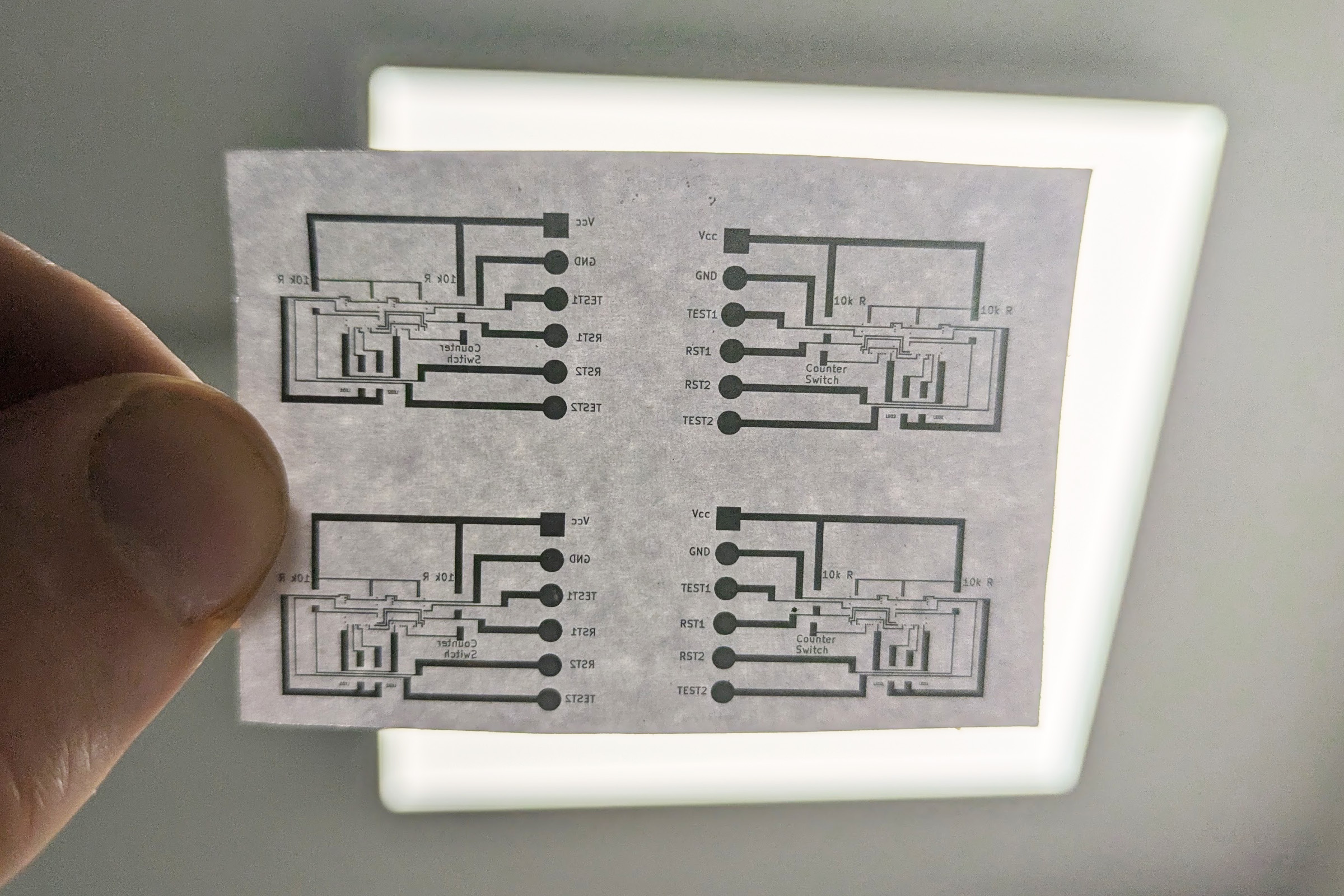
An example of a printed circuit board built using biodegradable materials and zinc conductors, designed to function like a PCB before breaking down naturally without leaving hazardous elements behind so | Courtesy of Jon Harwell

Researchers at the University of Glasgow have developed a printed circuit board (PCB) designed to do something most electronics never do: break down safely after doing its job.

The PCBs are not aimed at the phones, laptops and other long-life devices people may picture when they think about electronic waste. Instead, the technology targets a fast-growing category of devices built to be used briefly and discarded, often without any realistic path to recycling.

“People sometimes ask why you would want a biodegradable phone,” said Jonathon Harwell, lead author of a study. “The answer is that you do not. For high-end devices, extending the lifetime and recycling components is far better. This is about the things that are never reused or realistically recycled in the first place.”

Those products include disposable test kits, smart packaging and short-term sensors, Harwell said. He pointed to digital pregnancy tests as a clear example. The electronics inside can be simple, but the product is used once and thrown away, and is ill-suited for recycling systems.

“It’s things where recycling is not practical,” he said of potential applications for the technology.

Conventional PCBs are typically built on fiberglass-resin materials known as FR4, with copper used as the main conductor. The researchers’ paper notes that circuit board assemblies are hard to recycle because they combine many different metallic and nonmetallic materials and because the substrate itself makes up much of the weight while being difficult to process.

The research team’s approach replaces both major elements of a traditional board. The substrate can be made from biodegradable materials including paper, cellulose-based films or biodegradable plastics. The conductor is zinc rather than copper, chosen because it can provide high performance while offering a more biocompatible profile than many other metals.

Harwell said the team initially considered carbon-based materials often used in PCBs, but their conductivity was far below what would be needed to compete with conventional circuit boards. Zinc, he said, was one of the few options that could plausibly deliver the kind of electrical performance modern electronics require.

The key challenge was manufacturing. Many biodegradable materials are fragile and typical circuit fabrication processes can be harsh. The Glasgow method starts by electroplating zinc onto a temporary aluminum carrier, patterning it into a circuit layout, then transferring it into a biodegradable substrate while the substrate is processed as a liquid film. The result is metal circuitry embedded in the finished material.

The paper reports the technique can achieve conductive tracks as narrow as 5 micrometers (0.005 millimeters) and a shelf life of more than one year under normal storage conditions. The researchers demonstrated the circuits in several working devices including tactile sensors, LED counters and temperature sensors, and the study describes performance that approaches conventional circuit boards.

The boards are meant to last while they are kept dry, Harwell said, and degrade once exposed to conditions that encourage breakdown.

“If you keep them dry, as far as we can tell, they last for as long as you want,” he said. “But the more you protect them from water, the less biodegradable you make it. That tradeoff is why we’re only aiming for disposable-type products.”

The paper frames the work against the scale of electronic waste, citing global e-waste generation of more than 68.3 million tons in 2024 and noting the difficulty of keeping recycling systems ahead of growing volumes. It also cites European Union estimates that less than 17% of end-of-life printed circuit board assemblies are recycled.

A life cycle assessment included in the paper compared a zinc-based board made with the new method to a conventional fiberglass-copper board of the same size and track layout. The researchers reported a 79% reduction in global warming potential for the zinc-based option, driven by differences in materials and manufacturing as well as end-of-life treatment assumptions.

Harwell noted that biodegradability should not be mistaken for a universal answer to e-waste. For devices meant to last, he said the priority should remain repair, reuse and conventional recycling.

But for items that are effectively destined for the trash, he said, making the circuit board itself safely degradable could reduce the harm caused by disposal, while still keeping performance within what manufacturers expect.


TweetShare
Scott Snowden

Scott Snowden

Scott has been a reporter for over 25 years, covering a diverse range of subjects from sub-atomic cold fusion physics to scuba diving off the Great Barrier Reef. He's now deeply invested in the world of recycling, green tech and environmental preservation.

Related Posts

Newsom nixes recycled content claims bill

Newsom nixes recycled content claims bill

byAntoinette Smith
September 28, 2026

Supporters of AB 2253 said the bill would address greenwashing, while opponents said it demonized mass-balance accounting and didn't reflect...

NJ’s PCR delay risks making its own excuse permanently true

NJ’s PCR delay risks making its own excuse permanently true

byEdward Kosior
September 28, 2026

In this editorial, Prof. Edward Kosior explores how policy uncertainty discourages investment and risks destroying existing recycling capacity.

trash bags

Sorted: Should we use recycled trash bags?

byBrian Clark Howard
September 28, 2026

Manufacturers’ resistance is rooted in performance and cost, but the products may have an important role to play.

Analysis: Undersupply of PCR is ‘stifling’ brand goals

US lawmakers urge protection of domestic RPET

byAntoinette Smith
September 25, 2026

In a letter to the US Trade Representative, five representatives asked the USTR to consider trade remedies and support verification...

Oregon state capitol building with state flag and blue sky.

NAW appeals Oregon EPR ruling

byStefanie Valentic
September 25, 2026

NAW is challenging an Oregon judge's ruling in favor of the state's extended producer responsibility law.

Cutting healthcare plastics could save $18B

Report provides path to reduce medical e-scrap

byPaul Lane
September 25, 2026

The European report found that circularity in medical devices is possible through several potential initiatives.

Load More
Next Post

UT Austin spinout Supra launches to recover rare earths

2026 Buyers’ Guide

Equipment, services and technology suppliers serving the recycling industry.

Browse the Guide

More Posts

Oregon state capitol building with state flag and blue sky.

NAW appeals Oregon EPR ruling

September 25, 2026
Analysis: Undersupply of PCR is ‘stifling’ brand goals

US lawmakers urge protection of domestic RPET

September 25, 2026
Recyclers reeling from NJ PCR extension

Recyclers reeling from NJ PCR extension

September 23, 2026
Jeff Fielkow and the startup that’s building the US packaging EPR system

Jeff Fielkow and the startup that’s building the US packaging EPR system

September 10, 2026
Calif. Governor Gavin Newsom at podium.

Newsom signs battery EPR expansion, vetoes SB 54 fund bill

September 24, 2026
Bipartisan reps introduce bill on recycling claims

House passes bill to ease lithium-ion battery storage rules

September 24, 2026
Spin-off lets Linca focus on battery mineral recovery

Critical mineral policy shift creates opportunity

September 14, 2026
New Jersey pushes back PCR mandate to 2030

New Jersey pushes back PCR mandate to 2030

September 10, 2026
Newsom nixes recycled content claims bill

Newsom nixes recycled content claims bill

September 28, 2026
trash bags

Sorted: Should we use recycled trash bags?

September 28, 2026
Load More

About & Publications

About Us

Staff

Archive

Magazines

Work With Us

Advertise
Jobs
Contact
Terms and Privacy

Newsletters

Get the latest recycling news and analysis delivered to your inbox every week. Stay ahead on industry trends, policy updates, and insights from programs, processors, and innovators.

Subscribe

Welcome Back!

Login to your account below

Forgotten Password?

Retrieve your password

Please enter your username or email address to reset your password.

Log In

Add New Playlist

No Result
View All Result
  • The Latest
  • Analysis
  • Recycling
  • E-Scrap
  • Plastics
  • Policy Now
  • Conferences
    • E-Scrap Conference
    • Plastics Recycling Conference
    • Resource Recycling Conference
    • Textiles Recovery Summit
  • Magazines
  • About Us
  • Advertise
  • Archive
  • Jobs
  • Staff
Subscribe
This website uses cookies. By continuing to use this website you are giving consent to cookies being used. Visit our Privacy and Cookie Policy.