






Editor’s note: Due to the sensitive nature of industry relationships, market sources may be granted anonymity to provide candid assessments. If you would like your views to be reflected, please contact antoinette@dev.resource-recycling.com, and note whether you would like identifying information to be anonymized.
- Diesel fuel costs rise
- Domestic drivers more selective
- EIA forecasts oil turmoil to continue
The three-week-old war in Iran is increasing the pain in domestic recycling markets, as players wrestle with resultant increases in transportation costs.
US and Israeli strikes in Iran and the subsequent blockade of the Strait of Hormuz – a critical waterway for energy shipments including oil and natural gas – have pushed crude oil prices higher by about 60% since mid-February.
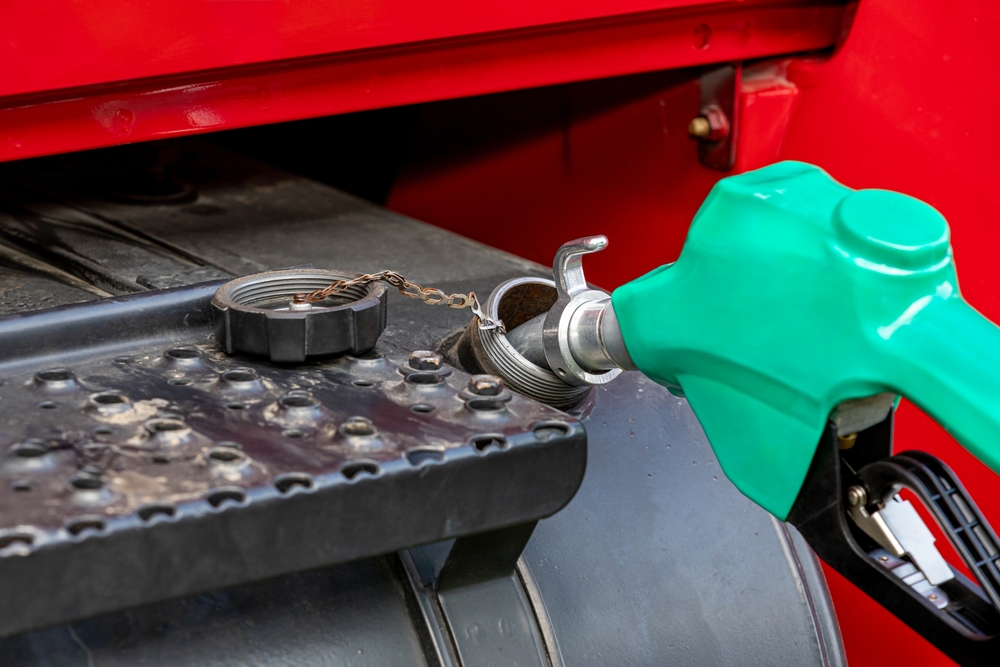
This has pushed fuel prices, including diesel used in trucking, higher by 10-20%, on top of costs that were trending upward even before the war started, said James Derrico, vice president of new business at distributor Cellmark. The company trades in post-consumer packaging bales as well as plastic resins and other commodities.
A recycling industry veteran, who was granted anonymity due to the sensitivity of market relationships, said the increased trucking costs are putting additional pressure on the recycling sector, “which is already in a very bad position.”
Scott Saunders, general manager of recycling at KW Plastics, agreed that the rising logistics costs are exacerbating an already difficult marketplace.
Most freight carriers have a fuel surcharge built into their rate, and it fluctuates with the price of diesel fuel, so KW’s freight costs have increased recently. In addition, some of KW’s suppliers have raised freight rates on top of the variations in fuel surcharges, Saunders said. “So that’s pretty tough, because most of our customers have spent the last two years demanding decreases at a time where our costs continue to go up.”
KW’s sister company Wiley Sanders Truck Lines has first right of refusal on KW shipments, Saunders said. However, as a separate business entity, “they treat us like any other customer,” he said.
Like many factors over the past year, the war in Iran is a wild card. “You’re seeing some oil spikes over this war, but all that can end overnight,” Saunders said. “And then once that’s over, stuff starts moving again. There’s no support to hold the price up, so you see a big collapse.”
Even firms with access to their own logistics services – for example, PolyQuest acquired Baker Transportation in 2023 – are unlikely to use their own network to service distant mills, Derrico said. “If you were local to Dallas you would use your fleet to Indorama in Texas, but if you’re in Chicago going to Dallas you will be subject to whatever the market price is for freight,” he said.
Drivers also have become more selective about accepting loads, several sources said, especially from locations that may not offer a return load, or backhaul, which significantly reduces the potential income but still incurs fuel costs.
Chris Goger, senior director of recycling at brokerage Blackbridge Recycling, agreed that rising logistics costs have only added pressure. Even so, “the bigger issue right now is the lack of capacity and orders for PET, which makes consistent movement challenging,” he said.
Ultimately, the most recent developments have reinforced the impossibility of making even short-term plans, with US policy and geopolitical events potentially shifting frequently and unpredictably. “We’ve just got to do it day by day,” Saunders said.
Oil turmoil expected to continue
In its most recent Short-Term Energy Outlook, published March 10, the US Energy Information Administration (EIA) forecast that the Brent crude oil price – the global oil benchmark, while West Texas Intermediate (WTI) is the standard in the US – would remain above $95/barrel over the next two months, before falling below $80/barrel in the third quarter of 2026 and around $70/barrel by the end of the year. However, the forecast hinges on assumptions EIA uses in its modeling, as far as the duration of the war as well as the resulting outages in oil production.
The EIA expects oil production in the Middle East to decrease further in the coming weeks, though this shut-in production is expected to gradually ease as transit through the Strait of Hormuz resumes.
The EIA also expects the higher oil prices to lead to more US crude oil production, averaging 13.6 million barrels/day in 2026 and rise to 13.8 million in 2027. The Baker Hughes rig count showed 553 wells operating in the US, higher by 2 on the week but lower by 39 from a year ago.