




Resource Recycling
  • The Latest
  • Analysis
    • All
    • Certification Scorecard
    • Industry Announcements
    • Opinion
    SERI works to restore faith in certifications

    Building a defensible E-scrap evidence file

    tires

    The most important decision in tire recycling happens before the shredder

    Intel sign outside of company building.

    Intel’s CapEx tops $20B on server demand while PC volume shrinks

    Google sign on company building with blue sky and clouds above.

    Inside Alphabet’s Q2 results: More capital spending and cloud backlog

    Alpek closing Pennsylvania RPET plant

    Alpek seizing on war-related opportunity 

    Our top stories from March 2023

    Iron Mountain’s data center report: Strong on power, quiet on hardware

  • Conferences
    • Resource Recycling Conference
    • Plastics Recycling Conference
    • E-Scrap: The Longevity Conference
    • Textiles Recovery Summit
  • Publications
    • E-Scrap News
    • Plastics Recycling Update
    • Policy Now
    • Resource Recycling
    • Other Topics
      • All Topics
      • Brand Owners
      • Critical Minerals
      • Glass
      • Grant Watch / RFPs
      • Markets
      • Organics
      • Packaging
      • Research
      • Technology
      • Textiles
Subscribe
No Result
View All Result
Resource Recycling
  • The Latest
  • Analysis
    • All
    • Certification Scorecard
    • Industry Announcements
    • Opinion
    SERI works to restore faith in certifications

    Building a defensible E-scrap evidence file

    tires

    The most important decision in tire recycling happens before the shredder

    Intel sign outside of company building.

    Intel’s CapEx tops $20B on server demand while PC volume shrinks

    Google sign on company building with blue sky and clouds above.

    Inside Alphabet’s Q2 results: More capital spending and cloud backlog

    Alpek closing Pennsylvania RPET plant

    Alpek seizing on war-related opportunity 

    Our top stories from March 2023

    Iron Mountain’s data center report: Strong on power, quiet on hardware

  • Conferences
    • Resource Recycling Conference
    • Plastics Recycling Conference
    • E-Scrap: The Longevity Conference
    • Textiles Recovery Summit
  • Publications
    • E-Scrap News
    • Plastics Recycling Update
    • Policy Now
    • Resource Recycling
    • Other Topics
      • All Topics
      • Brand Owners
      • Critical Minerals
      • Glass
      • Grant Watch / RFPs
      • Markets
      • Organics
      • Packaging
      • Research
      • Technology
      • Textiles
Subscribe
No Result
View All Result
Resource Recycling
No Result
View All Result
Home E-Scrap

OEM group crafts national CRT funding proposal

Colin StaubbyColin Staub
November 1, 2018
in E-Scrap
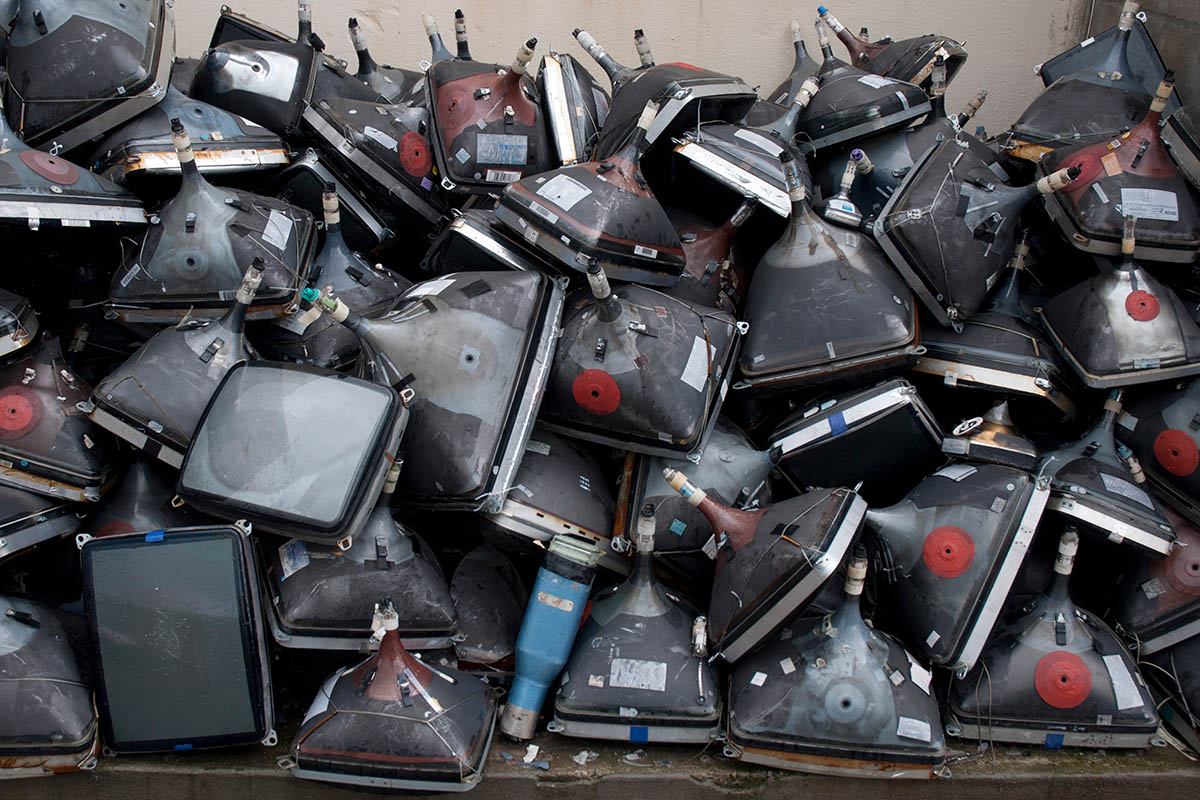
A pile of CRTs gathered for recycling.

Electronics manufacturers are proposing a nationwide point-of-sale fee to fund recycling of CRT devices, an industry group announced last week.

The Consumer Technology Association (CTA) has developed a program that would charge consumers a point-of-sale fee on new televisions and monitors. Money collected would be used to fund recycling efforts for problematic legacy devices. Federal elected leaders would need to pass and sign legislation into law to establish the program.

During a session at the Resource Recycling Conference last week, Walter Alcorn, vice president of environmental affairs and industry sustainability at CTA, said the program would target CRT devices. The advanced fee model is different from the extended producer responsibility (EPR) programs in place in many states, Alcorn said, describing those systems as producing “kind of a hidden tax” because producers are forced to internalize the costs of program management.

Further, Alcorn noted at the Resource Recycling Conference, customers in states without electronics recycling programs may be paying for OEMs’ recycling obligations in other states due to the higher costs of products.

“The idea is to make that visible, to have everybody across the country see that they’re actually paying for recycling whenever they’re buying a new television, a new computer monitor, and then make sure that folks across the country actually would be able to access those services,” Alcorn said.

Checkoff model utilized

CRTs were targeted because of the difficulties associated with recycling them. They are occasionally stockpiled and abandoned, leaving a mess for government agencies and landlords to clean up.

“Typically what happens is a recycler gets in over their head and then walks away from the site and leaves a warehouse full of old gaylords of CRT televisions and monitors,” Alcorn explained. “That continues to be an issue.”

The stockpiling problem creates expensive cleanups. But proper recycling of CRT devices is an expensive process as well. CTA has been looking into how it could tax consumer electronics products to pay for recycling costs, Alcorn said. But in the U.S., there aren’t very many ways that industry can tax itself legally, he noted.

“As a matter of fact, typically we’re restricted from doing that by antitrust laws. It’s called collusion and price fixing,” Alcorn said. The industry can’t go out and say it’s going to raise the price of everybody’s TVs by $10, for example. “We just can’t do that.”

So the consumer electronics industry has put together a proposal that mirrors the U.S. Department of Agriculture’s “checkoff” programs. These programs collect fees from all producers of a specific commodity product. The collected funds are used to research and promote that product generally, without referencing individual brands. The goal is for each company to contribute to an effort that benefits them all. The “Got Milk” ad campaign was funded in this manner.

Fee mechanics

Under the CTA proposal, in any state that does not already have an advanced recycling fee on monitors and TVs – in other words, any state other than California – this program would charge a point-of-sale fee of $10 or less per unit. That fee, Alcorn explained, “would go to paying for the recycling of the old technology televisions and computer monitors.”

The money could be routed through the Department of Commerce, Alcorn said. Once collected, the funds would go to pay for recycling service providers, including processors and collectors.

“The idea, also, is to help take care of those abandoned warehouses of CRTs and other places where CRTs have been dumped and abandoned,” Alcorn noted, although he stressed that this effort would secure financing, but would not be a regulatory activity. Regulations would still be up to state laws and the U.S. EPA’s Resource Conservation and Recovery Act (RCRA).

Furthermore, although the funds could go toward cleanups, this wouldn’t relieve any financial or cleanup liability on the recycling company for stockpiling. And the funding program would not change anything about RCRA, the Comprehensive Environmental Response, Compensation, and Liability Act (CERCLA, also called Superfund law) or any state cleanup liability laws.

Wheels in motion

CTA is actively proposing the fee concept to lawmakers on Capitol Hill, Alcorn said, noting that a program as big as this can’t be done without a law. It’s moving into the lobbying stage currently.

“So, we’ll see,” he said to applause in the room at the Resource Recycling Conference. “I mean, you’ve got to try. If you don’t try, it’s never going to happen.”

Alcorn said the CTA thinks the proposal has a shot at passing, although he noted it might be a long shot.

As CTA is proposing it, the program would go on for seven years. The manufacturers of the products would start the program and could end it early if it’s not working as planned. A multi-stakeholder board would oversee the program, determining fee amounts, standards for recycling operators receiving the funding and distributions of money.

Photo credit: Drazah/Shutterstock
 

Tags: CRTsIndustry GroupsLegislation & Enforcement

TweetShare
Colin Staub

Colin Staub

Colin Staub was a reporter and associate editor at Resource Recycling until August 2025.

Related Posts

Spin-off lets Linca focus on battery mineral recovery

GAO: Policy, tech updates needed to bolster domestic mineral supply

byPaul Lane
July 30, 2026

Federal investigators say short- and long-term solutions are needed to decrease the nation’s reliance upon foreign-based minerals.

The State of Oregon seal at a park in Salem, Ore.

MRM bids to run Oregon EPR for second year 

byPaul Lane
July 28, 2026

The company won the competitive process for 2026, but was the only company to apply for the 2027 PRO post.

California releases deposit system update draft rules

Groups move to intervene in SB 343 lawsuit

byStefanie Valentic
July 27, 2026

Earth Island Institute and Californians Against Waste have filed to intervene in the federal lawsuit that halted enforcement of California's...

U.S. Capitol building in Washington, D.C.

House committees advance critical mineral bills

byPaul Lane
July 27, 2026

Congressional votes earlier this month advanced three bills that would expand the nation’s critical mineral recycling capabilities. A subcommittee within...

Amazon plastic use flat despite shift to paper

Amazon plastic use flat despite shift to paper

byAntoinette Smith
July 22, 2026

In its latest sustainability report, the e-commerce giant noted a decrease of less than 1% for volumes of single-use plastic...

RecyClass hits 500 EU recyclability evals

RecyClass hits 500 EU recyclability evals

byAntoinette Smith
July 21, 2026

The most recent evaluations include Avery Dennison's RFID tag for PET bottles, ahead of the first PPWR enforcement in mid-August.

Load More
Next Post
A pile of electronic scrap ready for recycling.

Sims' higher earnings came from fewer pounds

2026 Buyers’ Guide

Equipment, services and technology suppliers serving the recycling industry.

Browse the Guide

More Posts

State policy is redefining plastics recycling in the US

State policy is redefining plastics recycling in the US

February 19, 2026
California bill would set up EPR for batteries

California bill would set up EPR for batteries

May 12, 2022
Closeup of a printed circuitboard

Hardware demand puts new focus on parts harvesting

June 5, 2026
Apple store

Apple leads on inputs, faces questions on ITAD

May 1, 2026
Analysis: circular design still elusive in laptops

PC shipments grew in Q1, but questions remain

April 23, 2026

In other news: May 2, 2016

May 2, 2016

Recycled copper output climbs as market shows surplus

April 6, 2026

ITAD is moving past its adolescent phase: beyond end-of-life

June 10, 2026
Server resale values surge in AI-driven markets

Server resale values surge in AI-driven markets

January 22, 2026
TÜV rolls out traceability audits for recycled inputs

TÜV rolls out traceability audits for recycled inputs

January 14, 2026
Load More

About & Publications

About Us

Staff

Archive

Magazine

Work With Us

Advertise
Jobs
Contact
Terms and Privacy

Newsletter

Get the latest recycling news and analysis delivered to your inbox every week. Stay ahead on industry trends, policy updates, and insights from programs, processors, and innovators.

Subscribe

Welcome Back!

Login to your account below

Forgotten Password?

Retrieve your password

Please enter your username or email address to reset your password.

Log In

Add New Playlist

No Result
View All Result
  • The Latest
  • Analysis
  • Recycling
  • E-Scrap
  • Plastics
  • Policy Now
  • Conferences
    • E-Scrap Conference
    • Plastics Recycling Conference
    • Resource Recycling Conference
    • Textiles Recovery Summit
  • Magazine
  • About Us
  • Advertise
  • Archive
  • Jobs
  • Staff
Subscribe
This website uses cookies. By continuing to use this website you are giving consent to cookies being used. Visit our Privacy and Cookie Policy.