Resource Recycling
  • The Latest
  • Analysis
    • All
    • Certification Scorecard
    • Industry Announcements
    • Opinion
    NJ’s PCR delay risks making its own excuse permanently true

    NJ’s PCR delay risks making its own excuse permanently true

    E-scrap magnet recycling company scales up

    Why only some rare-earth sources are economically viable

    e-Stewards to develop an ITAD-specific standard

    Certification scorecard — week of Sept. 21

    Who should pay for lithium-ion battery fire damage?

    America’s critical-materials buildout has a feedstock problem

    Certification scorecard – week of Sept. 14

  • Conferences
    • Resource Recycling Conference
    • Plastics Recycling Conference
    • E-Scrap: The Longevity Conference
    • Textiles Recovery Summit
  • Publications
    • E-Scrap News
    • Plastics Recycling Update
    • Policy Now
    • Resource Recycling
    • Other Topics
      • All Topics
      • Brand Owners
      • Critical Minerals
      • Glass
      • Grant Watch / RFPs
      • Markets
      • Organics
      • Packaging
      • Research
      • Technology
      • Textiles
Subscribe
No Result
View All Result
Resource Recycling
No Result
View All Result
Home E-Scrap

Experts talk impact of material exports to Africa

Colin StaubbyColin Staub
February 11, 2021
in E-Scrap
Laptops stacked awaiting repair.

During a recent panel discussion, an e-scrap researcher and a journalist described the consequences of exporting electronics to developing nations. They also discussed how much of that material is reusable and how much is truly waste.

Mike Anane, an environmental journalist and activist in Ghana, and Kees Baldé, an e-scrap researcher affiliated with United Nations University (UNU), spoke during a virtual talk hosted by Netherlands-based De Balie Academie. The event was titled “What a Waste: The challenge of environmental colonialism.”

During the wide-ranging discussion – which featured additional speakers from nonprofit organizations, universities and more – Anane and Baldé delved into the notorious Agbogbloshie site in Ghana. They referenced the practice of exporting devices from North America and Europe into Africa and labeling those devices as destined for reuse.

“The fact is that the term ‘secondhand’ has been used over the years as a loophole to export nonfunctioning electronic equipment to this part of the world,” Anane said.

Anane said Ghana and Nigeria are the most prevalent areas for dumping scrap electronics, but that material also ends up in Sierra Leone, Kenya and elsewhere.

Baldé said his team conducted research to learn exactly what is actually happening on the ground with electronics shipments to Africa. In one project, a researcher inspected containers coming into a port in Nigeria, shipments that were designated as secondhand items for reuse. The goal was to determine the ratio of functional to non-functional devices and appliances being shipped with that designation.

“It turns out that around 70% of the items are still functioning, and 30% is waste, is not functioning,” Baldé said.

That project drew both criticism and praise from electronics exporting stakeholders.

Anane described research he has conducted within Ghana that found the complete opposite ratio: “Between 70 to 80% of what comes in here? Complete garbage, complete waste that cannot be used.” The remainder, he said, is functioning and can be reused.

The “secondhand” definition and how it pertains to exporting electronics is currently the subject of a proposal to change rules within the Basel Convention, a global treaty covering waste shipments.

Speakers also noted that, for devices and appliances that are indeed reused, the secondhand life span is limited.

“We should not forget that after a secondhand commodity, or a secondhand good, or a secondhand fridge is being shipped into Ghana, it will last for a couple years. It will be repaired as much as possible, but it will also become waste in that country,” Baldé said.

“In the end, it is all waste,” Anane said.

The biggest problem with devices that are shipped into Ghana and not suitable for reuse is incineration to recover metals, according to Anane.

“We are talking about the destruction of water bodies. We are talking about hazardous components, mercury, lead, from the e-waste leaching into groundwater and even surface water. We are talking about the toxic components ending up in the sea, contaminating fisheries,” he said. Such practices also harm air quality and biodiversity, Anane added.

“The environmental and public health consequences are so grave, these are the main problems,” Anane said.
 

Ousei

Tags: Repair & ReuseResearchTrade & Tariffs
TweetShare
Colin Staub

Colin Staub

Colin Staub was a reporter and associate editor at Resource Recycling until August 2025.

Related Posts

Analysis: Undersupply of PCR is ‘stifling’ brand goals

US lawmakers urge protection of domestic RPET

byAntoinette Smith
September 25, 2026

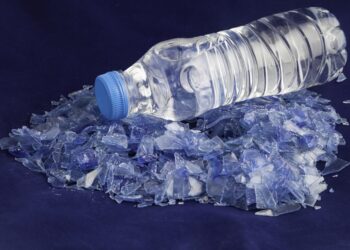
In a letter to the US Trade Representative, five representatives asked the USTR to consider trade remedies and support verification...

Cutting healthcare plastics could save $18B

Report provides path to reduce medical e-scrap

byPaul Lane
September 25, 2026

The European report found that circularity in medical devices is possible through several potential initiatives.

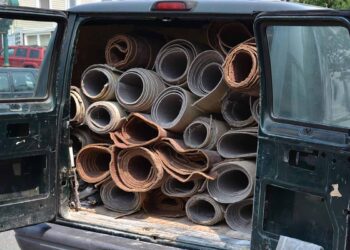
Van filled with rolled carpeting for recycling or disposal.

California carpet recycling rate reaches 37%

byBrian Clark Howard
September 17, 2026

The state’s recycling rate rose for the sixth year in a row, despite challenging market conditions.

Google Pixel 6 phone

Google makes repairability part of design ethos

byBrian Clark Howard
September 16, 2026

The tech titan supports the right-to-repair movement in several key ways.

The barrier isn’t tech. It’s leadership.

The owner should decide: iFixit’s Matt Zieminski on repair

byUriah Kiser, Resource Recycling Podcast
September 15, 2026

On this episode of the Resource Recycling Podcast, Uriah Kiser talks with Matt Zieminski, Vice President of Partnerships at iFixit,...

Canada tariffs latest in new normal for RPET

Canada tariffs latest in new normal for RPET

byAntoinette Smith
September 11, 2026

Tensions with the valuable trading partner have frayed nerves for over a year, but North American markets already have tariff...

Load More
Next Post
Cargo containers at port in Turkey.

Basel proposals could upend export landscape

2026 Buyers’ Guide

Equipment, services and technology suppliers serving the recycling industry.

Browse the Guide

More Posts

Ten e-scrap projects receive federal prize funds

Recycling rates for rare earths could double by 2040

July 17, 2026

In other news: May 2, 2016

May 2, 2016

Microsoft confirms PC sales slump

August 4, 2026
Intel sign outside of company building.

Intel’s CapEx tops $20B on server demand while PC volume shrinks

July 29, 2026
Feds to develop repairable computer donation program

The whitebox blind spot in PC recycling

April 24, 2026
Data erasure firm expands wearable device capabilities

Apple hits 30% recycled content, debuts new recovery tech

April 17, 2026
Textile EPR and the definition of recycling

Textile Exchange reports progress in production

September 22, 2026

America’s critical-materials buildout has a feedstock problem

September 18, 2026

AI and the changing economics of retired hardware

June 12, 2026
Closeup of a printed circuitboard

Hardware demand puts new focus on parts harvesting

June 5, 2026
Load More

About & Publications

About Us

Staff

Archive

Magazines

Work With Us

Advertise
Jobs
Contact
Terms and Privacy

Newsletters

Get the latest recycling news and analysis delivered to your inbox every week. Stay ahead on industry trends, policy updates, and insights from programs, processors, and innovators.

Subscribe

Welcome Back!

Login to your account below

Forgotten Password?

Retrieve your password

Please enter your username or email address to reset your password.

Log In

Add New Playlist

No Result
View All Result
  • The Latest
  • Analysis
  • Recycling
  • E-Scrap
  • Plastics
  • Policy Now
  • Conferences
    • E-Scrap Conference
    • Plastics Recycling Conference
    • Resource Recycling Conference
    • Textiles Recovery Summit
  • Magazines
  • About Us
  • Advertise
  • Archive
  • Jobs
  • Staff
Subscribe
This website uses cookies. By continuing to use this website you are giving consent to cookies being used. Visit our Privacy and Cookie Policy.
-
00:00
00:00

Queue

Update Required Flash plugin
-
00:00
00:00