






Resource Recycling
  • The Latest
  • Analysis
    • All
    • Certification Scorecard
    • Industry Announcements
    • Opinion
    NJ’s PCR delay risks making its own excuse permanently true

    NJ’s PCR delay risks making its own excuse permanently true

    E-scrap magnet recycling company scales up

    Why only some rare-earth sources are economically viable

    e-Stewards to develop an ITAD-specific standard

    Certification scorecard — week of Sept. 21

    Who should pay for lithium-ion battery fire damage?

    America’s critical-materials buildout has a feedstock problem

    Certification scorecard – week of Sept. 14

  • Conferences
    • Resource Recycling Conference
    • Plastics Recycling Conference
    • E-Scrap: The Longevity Conference
    • Textiles Recovery Summit
  • Publications
    • E-Scrap News
    • Plastics Recycling Update
    • Policy Now
    • Resource Recycling
    • Other Topics
      • All Topics
      • Brand Owners
      • Critical Minerals
      • Glass
      • Grant Watch / RFPs
      • Markets
      • Organics
      • Packaging
      • Research
      • Technology
      • Textiles
Subscribe
No Result
View All Result
Resource Recycling
No Result
View All Result
Home Plastics

Washington is the latest state to advance packaging EPR

Marissa HeffernanbyMarissa Heffernan
April 30, 2025
in Plastics
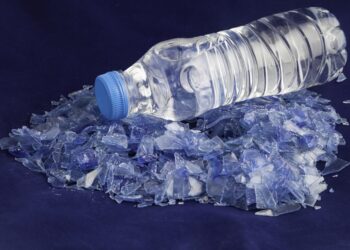
The legislation is intended to increase access to recycling, as only 58% of jurisdictions in the state provide access to curbside recycling. | Jeffrey-B.-Banke/Shutterstock

Just a week after Maryland became state No. 6 to approve a bill on extended producer responsibility for packaging and paper, Washington made No. 7.

SB 5284, the Recycling Reform Act, went to Gov. Bob Ferguson’s desk on April 23. It passed out of the Senate on March 7 with a vote of 27-22, then out of the House with a vote of 51-45 on April 14 with some amendments. After the Senate concurred with the changes on April 23 on a vote of 27-21, the bill was off to the final step. 

Ferguson has 30 days to sign the bill after it’s delivered to him.  

Bill sponsor Sen. Liz Lovelett said in a press release that the passage of the bill “represents a historic step forward for our state to a cleaner, more accessible, and more sustainable recycling system.” 

“Today we are all celebrating progress to reduce pollution, improve recycling rates, and divert materials away from landfills,” Lovelett added. 

The legislation is intended to increase access to recycling, as only 58% of jurisdictions in the state provide access to curbside recycling, according to the release. About 500,000 more homes in Washington would get recycling services for the first time under EPR, many in rural areas or in multifamily residences. 

Rep. Liz Berry has championed EPR in the House for several years and sponsored SB 5284’s companion bill this year. Berry thanked Lovelett in the press release “for being a great partner in getting this policy moved forward.” 

“I am excited that Washington will have a better recycling system that holds producers responsible and gives all communities access to recycling,” Berry added. 

SB 5284 has many of the classic elements of American EPR, including needs assessments, convenience standards, eco-modulation of fees, education and outreach requirements and the mandate that material go to responsible end markets. 

It also notes that if and when Washington creates a deposit return system for beverage containers, the two programs should be harmonized and any DRS implementation “must include a two-year transition period before the expiration of the currently approved plan and be conducted in a manner that does not create sudden and significant operational or financial disruption.” 

DRS didn’t pass in the state this year – paired bills HB 1607 and SB 5502 died in committee.

Program details 

SB 5284 calls for a producer responsibility organization to be selected by Jan. 1, 2026, as well as a 19-person advisory council. The first annual PRO registration fee is due to the state that September. Producers would be required to register with the PRO by July 1, 2026. 

It also requires an initial statewide collection list by Oct. 1, 2026, a preliminary needs assessment by Dec. 31, 2026, and a full PRO plan by Oct. 1, 2028. Full program implementation is slated for Jan. 1, 2030.

Multiple PROs are allowed under the bill once the initial program plan expires. SB 5284 also would require an equity study and a litter tax study. 

The statewide collection lists must distinguish between materials suitable for residential recycling, residential composting, public place collection and alternative collection, the bill states, and the PRO and state share responsibility for setting performance targets in the program plan based on the needs assessment. 

Like Minnesota and Maryland, Washington’s EPR program uses a phased-in reimbursement approach, stating that the PRO must cover at least 50% of the net costs by Feb. 15, 2030, at least 75% by 2031 and at least 90% by 2032. 

Covered materials may be exempted if the producer can demonstrate annually that the material has had a state recycling rate of 65% for three consecutive years. Beginning Jan. 1, 2020, that requirement changes to demonstrating every two years that the material has had a state recycling rate of at least 70%. 

In a state-specific twist, the PRO must fund and implement a reuse financial assistance program, putting in at least $5 million beginning in 2029 and then again each year, adjusted for inflation.

Finally, the bill requires any MRF that annually manages 25,000 tons or more of covered materials under SB 5284 to ensure that workers “receive minimum industry standard compensation” beginning Oct. 1, 2028, meaning a wage and benefits package “equal to or greater than the combined hourly wage and usual benefits package set by a collective bargaining agreement that covers similar or equivalent work in a county.”

A version of this story appeared in Resource Recycling on Apr. 23.

Tags: EPRLegislation & Enforcement
TweetShare
Marissa Heffernan

Marissa Heffernan

Marissa Heffernan worked at Resource Recycling from January 2022 through June 2025, first as staff reporter and then as associate editor. Marissa Heffernan started working for Resource Recycling in January 2022 after spending several years as a reporter at a daily newspaper in Southwest Washington. After developing a special focus on recycling policy, they were also the editor of the monthly newsletter Policy Now.

Related Posts

Newsom nixes recycled content claims bill

Newsom nixes recycled content claims bill

byAntoinette Smith
September 28, 2026

Supporters of AB 2253 said the bill would address greenwashing, while opponents said it demonized mass-balance accounting and didn't reflect...

NJ’s PCR delay risks making its own excuse permanently true

NJ’s PCR delay risks making its own excuse permanently true

byEdward Kosior
September 28, 2026

In this editorial, Prof. Edward Kosior explores how policy uncertainty discourages investment and risks destroying existing recycling capacity.

Analysis: Undersupply of PCR is ‘stifling’ brand goals

US lawmakers urge protection of domestic RPET

byAntoinette Smith
September 25, 2026

In a letter to the US Trade Representative, five representatives asked the USTR to consider trade remedies and support verification...

Oregon state capitol building with state flag and blue sky.

NAW appeals Oregon EPR ruling

byStefanie Valentic
September 25, 2026

NAW is challenging an Oregon judge's ruling in favor of the state's extended producer responsibility law.

Bipartisan reps introduce bill on recycling claims

House passes bill to ease lithium-ion battery storage rules

byStefanie Valentic
September 24, 2026

The BRACE Act would let lithium-ion battery recyclers store batteries on site under universal waste rules and give EPA 18...

Calif. Governor Gavin Newsom at podium.

Newsom signs battery EPR expansion, vetoes SB 54 fund bill

byStefanie Valentic
September 24, 2026

Newsom signed a battery EPR expansion and a nitrous oxide sales ban but vetoed a bill setting spending rules for...

Load More
Next Post

Coalition aims to support Kentucky recycling sector

2026 Buyers’ Guide

Equipment, services and technology suppliers serving the recycling industry.

Browse the Guide

More Posts

Ten e-scrap projects receive federal prize funds

Recycling rates for rare earths could double by 2040

July 17, 2026
Intel sign outside of company building.

Intel’s CapEx tops $20B on server demand while PC volume shrinks

July 29, 2026

In other news: May 2, 2016

May 2, 2016
Feds to develop repairable computer donation program

The whitebox blind spot in PC recycling

April 24, 2026
Textile EPR and the definition of recycling

Textile Exchange reports progress in production

September 22, 2026

Microsoft confirms PC sales slump

August 4, 2026
Closeup of a printed circuitboard

Hardware demand puts new focus on parts harvesting

June 5, 2026

America’s critical-materials buildout has a feedstock problem

September 18, 2026
Data erasure firm expands wearable device capabilities

Apple hits 30% recycled content, debuts new recovery tech

April 17, 2026
E-scrap magnet recycling company scales up

Why only some rare-earth sources are economically viable

September 24, 2026
Load More

About & Publications

About Us

Staff

Archive

Magazines

Work With Us

Advertise
Jobs
Contact
Terms and Privacy

Newsletters

Get the latest recycling news and analysis delivered to your inbox every week. Stay ahead on industry trends, policy updates, and insights from programs, processors, and innovators.

Subscribe

Welcome Back!

Login to your account below

Forgotten Password?

Retrieve your password

Please enter your username or email address to reset your password.

Log In

Add New Playlist

No Result
View All Result
  • The Latest
  • Analysis
  • Recycling
  • E-Scrap
  • Plastics
  • Policy Now
  • Conferences
    • E-Scrap Conference
    • Plastics Recycling Conference
    • Resource Recycling Conference
    • Textiles Recovery Summit
  • Magazines
  • About Us
  • Advertise
  • Archive
  • Jobs
  • Staff
Subscribe
This website uses cookies. By continuing to use this website you are giving consent to cookies being used. Visit our Privacy and Cookie Policy.
-
00:00
00:00

Queue

Update Required Flash plugin
-
00:00
00:00