





Resource Recycling
  • The Latest
  • Analysis
    • All
    • Certification Scorecard
    • Industry Announcements
    • Opinion
    Apple Watch on product box.

    Wearables are coming and ITAD isn’t ready

    Certification Scorecard — Week of April 13, 2026

    EV Battery Pack - Sergii Chernov-Shutterstock

    Redwood, Rivian deal fuels US infrastructure plans

    Bloom ESG and e-Stewards roll out critical metals metric

    Colorado regulators suggest mid-range EPR scenario

    Why collaboration on plastic waste still matters

    Battery recycler Ascend Elements files for bankruptcy

    Battery recycler Ascend Elements files for bankruptcy

    EPR fees are a market signal. Here’s what they’re telling you.

    EPR fees are a market signal. Here’s what they’re telling you.

    Wolframite ore, the primary ore of tungsten from Altai, Russia

    Tungsten scrap export controls draw industry attention

    Certification Scorecard — Week of April 6, 2026

  • Conferences
  • Publications
    • E-Scrap News
    • Plastics Recycling Update
    • Policy Now
    • Resource Recycling
    • Other Topics
      • Brand Owners
      • Grant Watch
      • Markets
      • Organics
      • Packaging
      • Research
      • Technology
      • Textiles
      • All Topics
Subscribe
No Result
View All Result
Resource Recycling
  • The Latest
  • Analysis
    • All
    • Certification Scorecard
    • Industry Announcements
    • Opinion
    Apple Watch on product box.

    Wearables are coming and ITAD isn’t ready

    Certification Scorecard — Week of April 13, 2026

    EV Battery Pack - Sergii Chernov-Shutterstock

    Redwood, Rivian deal fuels US infrastructure plans

    Bloom ESG and e-Stewards roll out critical metals metric

    Colorado regulators suggest mid-range EPR scenario

    Why collaboration on plastic waste still matters

    Battery recycler Ascend Elements files for bankruptcy

    Battery recycler Ascend Elements files for bankruptcy

    EPR fees are a market signal. Here’s what they’re telling you.

    EPR fees are a market signal. Here’s what they’re telling you.

    Wolframite ore, the primary ore of tungsten from Altai, Russia

    Tungsten scrap export controls draw industry attention

    Certification Scorecard — Week of April 6, 2026

  • Conferences
  • Publications
    • E-Scrap News
    • Plastics Recycling Update
    • Policy Now
    • Resource Recycling
    • Other Topics
      • Brand Owners
      • Grant Watch
      • Markets
      • Organics
      • Packaging
      • Research
      • Technology
      • Textiles
      • All Topics
Subscribe
No Result
View All Result
Resource Recycling
No Result
View All Result
Home Plastics

Plastics Pact supports chemical recycling as complementary

Antoinette SmithbyAntoinette Smith
November 19, 2025
in Plastics
Plastics Pact supports chemical recycling as complementary
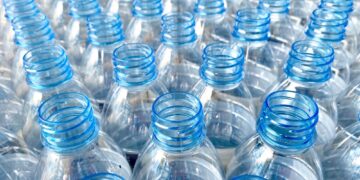
In its new position paper, the Pact notes that chemical or physical recycling methods can serve applications with stricter regulations, such as food-contact packaging. | Sergey Ryzhov / Shutterstock

To help inform policy and develop industry-led best practices, the US Plastics Pact published a position paper on Wednesday regarding the role of physical and chemical recycling for plastic packaging.

“Too often, these technologies are talked about in extremes, either as a silver bullet or as something to be dismissed outright,” said Jonathan Quinn, Pact president and CEO. He added that the group is designed to bring together its members, called Activators, “in a pre-competitive space to wrestle with hard problems and consider data-driven real-world solutions.”

In the position paper, the Pact supports responsible integration of physical recycling and chemical recycling technologies, noting that these must not displace efforts focused on reduction, reuse or mechanical recycling methods, but rather complement them.

Utilizing these technologies also advances the Pact’s goal of reducing reliance on virgin plastics, and supports the economics of recycled content as a whole by creating new end markets for materials that otherwise would be landfilled. 

Moreover, the Pact points to the US EPA’s Waste Management Hierarchy, which prioritizes reduction, reuse, mechanical recycling and then physical or chemical recycling for harder-to-recycle materials. 

The paper defines physical recycling as solvent-based methods, such as dissolution and purification, that do not change the polymer’s molecular structure. Chemical recycling such as pyrolysis and depolymerization uses heat and/or chemicals to break down a polymer into its molecular components. These methods often produce virgin-quality resin suitable for applications with strict regulatory requirements, including medical packaging, some food-contact uses and automotive safety materials, which fall outside the Pact’s scope. 

“This position paper recognizes that physical and chemical recycling technologies can play a  meaningful role in addressing plastics that are difficult to recycle through conventional means,”  said Tamsin Ettefagh, chief sustainability officer and executive vice president of government and industry relations for PureCycle Technologies. “As a physical recycler, we believe it is essential to define responsible parameters and to position these technologies as complementary within the broader system,” Ettefagh added.

However, the Pact emphasizes that waste-to-energy or fuel processes are excluded from its definition of material recycling, echoing the position of many industry groups.

Standardized, consistent terminology

The plastics industry has adopted various terms to describe recycling technology, including “advanced” or “molecular.” The terminology “is inconsistently applied, creating misunderstandings and challenges in aligning on solutions,” the Pact posits.  

Adopting the forthcoming ISO/CD 15270-1.3 framework – currently under development to replace ISO 15270:2008 – the Pact categorizes recycling technologies into mechanical, physical, chemical and organic/biological. “Standardizing these terms is critical for transparent, evidence-based discussions and accurate evaluation of risks and benefits,” the group says in the paper. 

Calls for industry action

The paper also notes that chemical and physical processes require robust standards and safeguards, to address concerns around carbon emissions, pollution and environmental justice. In addition, claims of a lower environmental footprint for chemical and physical recycling processes than virgin plastic manufacturing must undergo independent third-party verified life cycle assessments. 

The group calls for the industry to develop best practices for regulatory issues, including financial mechanisms such as insurance and dedicated bond funds to pay for cleanup or remediation in case of environmental accidents. In addition, facilities must commit to treating communities near proposed activities in a fair and meaningful way, prioritizing residents for jobs and local investment. 

In preparing the position paper, the Pact conducted research, discussion and review, according to the press release, examining scientific literature, existing policy approaches and environmental assessments, and incorporating feedback from members across the plastics value chain. 

“Our goal is to help policymakers, companies, and communities make informed decisions grounded in science, transparency, and shared responsibility,” said Crystal Bayliss, director of strategy and engagement at the Pact.
Tags: Industry Groups
TweetShare
Antoinette Smith

Antoinette Smith

Antoinette Smith has been at Resource Recycling Inc., since June 2024, after several years of covering commodity plastics and supply chains, with a special focus on economic impacts. She can be contacted at [email protected].

Related Posts

Recycling Partnership CEO stepping down

byStefanie Valentic
April 15, 2026

Outgoing CEO Keefe Harrison will remain until August with the organization she built from the ground up.

NERC launches hub to promote PCR demand 

byAntoinette Smith
April 15, 2026

The Northeast Recycling Council's PCR Material Demand Hub offers resources for government procurement, material- and product-specific resources, and certification and...

Reverse Logistics Network launches to support industry

byPaul Lane
April 14, 2026

The reverse logistics community has a new organization to give companies in that sector a place to connect.

Colorado regulators suggest mid-range EPR scenario

Why collaboration on plastic waste still matters

byCrystal Bayliss
April 13, 2026

Six years ago, the U.S. Plastics Pact launched at a moment of rising concern about plastic waste and growing momentum...

Industrial sources drive rise in PVC recycling

byAntoinette Smith
April 13, 2026

Volumes of post-industrial PVC recycled in 2024 rose by 10% from 2019 levels, while post-consumer sources fell and missed a...

End markets, policy key to RPET viability

End markets, policy key to RPET viability

byAntoinette Smith
April 8, 2026

Longer-term actions support domestic RPET markets and can help prevent the loss of public trust in recycling systems, industry experts...

Load More
Next Post

Certification Scorecard for November 19, 2025

Leading the Charge in Safe Battery Recycling
Sponsored

Leading the Charge in Safe Battery Recycling

byThe Battery Network
April 13, 2026

We’re connecting people, brands, and communities through one nationwide network built to make battery recycling safer, simpler, and more accessible...

Read moreDetails

More Posts

Policy Now | December 2025 – Year-end nears, policy talks continue

Policy Now | December 2025 – Year-end nears, policy talks continue

December 1, 2025

Quebec PRO reflects on first year of packaging EPR

March 30, 2026

Certification scorecard – Week of March 23, 2026

March 24, 2026
Bottle cap design: No need to ‘reinvent the wheel’

Bottle cap design: No need to ‘reinvent the wheel’

June 25, 2025
MRF equipment firm Machinex wins patent fight with rival

Judge blocks four groups from joining Oregon Recycling Act injunction

April 7, 2026

Diversion Dynamics: Secondhand exports slow down fast fashion

March 5, 2026
Basel e-scrap rules disrupt larger metal sector

Basel e-scrap rules disrupt larger metal sector

June 26, 2025

Here’s what is (and isn’t) becoming law in California

October 16, 2019

Full plastic bag ban passes California Senate

June 4, 2024
Aduro losses nearly double on year

Aduro losses nearly double on year

April 15, 2026
Load More

About & Publications

About Us

Staff

Archive

Magazine

Work With Us

Advertise
Jobs
Contact
Terms and Privacy

Newsletter

Get the latest recycling news and analysis delivered to your inbox every week. Stay ahead on industry trends, policy updates, and insights from programs, processors, and innovators.

Subscribe

Welcome Back!

Login to your account below

Forgotten Password?

Retrieve your password

Please enter your username or email address to reset your password.

Log In

Add New Playlist

No Result
View All Result
  • The Latest
  • Analysis
  • Recycling
  • E-Scrap
  • Plastics
  • Policy Now
  • Conferences
    • E-Scrap Conference
    • Plastics Recycling Conference
    • Resource Recycling Conference
    • Textiles Recovery Summit
  • Magazine
  • About Us
  • Advertise
  • Archive
  • Jobs
  • Staff
Subscribe
This website uses cookies. By continuing to use this website you are giving consent to cookies being used. Visit our Privacy and Cookie Policy.