





Resource Recycling
  • The Latest
  • Analysis
    • All
    • Certification Scorecard
    • Industry Announcements
    • Opinion
    MP Materials breaks ground on rare earth magnet campus in North Texas

    How critical mineral alliances aim to shape the future of e-scrap metals

    Certification Scorecard — Week of May 18, 2026

    Aurubis: Thefts involved scrap sample manipulation

    Metals and electronics recyclers report growth

    Plastic packaging

    Why SB 54 source reduction planning is becoming the industry’s most challenging EPR test

    Recycler cites market pressure in short-term closure

    AI, data anxiety push enterprises to destroy working devices: report

    Before the Bin: America’s textile waste problem starts in your closet

  • Conferences
    • Resource Recycling Conference
    • Plastics Recycling Conference
    • E-Scrap: The Longevity Conference
    • Textiles Recovery Summit
  • Publications
    • E-Scrap News
    • Plastics Recycling Update
    • Policy Now
    • Resource Recycling
    • Other Topics
      • Brand Owners
      • Critical Minerals
      • Glass
      • Grant Watch
      • Markets
      • Organics
      • Packaging
      • Research
      • Technology
      • Textiles
      • All Topics
Subscribe
No Result
View All Result
Resource Recycling
  • The Latest
  • Analysis
    • All
    • Certification Scorecard
    • Industry Announcements
    • Opinion
    MP Materials breaks ground on rare earth magnet campus in North Texas

    How critical mineral alliances aim to shape the future of e-scrap metals

    Certification Scorecard — Week of May 18, 2026

    Aurubis: Thefts involved scrap sample manipulation

    Metals and electronics recyclers report growth

    Plastic packaging

    Why SB 54 source reduction planning is becoming the industry’s most challenging EPR test

    Recycler cites market pressure in short-term closure

    AI, data anxiety push enterprises to destroy working devices: report

    Before the Bin: America’s textile waste problem starts in your closet

  • Conferences
    • Resource Recycling Conference
    • Plastics Recycling Conference
    • E-Scrap: The Longevity Conference
    • Textiles Recovery Summit
  • Publications
    • E-Scrap News
    • Plastics Recycling Update
    • Policy Now
    • Resource Recycling
    • Other Topics
      • Brand Owners
      • Critical Minerals
      • Glass
      • Grant Watch
      • Markets
      • Organics
      • Packaging
      • Research
      • Technology
      • Textiles
      • All Topics
Subscribe
No Result
View All Result
Resource Recycling
No Result
View All Result
Home Plastics

APR year in review

Antoinette SmithbyAntoinette Smith
December 30, 2025
in Plastics
APR year in review

APR CEO Steve Alexander | Courtesy Photo APR

Editor’s Note: End markets will be featured in sessions at the 2026 Plastics Recycling Conference, Feb. 23-25 in San Diego, California. Register now for the best rates.

Plastics recyclers are completing what often has been described as the worst year to date, amid cheap virgin and imported resin, and renewed criticism of the industry in well-publicized reports.

Listen to the full episode on Spotify or wherever you get your podcasts

But in the end, “very simply, the issue is market demand,” said Steve Alexander, CEO of the Association of Plastic Recyclers, in a recent podcast. APR owns Resource Recycling, Inc., publisher of Plastics Recycling Update. 

The closures of reclaimer rPlanet Earth in California and a PET wash line at Phoenix Technologies in Ohio weigh heavily on Alexander, who has helmed the organization for 20 years. “They’re closing because they don’t have any customers.”

To widen the market for recycled plastics, Alexander called for policy levers to incentivize consumer brands “to recognize the value of using more recycled material that is domestically produced.” 

The key to making plastics recycling economically viable is to create demand, he said. “We don’t need government funding. We don’t need government grants, etc. If we have customers, we’ll invest in the plants.” 

As such, APR’s primary focus for 2026 will be on how to incentivize the market to use domestically sourced recycled plastics.

“APR has solved every technical problem out there, relative to ‘can your package or product be recycled,'” he said, pointing to the globally recognized APR Design Guide. 

Alexander used a favorite analogy: incentives for buying EVs, which proved their effectiveness particularly when the incentives expired, and sales plummeted.

Although EPR legislation helps incentivize collection of plastic packaging by way of producer funding, “without a market for that material, the only thing we’re going to end up with is a lot more material with nowhere for it to go.” 

As one example, consumer brands have pulled back on ambitious voluntary PCR targets but still are using recycled resin, he said. They currently depend on cheaper imports, which Alexander said may not be certified as post-consumer material or may originate in countries that lack environmental and labor guardrails of the US. 

“And it’s all about bringing manufacturing back to the United States, right? It’s all part and parcel of what this administration is doing,” he said, adding that the need to grow domestic manufacturing extends to Canada and Mexico. “We all know material flows back and forth, sometimes three, four times before it ends up in a final product.” 

Does recycling really work?

Another issue that has frustrated plastic recyclers is public mistrust of the system, often spurred by critical and sometimes misleading reports, along with “tracker tests.” 

For example, a recent report “somehow conflated the reduction in use of virgin plastic as something that doesn’t work,” Alexander said. “The one thing that we know which does work to create plastics being sustainable is the recycling component of it.

“So I’m a little confused at the narrative of saying recycling doesn’t work.” 

However, consumers can still feel confident about their role in reducing their own carbon footprint – and in making recycling work – primarily by putting their plastic bottles and containers in the bins. 

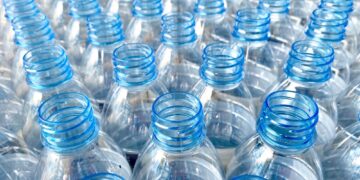
“The most iconic container that is recyclable, that consumers use, is a water bottle, and yet somehow we only collect three of 10 of them,” he said. “We can’t recycle what is not collected.” 

“To say recycling doesn’t work is an erroneous statement. The fact of the matter is, it works.” 

Another misconception is that North America faces a recycling capacity shortage. A report published in May 2025 indicated that North American recyclers could process 1.7 billion additional pounds/year of plastic – about one-third more than current 5 billion. 

“To say recycling doesn’t work is an erroneous statement. The fact of the matter is, it works.” 

Although the concept of recycling is often treated as a monolith whose success is evaluated with a binary rating system of working versus not working, five distinct elements are required for packaging to successfully complete the full recycling process, Alexander said.  

First and foremost, a plastic product must be designed for recycling. “If it’s not designed to be recycled, it doesn’t matter what else you do with it.” 

Then it must be collected and sorted for recycling. APR has a sortation protocol to help ensure material flows into the proper bale, he said. Following effective sortation, the material needs to be processed into resin pellets for use in new products. And all of these processes are working today, he said. 

But ultimately the existence of end markets is the glue that holds together the rest of the recycling process. “The market monetizes the entire system. You don’t have customers, then you have no money to fund the system. So it’s as simple as that.” 

How much plastic is really being recycled?

There’s also no shortage of plastic recycling rate estimates to choose from, which adds to consumer confusion. 

“You know, the numbers are frustrating,” he said, noting that very low plastic recycling numbers usually include all plastics produced, many of which were never made to be recycled. “The plastic that people really talk about is plastic that’s in consumer packaging. That’s really where the issue is, and less than half of the plastics that are generated go into consumer packaging.”

“At least 70% of what you put in your bin ultimately ends up getting recycled,” with the rest largely having some sort of contamination – for example, a non-recyclable container mixed in with recyclable items. 

Regardless of the figures used, recycling rates are “not great, as I’ve indicated,” and there is work to be done, such as improving consistency among collection programs. 

For example, the thousands of US recycling programs vary widely in what materials they will accept. “You’re asking recyclers to create a business model where we’re never sure what material is being collected.” 

At a minimum, APR encourages recycling programs to accept PET, HDPE and PP containers, he said. “If you do that, at least we know we’re getting the same volume and the same consistency, and you can build an infrastructure on it.” 
TweetShare
Antoinette Smith

Antoinette Smith

Antoinette Smith has been at Resource Recycling Inc., since June 2024, after several years of covering commodity plastics and supply chains, with a special focus on economic impacts. She can be contacted at [email protected].

Related Posts

Ball, Novelis give capacity updates

Ball, Novelis give capacity updates

byAntoinette Smith
May 21, 2026

Novelis will restart its Oswego plant within weeks, and Ball Corp. plans commissioning at its Millersburg plant by the end...

MP Materials breaks ground on rare earth magnet campus in North Texas

How critical mineral alliances aim to shape the future of e-scrap metals

byDavid Daoud
May 21, 2026

The Minerals Integrity & Resilience Alliance (MIRA) is part of a broader effort to strengthen transparency and resilience across critical...

EPR rules take shape in Oregon, as first test

Oregon OKs end-market verification from CAA

byStefanie Valentic
May 20, 2026

The state's Department of Environmental Quality has given the stamp of approval on CAA's Responsible End Markets program plan amendment.

Certification Scorecard — Week of May 18, 2026

byEditorial Staff
May 20, 2026

The following facilities have achieved, renewed or otherwise regained industry certifications.

Aurubis: Thefts involved scrap sample manipulation

Metals and electronics recyclers report growth

byDavid Daoud
May 20, 2026

Aurubis, Umicore and Sims show that downstream multimetal and electronics-related recovery businesses are, at least for now, operating in a...

Revised CA budget includes $200m for recycling

Revised CA budget includes $200m for recycling

byAntoinette Smith
May 20, 2026

Stakeholders applauded the additional allocations proposed, but would like to see distribution re-formulated to more effectively address market realities.

Load More
Next Post
Industry announcements for January 2026

Industry announcements for January 2026

More Posts

Bottle bill backers see opportunity for action

PET collapse exposes gaps in US recycling infrastructure

May 15, 2026
Revised CA budget includes $200m for recycling

Revised CA budget includes $200m for recycling

May 20, 2026
Plastic packaging

Why SB 54 source reduction planning is becoming the industry’s most challenging EPR test

May 19, 2026

Before the Bin: America’s textile waste problem starts in your closet

May 19, 2026
Aurubis: Thefts involved scrap sample manipulation

Metals and electronics recyclers report growth

May 20, 2026
Niagara acquires rPlanet Earth assets in California

Niagara acquires rPlanet Earth assets in California

May 15, 2026
Industry descends on DC to fight for PET

Industry descends on DC to fight for PET

May 13, 2026
Recycler cites market pressure in short-term closure

AI, data anxiety push enterprises to destroy working devices: report

May 19, 2026
Retail aisle with paper and plastic packaging.

Loblaw’s recyclability push could reshape packaging design across North America

May 14, 2026

Price increases help end user offset higher OCC

December 10, 2024
Load More

About & Publications

About Us

Staff

Archive

Magazine

Work With Us

Advertise
Jobs
Contact
Terms and Privacy

Newsletter

Get the latest recycling news and analysis delivered to your inbox every week. Stay ahead on industry trends, policy updates, and insights from programs, processors, and innovators.

Subscribe

Welcome Back!

Login to your account below

Forgotten Password?

Retrieve your password

Please enter your username or email address to reset your password.

Log In

Add New Playlist

No Result
View All Result
  • The Latest
  • Analysis
  • Recycling
  • E-Scrap
  • Plastics
  • Policy Now
  • Conferences
    • E-Scrap Conference
    • Plastics Recycling Conference
    • Resource Recycling Conference
    • Textiles Recovery Summit
  • Magazine
  • About Us
  • Advertise
  • Archive
  • Jobs
  • Staff
Subscribe
This website uses cookies. By continuing to use this website you are giving consent to cookies being used. Visit our Privacy and Cookie Policy.