





Resource Recycling
  • The Latest
  • Analysis
    • All
    • Certification Scorecard
    • Industry Announcements
    • Opinion
    SERI works to restore faith in certifications

    Building a defensible E-scrap evidence file

    tires

    The most important decision in tire recycling happens before the shredder

    Intel sign outside of company building.

    Intel’s CapEx tops $20B on server demand while PC volume shrinks

    Google sign on company building with blue sky and clouds above.

    Inside Alphabet’s Q2 results: More capital spending and cloud backlog

    Alpek closing Pennsylvania RPET plant

    Alpek seizing on war-related opportunity 

    Our top stories from March 2023

    Iron Mountain’s data center report: Strong on power, quiet on hardware

  • Conferences
    • Resource Recycling Conference
    • Plastics Recycling Conference
    • E-Scrap: The Longevity Conference
    • Textiles Recovery Summit
  • Publications
    • E-Scrap News
    • Plastics Recycling Update
    • Policy Now
    • Resource Recycling
    • Other Topics
      • All Topics
      • Brand Owners
      • Critical Minerals
      • Glass
      • Grant Watch / RFPs
      • Markets
      • Organics
      • Packaging
      • Research
      • Technology
      • Textiles
Subscribe
No Result
View All Result
Resource Recycling
  • The Latest
  • Analysis
    • All
    • Certification Scorecard
    • Industry Announcements
    • Opinion
    SERI works to restore faith in certifications

    Building a defensible E-scrap evidence file

    tires

    The most important decision in tire recycling happens before the shredder

    Intel sign outside of company building.

    Intel’s CapEx tops $20B on server demand while PC volume shrinks

    Google sign on company building with blue sky and clouds above.

    Inside Alphabet’s Q2 results: More capital spending and cloud backlog

    Alpek closing Pennsylvania RPET plant

    Alpek seizing on war-related opportunity 

    Our top stories from March 2023

    Iron Mountain’s data center report: Strong on power, quiet on hardware

  • Conferences
    • Resource Recycling Conference
    • Plastics Recycling Conference
    • E-Scrap: The Longevity Conference
    • Textiles Recovery Summit
  • Publications
    • E-Scrap News
    • Plastics Recycling Update
    • Policy Now
    • Resource Recycling
    • Other Topics
      • All Topics
      • Brand Owners
      • Critical Minerals
      • Glass
      • Grant Watch / RFPs
      • Markets
      • Organics
      • Packaging
      • Research
      • Technology
      • Textiles
Subscribe
No Result
View All Result
Resource Recycling
No Result
View All Result
Home Recycling

Collaboration sits at heart of the best MRF contracts

Marissa HeffernanbyMarissa Heffernan
August 23, 2022
in Recycling
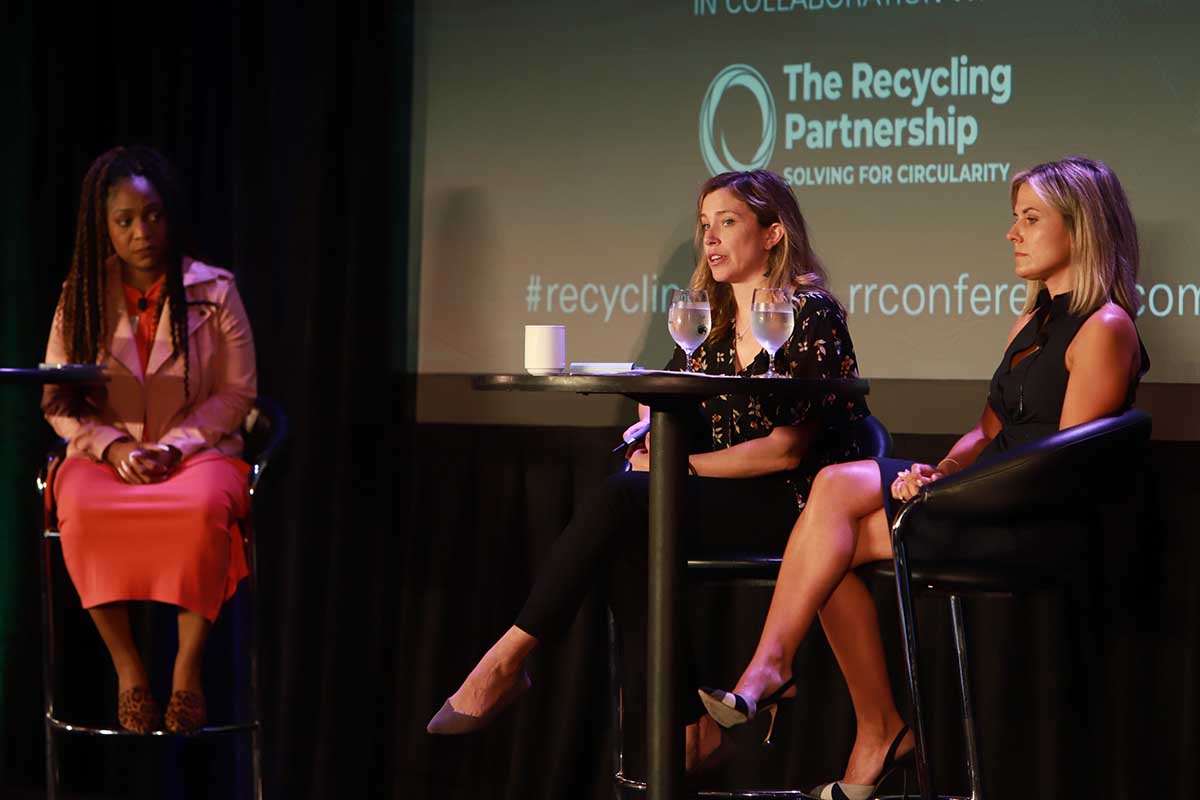
The “Rethinking MRF Contracts” session at this year’s Resource Recycling Conference featured (l to r) moderator Keysha Burton of The Recycling Partnership and speakers Natalie Betts of Balcones Resources and Stephanie Sidler of GFL. | Big Wave Productions/Resource Recycling Inc.

Volatile markets, changing material compositions and aging infrastructure can all be addressed with the right municipal MRF contract. Industry experts discussed how to achieve such arrangements at the Resource Recycling Conference.

The conference was held Aug. 15-17 in Austin, Texas.

During the Aug. 16 “Rethinking MRF Contracts” session, Stephanie Sidler, director of business development for recycling at GFL Environmental and Natalie Betts, director of partnerships and municipal relations for Balcones Resources, offered their advice.

Sidler said GFL prefers to start the contract process with a thorough request for proposal (RFP) from the municipality. 

“RFPs can really be an essential tool in procuring recycling services and set the stage for collaborative partnerships, where there’s potential to increase the operational, financial and innovation capacity,” she said. “A well-structured RFP can lead to well-structured contracts which increase the value of the public-private partnerships for both the municipality and the service provider.” 

Contract necessities 

Related to recycling, there are two styles of RFPs: one for operating a municipally owned facility and one for vendor-run facilities. Sidler said the latter are “really the ones that can help municipalities to bridge the gap between their available capital and infrastructure needs.”

For either style of RFP, Sidler said it’s essential to have clear requirements about what services need to be provided, to make sure “all vendors are bidding apples to apples.”  

Time for vendors to review the equipment at municipal-owned facilities is important as well, she added, to understand what maintenance costs will be and determine any investments that may need to be made to run the facility properly. 

Comprehensive data, including contamination levels and material composition, is another thing GFL looks for in a strong RFP, Sidler said, as are detailed performance measurements and language that address what happens if there are significant changes over the term of the contract. 

“These are really long-term relationships we’re talking about, these are 10-year contracts, and a lot can change over that time,” Sidler said. “Look how much has changed over the past 10 years. So what happens if material composition changes, what happens if contamination increases, what happens if there’s a change of law and an EPR program comes into place in your municipality? That kind of stuff is important to get out in the RFP process.” 

Betts said she’s found that transparency, communication and co-investment for both the vendor and the municipality are integral parts of a good contract, as are contingency plans. 

“On the municipality side, that really looks like treating recycling as the utility and essential service that it is, and not a ‘nice-to-have,'” she said. 

While transparency can be tricky when many vendors do not publicly disclose the end market customers for their material, Betts suggested having municipal partners come in to look at end market information but not sharing it. Sidler said providing reports of the general “chain of command” for material can help municipalities trust that material is going where it should. 

Betts also recommended asking for references about vendor openness and communication,  requiring in contracts that cities meet with vendors at least quarterly and using historical data to evaluate bids. 

“We’ve been in recycling for a while now as an industry and we can use that data from the past years of markets, we can use our experience with knowing that new technology will come and end markets will shift, to plan ahead,” Betts said. “And we also know that things we don’t foresee are going to happen, so we need to be building that relationship and that partnership so you have someone in it with you.” 

Sidler said a case study GFL worked with is the city of Winnipeg in Manitoba, Canada. In the late 2010s, it issued an RFP to increase diversion from landfill and deal with changing markets. 

The city provided a minimum annual tonnage guarantee, detailed material composition data and an allowance for the vendor to procure third-party tons. The city laid out clear performance standards, “so we understood going in what we would be evaluated on, but also what would be the performance standards during the contract,” Sidler said.

GFL built a state-of-the-art MRF that opened in October 2019, and in 2020 won the National Waste and Recycling Association facility of the year award.

“It’s these types of collaborations, where we share information, where we work together, where we implement end-market partnerships and provide for continuous improvement throughout the term of the contract that all help to ensure long-term sustainability and viability of the project,” Sidler said. 

Assessing costs and incentives 

In response to an audience question about connecting inbound contamination rates to revenue share as an incentive, Betts said she supports “anything that financially incentivizes all parties to reduce contamination.”

The overall structure of most contracts “really recognizes the unique economics of recycling,” Betts said, with a processing fee to cover the operating cost of the MRF and a revenue share agreement. 

She suggested municipalities do a full calculation before accepting a bid, as there are pros and cons to the two styles of fees and shares. With a low fee and low share, there’s less variation in cost, but also less potential for revenue on the municipal side. 

“Your good years are going to be less good but your bad years are going to be less bad,” she said. 

With a higher fee and higher share, the higher processing fee covers the cost of a higher quality operation, and because the revenue share is bigger there’s more investment from all parties in the quality of recycling, Betts said. 

For example, say a city got two bids, one with a $98 per ton processing fee and a 80% revenue share and one with a $78 per ton fee and a 40% revenue share. 

Betts said while “at first blush the $20 less processing fee might seem the better way to go,” once performance in an average market is calculated, the higher fee and higher share would actually end up costing the city less. 

“Government is a risk-averse place, which is why it’s important to do the calculation and not just go to the more stable option,” she noted.
 

Harris Equipment

Tags: Local ProgramsMarketsMRFs
TweetShare
Marissa Heffernan

Marissa Heffernan

Marissa Heffernan worked at Resource Recycling from January 2022 through June 2025, first as staff reporter and then as associate editor. Marissa Heffernan started working for Resource Recycling in January 2022 after spending several years as a reporter at a daily newspaper in Southwest Washington. After developing a special focus on recycling policy, they were also the editor of the monthly newsletter Policy Now.

Related Posts

Facility fires on pace to match 2025

byPaul Lane
July 29, 2026

The mid-year report from Fire Rover found the number of fire incidents remains elevated compared to historical averages.

Alpek closing Pennsylvania RPET plant

Alpek seizing on war-related opportunity 

byAntoinette Smith
July 27, 2026

The world's largest PET producer saw a big increase in spot volumes during Q2 thanks to supply chain disruptions, and...

Waste Connections company truck on an urban street.

Waste Connections sees Q2 lift on recycled commodity values

byStefanie Valentic
July 24, 2026

Waste Connections topped second-quarter expectations and raised its full-year outlook, citing a second straight quarter of rising recycled commodity values.

Dow touts US PE advantage amid Iran war

Dow bullish on August PE pricing

byAntoinette Smith
July 24, 2026

Executives made the case for higher prices during a Q2 investor call, pointing to planned maintenance and a throttled supply...

Compudopt names new CEO

Compudopt names new CEO

byPaul Lane
July 24, 2026

Allison Kotarski will lead the Texas-based nonprofit, which gets refurbished electronics into new hands.

May pricing bullish for most bales

Nth Cycle joins SPAC to IPO in US critical minerals push

byStefanie Valentic
July 22, 2026

Nth Cycle is merging with a SPAC to go public, joining a growing wave of critical minerals companies racing to...

Load More
Next Post

News from Fiji Water, VTT and more

2026 Buyers’ Guide

Equipment, services and technology suppliers serving the recycling industry.

Browse the Guide

More Posts

Low chip prices hurt processor’s resale revenues

Low chip prices hurt processor’s resale revenues

May 10, 2023

Certification Scorecard — Week of July 27, 2026

July 29, 2026
In Our Opinion: Coalitions: The EPR Differentiator

Inside NAW’s constitutional case against packaging EPR

July 6, 2026
RIT researchers develop AI-based textile recycling system

CA expects first textile EPR deadline

June 30, 2026

NERC forum explores textile reuse

June 30, 2026
Emerging technology holds the key to rare earth recovery

Emerging technology holds the key to rare earth recovery

June 1, 2026

PP cups now ‘widely recyclable’ with increased acceptance

February 3, 2026
Report: Battery ‘retirement tide’ nears

Report: Battery ‘retirement tide’ nears

March 13, 2025
Our top stories from February 2025

Our top stories from February 2025

March 5, 2025

EPA seeking industry help in shaping new grants

May 25, 2022
Load More

About & Publications

About Us

Staff

Archive

Magazine

Work With Us

Advertise
Jobs
Contact
Terms and Privacy

Newsletter

Get the latest recycling news and analysis delivered to your inbox every week. Stay ahead on industry trends, policy updates, and insights from programs, processors, and innovators.

Subscribe

Welcome Back!

Login to your account below

Forgotten Password?

Retrieve your password

Please enter your username or email address to reset your password.

Log In

Add New Playlist

No Result
View All Result
  • The Latest
  • Analysis
  • Recycling
  • E-Scrap
  • Plastics
  • Policy Now
  • Conferences
    • E-Scrap Conference
    • Plastics Recycling Conference
    • Resource Recycling Conference
    • Textiles Recovery Summit
  • Magazine
  • About Us
  • Advertise
  • Archive
  • Jobs
  • Staff
Subscribe
This website uses cookies. By continuing to use this website you are giving consent to cookies being used. Visit our Privacy and Cookie Policy.