



Resource Recycling
  • The Latest
  • Analysis
    • All
    • Certification Scorecard
    • Industry Announcements
    • Opinion
    SERI works to restore faith in certifications

    Building a defensible E-scrap evidence file

    tires

    The most important decision in tire recycling happens before the shredder

    Intel sign outside of company building.

    Intel’s CapEx tops $20B on server demand while PC volume shrinks

    Google sign on company building with blue sky and clouds above.

    Inside Alphabet’s Q2 results: More capital spending and cloud backlog

    Alpek closing Pennsylvania RPET plant

    Alpek seizing on war-related opportunity 

    Our top stories from March 2023

    Iron Mountain’s data center report: Strong on power, quiet on hardware

  • Conferences
    • Resource Recycling Conference
    • Plastics Recycling Conference
    • E-Scrap: The Longevity Conference
    • Textiles Recovery Summit
  • Publications
    • E-Scrap News
    • Plastics Recycling Update
    • Policy Now
    • Resource Recycling
    • Other Topics
      • All Topics
      • Brand Owners
      • Critical Minerals
      • Glass
      • Grant Watch / RFPs
      • Markets
      • Organics
      • Packaging
      • Research
      • Technology
      • Textiles
Subscribe
No Result
View All Result
Resource Recycling
  • The Latest
  • Analysis
    • All
    • Certification Scorecard
    • Industry Announcements
    • Opinion
    SERI works to restore faith in certifications

    Building a defensible E-scrap evidence file

    tires

    The most important decision in tire recycling happens before the shredder

    Intel sign outside of company building.

    Intel’s CapEx tops $20B on server demand while PC volume shrinks

    Google sign on company building with blue sky and clouds above.

    Inside Alphabet’s Q2 results: More capital spending and cloud backlog

    Alpek closing Pennsylvania RPET plant

    Alpek seizing on war-related opportunity 

    Our top stories from March 2023

    Iron Mountain’s data center report: Strong on power, quiet on hardware

  • Conferences
    • Resource Recycling Conference
    • Plastics Recycling Conference
    • E-Scrap: The Longevity Conference
    • Textiles Recovery Summit
  • Publications
    • E-Scrap News
    • Plastics Recycling Update
    • Policy Now
    • Resource Recycling
    • Other Topics
      • All Topics
      • Brand Owners
      • Critical Minerals
      • Glass
      • Grant Watch / RFPs
      • Markets
      • Organics
      • Packaging
      • Research
      • Technology
      • Textiles
Subscribe
No Result
View All Result
Resource Recycling
No Result
View All Result
Home Recycling

What MRFs can expect from California’s new CRV laws

byJared Paben
October 17, 2022
in Recycling
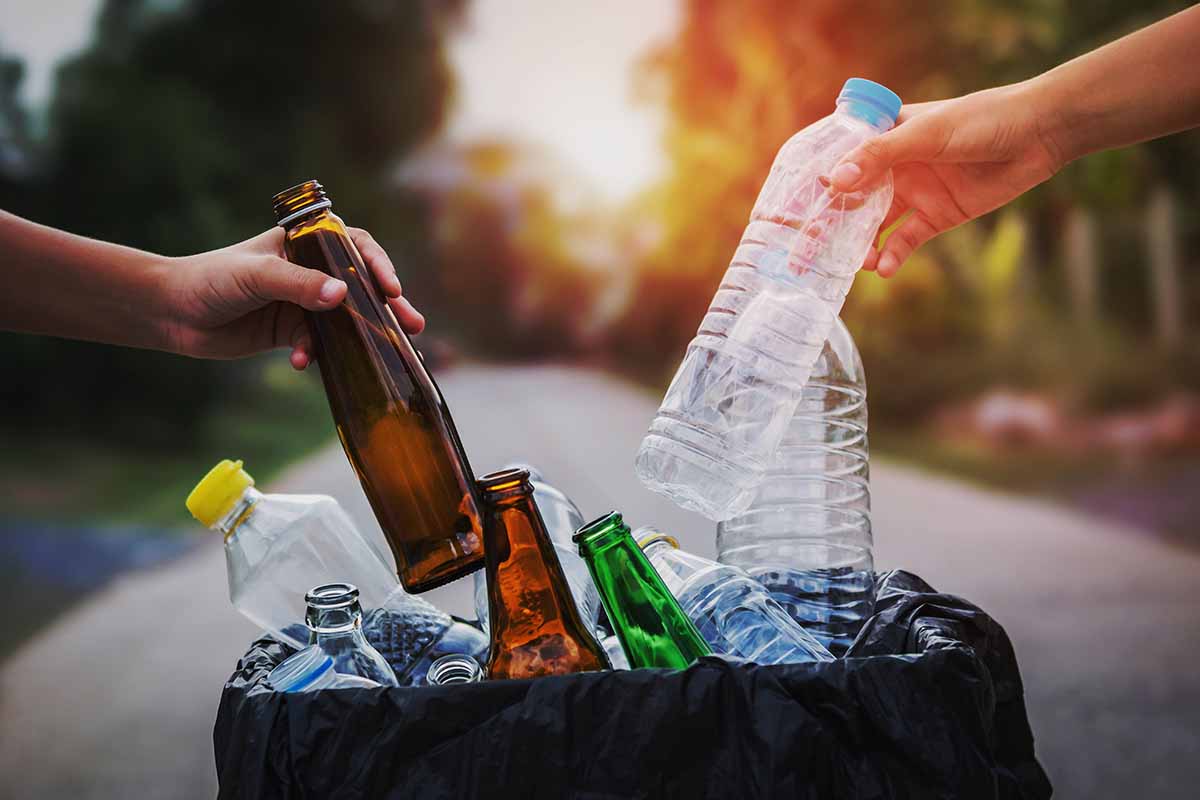
Recovery facilities in California face a number of changes in the wake of legislative updates. | gavrilhurgoi/Shutterstock

Amid a flurry of bills at the end of California’s legislative session, lawmakers passed $1.3 billion in recycling spending and made a number of key policy changes. A recent webinar hinted at what the changes may mean for MRFs.

Susan Collins, president of bottle bill advocacy group the Container Recycling Institute (CRI), presented on the numerous California bills passed and signed in recent weeks.

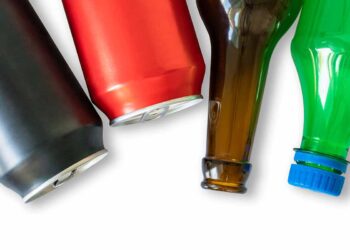
After the passage and signing of Senate Bill 1013, all wine and spirits will be added to the California Redemption Value (CRV) program, which is the Golden State’s bottle and can deposit program. The additions, which go into effect starting Jan. 1, 2024, include wine and spirits in glass bottles, plastic bladders in cardboard boxes, multi-material cartons, plastic pouches and tiny plastic bottles called nips.

As a result, MRFs can likely expect to see a reduced volume of those packages, particularly because the new packaging types – the boxed wine, cartons and pouches – will have a 25-cent deposit, instead of the existing 5-cent or 10-cent deposits.

However, because California has for years struggled with a limited number of redemption locations, many residents forgo their deposits and recycle their CRV containers curbside. That means MRFs should still expect to see wine and liquor containers coming down the conveyor belt.

Here’s the good news for MRFs: After all wine and spirits are added to the CRV program, MRFs can qualify to receive CRV payments from the state when they sort, bale and market those packages. California’s CRV program is unique in that it allows curbside programs to claim deposits for eligible CRV containers, with the payments calculated using bale weight and a formula estimating how much of the weight consists of CRV containers. CalRecycle is currently paying curbside programs about $74 per ton in CRV payments for commingled glass they recover.

Curbside programs can also receive processing payments from the state for handling CRV containers for which the processing costs exceed the scrap value. For glass, the processing payment is currently over $165 per ton.

During the webinar, Collins estimated the changes would result in extra CRV-related payments from the state to curbside and drop-off programs, totaling about $46 million a year. That’s despite the fact they’ll be handling less material due to many wine and liquor containers being diverted to redemption centers instead.

“We were quite vocal on that in saying this is not a good use of government funds,” said Collins, who added that the public is not receiving anything additional for that money.

Of course, sorting of those packaging types presents other problems. Flexible film pouches don’t have consistent end markets, so most MRFs are not equipped to automatically sort them. And because of nips’ small size, they run the risk of falling through sorting screens at MRFs and going to landfills with other MRF residue.

Lots of money for glass downstreams

SB 1013 included other provisions that may affect MRFs, particularly their downstream glass markets.

Collins noted that the bill establishes a glass processing incentive grant program, funded at $4 million annually, to pay glass bottle manufacturers that install equipment to increase their consumption of post-consumer glass. That program started on Jan. 1, 2023.

The bill also calls for creating a new market development payment program for glass, starting Jan. 1, 2023. That program, funded at $60 million per year, will provide payments of up to $50 to bottle manufacturers for each ton of cullet they use. That program sunsets on Jan. 1, 2028.

Collins said the programs don’t make sense because of their timing, however. Wine and spirits won’t be added to the deposit program, thus freeing up greater quantities of recovered glass, until a year later, on Jan. 1, 2024. And she argued that glass bottle plants are already purchasing all the cullet they can.

SB 1013 also creates a grant program, funded with $1 million per year, to offset costs of transporting post-consumer glass bottles to glass beneficiation facilities, which sort and clean up glass for sale to manufacturers. But the program only applies to railroad shipping, not trucking, she noted.

Additionally, the bill boosts total funding for the glass Quality Incentive Payment (QIP) program, which provides payments to MRFs that produce ultra-clean commodities, from $10 million per year to $15 million. The legislation, according to Collins, also restricts the end market for eligible QIP payments to glass bottles, which means it now excludes fiberglass insulation manufacturing.

“There won’t be a need for it because the material won’t need the QIP funding, because we’re going to have clean glass and less through curbside,” she said.

Despite her criticism, Collins pointed to some big benefits from adding wine and spirits to the program. CRI estimates the change will result in the recovery of an additional 300,000 tons of glass per year, and the material coming through redemption centers will be clean. That’s a huge quantity. For comparison, Texas, which has no deposit program, recycled about 120,000 tons of glass containers total in 2019, when the state’s population was over 28 million people.
In California, adding wine and spirits will also mean less litter, reduced energy use and fewer greenhouse gas emissions, she noted.

And because beverage distributors pay fees into the state’s CRV fund, the addition of wine and spirits also means producers will be contributing to the recycling of their products, Collins noted.
 

BHS

Tags: CaliforniaGlassIndustry GroupsLegislation & EnforcementMRFs
TweetShare
Jared Paben

Jared Paben

Related Posts

Spin-off lets Linca focus on battery mineral recovery

GAO: Policy, tech updates needed to bolster domestic mineral supply

byPaul Lane
July 30, 2026

Federal investigators say short- and long-term solutions are needed to decrease the nation’s reliance upon foreign-based minerals.

Facility fires on pace to match 2025

byPaul Lane
July 29, 2026

The mid-year report from Fire Rover found the number of fire incidents remains elevated compared to historical averages.

The State of Oregon seal at a park in Salem, Ore.

MRM bids to run Oregon EPR for second year 

byPaul Lane
July 28, 2026

The company won the competitive process for 2026, but was the only company to apply for the 2027 PRO post.

California releases deposit system update draft rules

Groups move to intervene in SB 343 lawsuit

byStefanie Valentic
July 27, 2026

Earth Island Institute and Californians Against Waste have filed to intervene in the federal lawsuit that halted enforcement of California's...

U.S. Capitol building in Washington, D.C.

House committees advance critical mineral bills

byPaul Lane
July 27, 2026

Congressional votes earlier this month advanced three bills that would expand the nation’s critical mineral recycling capabilities. A subcommittee within...

A call to action: End markets and EPR

EPR faces several key questions

byBrian Clark Howard
July 23, 2026

Panelists discuss the promise and perils of EPR nationwide at the PROP conference in Pennsylvania.

Load More
Next Post

How SB 54 went from twice-failed bill to landmark EPR

2026 Buyers’ Guide

Equipment, services and technology suppliers serving the recycling industry.

Browse the Guide

More Posts

State policy is redefining plastics recycling in the US

State policy is redefining plastics recycling in the US

February 19, 2026
California bill would set up EPR for batteries

California bill would set up EPR for batteries

May 12, 2022

In other news: May 2, 2016

May 2, 2016
Closeup of a printed circuitboard

Hardware demand puts new focus on parts harvesting

June 5, 2026

Recycled copper output climbs as market shows surplus

April 6, 2026
Top stories from March 2025

3 factors force e-scrap processing onshore

June 19, 2026

Umicore highlights strength in recycling, catalysis

February 20, 2026

Alpla decries ‘painful impact’ of recycling market pressures

January 19, 2026
Top stories from August 2024

Top stories from August 2024

September 6, 2024
Phonecheck's phone rating and erasing machine.

AI robot grades, erases up to 55 phones an hour

December 7, 2022
Load More

About & Publications

About Us

Staff

Archive

Magazine

Work With Us

Advertise
Jobs
Contact
Terms and Privacy

Newsletter

Get the latest recycling news and analysis delivered to your inbox every week. Stay ahead on industry trends, policy updates, and insights from programs, processors, and innovators.

Subscribe

Welcome Back!

Login to your account below

Forgotten Password?

Retrieve your password

Please enter your username or email address to reset your password.

Log In

Add New Playlist

No Result
View All Result
  • The Latest
  • Analysis
  • Recycling
  • E-Scrap
  • Plastics
  • Policy Now
  • Conferences
    • E-Scrap Conference
    • Plastics Recycling Conference
    • Resource Recycling Conference
    • Textiles Recovery Summit
  • Magazine
  • About Us
  • Advertise
  • Archive
  • Jobs
  • Staff
Subscribe
This website uses cookies. By continuing to use this website you are giving consent to cookies being used. Visit our Privacy and Cookie Policy.