




Resource Recycling
  • The Latest
  • Analysis
    • All
    • Certification Scorecard
    • Industry Announcements
    • Opinion
    SERI works to restore faith in certifications

    Building a defensible E-scrap evidence file

    tires

    The most important decision in tire recycling happens before the shredder

    Intel sign outside of company building.

    Intel’s CapEx tops $20B on server demand while PC volume shrinks

    Google sign on company building with blue sky and clouds above.

    Inside Alphabet’s Q2 results: More capital spending and cloud backlog

    Alpek closing Pennsylvania RPET plant

    Alpek seizing on war-related opportunity 

    Our top stories from March 2023

    Iron Mountain’s data center report: Strong on power, quiet on hardware

  • Conferences
    • Resource Recycling Conference
    • Plastics Recycling Conference
    • E-Scrap: The Longevity Conference
    • Textiles Recovery Summit
  • Publications
    • E-Scrap News
    • Plastics Recycling Update
    • Policy Now
    • Resource Recycling
    • Other Topics
      • All Topics
      • Brand Owners
      • Critical Minerals
      • Glass
      • Grant Watch / RFPs
      • Markets
      • Organics
      • Packaging
      • Research
      • Technology
      • Textiles
Subscribe
No Result
View All Result
Resource Recycling
  • The Latest
  • Analysis
    • All
    • Certification Scorecard
    • Industry Announcements
    • Opinion
    SERI works to restore faith in certifications

    Building a defensible E-scrap evidence file

    tires

    The most important decision in tire recycling happens before the shredder

    Intel sign outside of company building.

    Intel’s CapEx tops $20B on server demand while PC volume shrinks

    Google sign on company building with blue sky and clouds above.

    Inside Alphabet’s Q2 results: More capital spending and cloud backlog

    Alpek closing Pennsylvania RPET plant

    Alpek seizing on war-related opportunity 

    Our top stories from March 2023

    Iron Mountain’s data center report: Strong on power, quiet on hardware

  • Conferences
    • Resource Recycling Conference
    • Plastics Recycling Conference
    • E-Scrap: The Longevity Conference
    • Textiles Recovery Summit
  • Publications
    • E-Scrap News
    • Plastics Recycling Update
    • Policy Now
    • Resource Recycling
    • Other Topics
      • All Topics
      • Brand Owners
      • Critical Minerals
      • Glass
      • Grant Watch / RFPs
      • Markets
      • Organics
      • Packaging
      • Research
      • Technology
      • Textiles
Subscribe
No Result
View All Result
Resource Recycling
No Result
View All Result
Home Recycling

Study explores cleanliness of food packaging in bins

Marissa HeffernanbyMarissa Heffernan
July 31, 2023
in Recycling
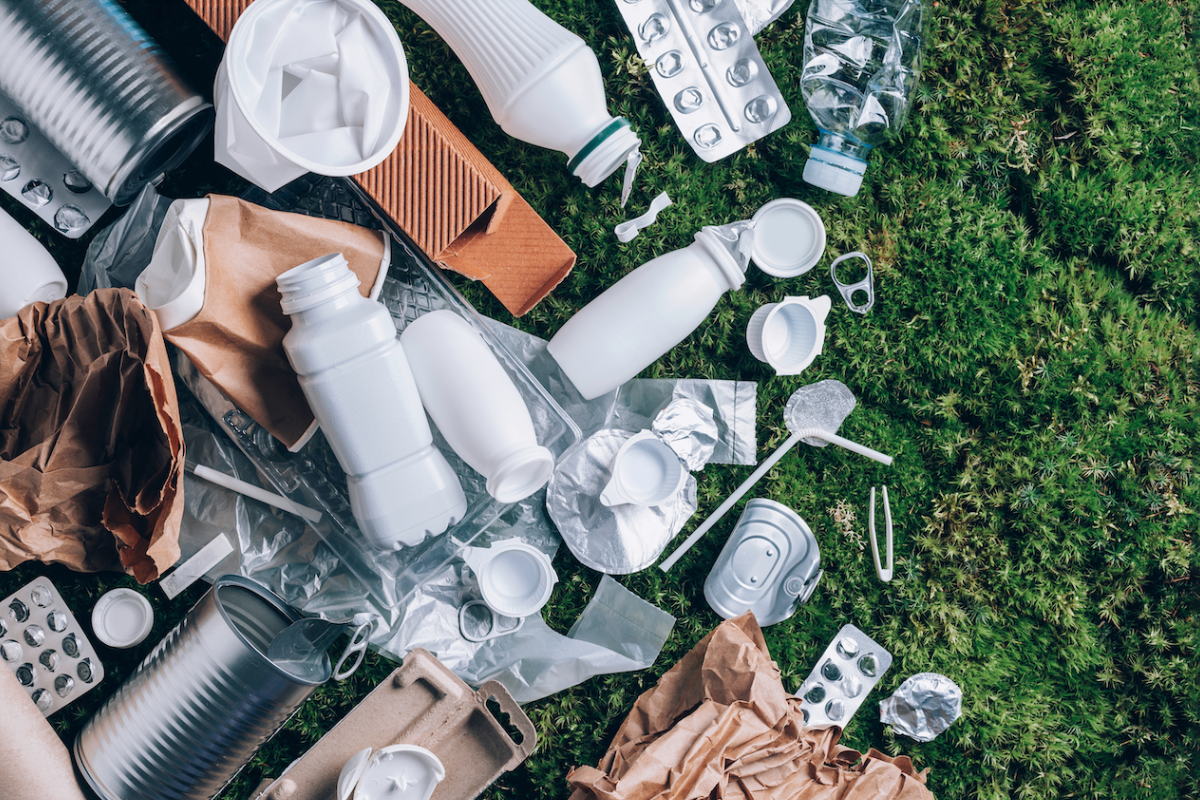
Researchers found that molded fiber food service packaging showed the highest levels of food residue among the items studied. | J.chizhe/Shutterstock

In a follow-up to previous research, the Foodservice Packaging Institute performed an audit of food residue on residential recyclables, finding little difference between food service and food contact items. 

The Foodservice Packaging Institute (FPI), a trade association for the food service packaging industry in North America, has been tracking food residue for some time now, having conducted inquiries into the issue in 2013 and 2014. 

The latest FPI study took place in 2022 and investigated whether levels of food residue on food service packaging differed from those found on the food contact packaging that is more traditionally included in recycling programs. 

All three studies found the residue levels were roughly the same, with one exception noted in the case of molded fiber items. 

The 2022 study defined food service packaging as material used by businesses such as restaurants and fast food chains to package ready-to-eat foods. Examples include pizza boxes, paper cups, plastic cups, clamshells and aluminum trays. Food contact packaging is material more commonly found in grocery stores, such as peanut butter jars, cans or pasta boxes.

Methods and results

The audit was carried out over two days by Resource Recycling Systems (RRS) at a MRF in Michigan. Thirteen samples of residential recyclables, averaging 200 pounds each, were sorted and rated on a scale of 1 to 5 according to the level of visible food residue. 

The results were that the majority of both food contact and food service items were rated at level 1, meaning they were clean with no food residue, or level 2, meaning clean with some crumbs or staining from oils. 

By item type, paperboard and plastic containers for both categories had extremely low rates of significant residue, with 0% of paper items rated at 4 or 5 and 2% of plastic items reaching those rating levels. Peanut butter jars, plastic salad clamshells, ice cream cartons and pizza boxes had the most food residue. 

The two categories for which more than 10% of the items had a level 4 or 5 were corrugated food service packaging at 17% and molded fiber food service packaging at 23%. All of the other categories showed 7% or fewer items with significant residue.

 Molded fiber exhibited the greatest difference in food residue between food contact and food service packaging, with residue observed much more frequently in the food service items. 

“This is both due to some common foodservice molded fiber applications being prone to residue, as well as the most common food contact application (e.g., egg cartons) being exceptionally clean,” the study noted. “Molded Fiber foodservice packages rated a 1 or 2 were typically a drink cup holder, and those rated a 3 or 4 were typically a clamshell or a plate with food residue.” 

FPI President Natha Dempsey said, “The audits help to provide additional information on what little difference there is between food contact and foodservice packaging items in the ability to process materials for recycling.”


Tags: ContaminationIndustry GroupsResearch
TweetShare
Marissa Heffernan

Marissa Heffernan

Marissa Heffernan worked at Resource Recycling from January 2022 through June 2025, first as staff reporter and then as associate editor. Marissa Heffernan started working for Resource Recycling in January 2022 after spending several years as a reporter at a daily newspaper in Southwest Washington. After developing a special focus on recycling policy, they were also the editor of the monthly newsletter Policy Now.

Related Posts

tires

The most important decision in tire recycling happens before the shredder

byPaul Downey, Pliteq
August 3, 2026

Contamination gets the attention, but classification is the bottleneck that actually decides who wins.

Penn State professor Maryam Shahri speaks at the PROP conference in Lancaster, Pennsylvania July 23, 2026.

How to get more people to recycle

byBrian Clark Howard
July 24, 2026

Harness the power of behavioral marketing, panelists said at the PROP conference in Pennsylvania.

Amazon plastic use flat despite shift to paper

Amazon plastic use flat despite shift to paper

byAntoinette Smith
July 22, 2026

In its latest sustainability report, the e-commerce giant noted a decrease of less than 1% for volumes of single-use plastic...

RecyClass hits 500 EU recyclability evals

RecyClass hits 500 EU recyclability evals

byAntoinette Smith
July 21, 2026

The most recent evaluations include Avery Dennison's RFID tag for PET bottles, ahead of the first PPWR enforcement in mid-August.

Surveys examine gaps in consumer recycling education

Interest up, volume down for battery recycling

byPaul Lane
July 21, 2026

Online engagement spurred a spike in battery collection sites, according to The Battery Network, although total participation fell slightly on...

Former president of CRT processor sentenced to prison

Groups say injunction doesn’t settle labeling issues

byStefanie Valentic
July 17, 2026

Californians Against Waste and the National Stewardship Action Council say a federal injunction blocking SB 343 pauses enforcement but still...

Load More
Next Post

Here's what cities in Oregon want to see under EPR

2026 Buyers’ Guide

Equipment, services and technology suppliers serving the recycling industry.

Browse the Guide

More Posts

State policy is redefining plastics recycling in the US

State policy is redefining plastics recycling in the US

February 19, 2026
Closeup of a printed circuitboard

Hardware demand puts new focus on parts harvesting

June 5, 2026
Apple store

Apple leads on inputs, faces questions on ITAD

May 1, 2026
Analysis: circular design still elusive in laptops

PC shipments grew in Q1, but questions remain

April 23, 2026

Recycled copper output climbs as market shows surplus

April 6, 2026

In other news: May 2, 2016

May 2, 2016

Umicore highlights strength in recycling, catalysis

February 20, 2026
California bill would set up EPR for batteries

California bill would set up EPR for batteries

May 12, 2022
Ten e-scrap projects receive federal prize funds

Recycling rates for rare earths could double by 2040

July 17, 2026

ITAD is moving past its adolescent phase: beyond end-of-life

June 10, 2026
Load More

About & Publications

About Us

Staff

Archive

Magazine

Work With Us

Advertise
Jobs
Contact
Terms and Privacy

Newsletter

Get the latest recycling news and analysis delivered to your inbox every week. Stay ahead on industry trends, policy updates, and insights from programs, processors, and innovators.

Subscribe

Welcome Back!

Login to your account below

Forgotten Password?

Retrieve your password

Please enter your username or email address to reset your password.

Log In

Add New Playlist

No Result
View All Result
  • The Latest
  • Analysis
  • Recycling
  • E-Scrap
  • Plastics
  • Policy Now
  • Conferences
    • E-Scrap Conference
    • Plastics Recycling Conference
    • Resource Recycling Conference
    • Textiles Recovery Summit
  • Magazine
  • About Us
  • Advertise
  • Archive
  • Jobs
  • Staff
Subscribe
This website uses cookies. By continuing to use this website you are giving consent to cookies being used. Visit our Privacy and Cookie Policy.