




Resource Recycling
  • The Latest
  • Analysis
    • All
    • Certification Scorecard
    • Industry Announcements
    • Opinion
    SERI works to restore faith in certifications

    Building a defensible E-scrap evidence file

    tires

    The most important decision in tire recycling happens before the shredder

    Intel sign outside of company building.

    Intel’s CapEx tops $20B on server demand while PC volume shrinks

    Google sign on company building with blue sky and clouds above.

    Inside Alphabet’s Q2 results: More capital spending and cloud backlog

    Alpek closing Pennsylvania RPET plant

    Alpek seizing on war-related opportunity 

    Our top stories from March 2023

    Iron Mountain’s data center report: Strong on power, quiet on hardware

  • Conferences
    • Resource Recycling Conference
    • Plastics Recycling Conference
    • E-Scrap: The Longevity Conference
    • Textiles Recovery Summit
  • Publications
    • E-Scrap News
    • Plastics Recycling Update
    • Policy Now
    • Resource Recycling
    • Other Topics
      • All Topics
      • Brand Owners
      • Critical Minerals
      • Glass
      • Grant Watch / RFPs
      • Markets
      • Organics
      • Packaging
      • Research
      • Technology
      • Textiles
Subscribe
No Result
View All Result
Resource Recycling
  • The Latest
  • Analysis
    • All
    • Certification Scorecard
    • Industry Announcements
    • Opinion
    SERI works to restore faith in certifications

    Building a defensible E-scrap evidence file

    tires

    The most important decision in tire recycling happens before the shredder

    Intel sign outside of company building.

    Intel’s CapEx tops $20B on server demand while PC volume shrinks

    Google sign on company building with blue sky and clouds above.

    Inside Alphabet’s Q2 results: More capital spending and cloud backlog

    Alpek closing Pennsylvania RPET plant

    Alpek seizing on war-related opportunity 

    Our top stories from March 2023

    Iron Mountain’s data center report: Strong on power, quiet on hardware

  • Conferences
    • Resource Recycling Conference
    • Plastics Recycling Conference
    • E-Scrap: The Longevity Conference
    • Textiles Recovery Summit
  • Publications
    • E-Scrap News
    • Plastics Recycling Update
    • Policy Now
    • Resource Recycling
    • Other Topics
      • All Topics
      • Brand Owners
      • Critical Minerals
      • Glass
      • Grant Watch / RFPs
      • Markets
      • Organics
      • Packaging
      • Research
      • Technology
      • Textiles
Subscribe
No Result
View All Result
Resource Recycling
No Result
View All Result
Home Recycling

Illinois eyes bottle bill, amends SB 85 multiple times

Marissa HeffernanbyMarissa Heffernan
January 5, 2024
in Recycling
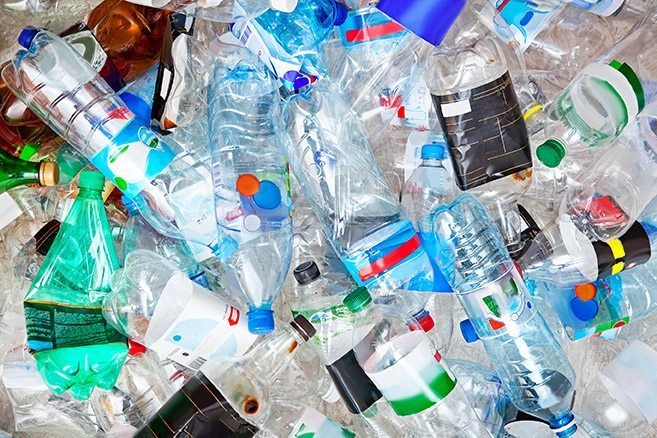
Illinois stakeholders have been workshopping a beverage container deposit return system under Senate Bill 85. | luckyraccoon/Shutterstock

Illinois may or may not be the next state to pass a bill setting up a beverage container deposit return system under Senate Bill 85, and industry players recently debated the benefits and concerns around the bill. 

During an Illinois Recycling Foundation webinar on Dec. 12, several stakeholders discussed the work being done to create a deposit return system (DRS) in Illinois, namely SB 85. 

Scott Breen, vice president of sustainability at the Can Manufacturers Institute (CMI), said the bill was “trying to find the sweet spot” between higher recycling rates, cost savings to municipalities, reduced litter, fewer landfill tipping fees and the needs of MRFs. 

“We’re trying to get this bill in place so it works for everybody,” he said. “This is fundamentally changing how people buy and return beverage containers and also impacts the recycling industry, so this is serious stuff. There’s a lot of money and jobs wrapped up in this.” 

Scott DeFife, president at the Glass Packaging Institute, noted that current bottle bill states supply the majority of the glass in the Midwest, but its “still not enough to meet the demand of all the plants in the region.” 

He noted that bottle bills could help increase those numbers, but right now, “very few MRFs meet the standards in the bill.” 

“They can get there though, but it’s very hard for glass that is single stream,” he warned. 

Todd Shumaker, owner and director of procurement for Midwest Fiber Recycling, raised concerns about SB 85 removing high value material from the stream and that costs will be passed on to customers. He also had worries about recyclers such as his company that get some out-of-state material and how that would be handled under the bill. Shumaker noted he was surprised the bill doesn’t include a minimum recycled content requirement in new container production.

Shumaker also pointed out that the industry has been reactive and made “hundreds of millions of dollars of investment to new MRFs and improvements.” 

“We all have the same goal,” he said. “We all live in a world where we want to see more collection of material, [the question is] just how we make it happen.”

Changes to the bill 

SB 85 has undergone two amendments – once in April and once in November – since it was introduced in January 2023. The amendments changed redemption rates, lowered target redemption goals, clarified retailer obligations and added several studies. 

The initial bill established the Distributor and Importer Responsibility Organization and set out labeling requirements, performance targets, reporting requirements and required the Organization to establish an Operations Advisory Committee and an Equity and Access Advisory Committee. 

The proposed DRS would exclude drugs regulated under the Federal Food, Drug, and Cosmetic Act,  infant formula and meal replacement liquids. 

The first version of the bill set the refund value at 10 cents for containers 24 fluid ounces or less and fifteen cents for containers more than 24 fluid ounces. The amendments change that value to five cents for 24 fluid ounces or less and 10 cents for larger containers, with those rates rising five cents apiece after two years. 

The latest version also eliminated a provision that would have increased deposit values to 15 cents and 20 cents for the smaller and larger containers, respectively, if the redemption rate did not reach 80% for two consecutive years.

All three versions of the bill stated that any unclaimed refunds go to the producer organization. 

Retailer redemption obligations are set by square footage in the latest version of the bill, a change from the parking space system set out in the first version. Under the amended version, retailers will also be compensated under a formula developed by the state and producer organization. 

Retailers that primarily prepare food for sale or sell beverage containers primarily through stand-alone vending machines or by similar means are exempt from the redemption obligations. 

“Very few MRFs meet the standards in the bill. They can get there, though.” –Scott DeFife, president at the Glass Packaging Institute

As for convenience standards, the original bill set a standard of one beverage container processing mechanism per 500 people in zip codes with a population density greater than 30,000 residents per square mile. That was amended to indicate that the state, in consultation with the producer organization, will develop convenience standards that have processing mechanisms “within a reasonable distance of each resident of the State with the recognition that what is reasonable may depend on a variety of factors, including population density, proximity to public transit, and the number of retailers in the area.” 

Performance targets underwent significant changes between bill versions. The initial version set a 70% annual redemption rate for all beverage containers after two years, which rose to 75% at four years, 85% at six years and 90% at eight years. The final 90% goal was removed in later versions. 

The initial version also allowed the state to take over from the producer organization if the performance targets were not met over 7 consecutive years, but that provision was removed. The amended bill includes penalties for not hitting targets and requirements to resubmit product stewardship plans. 

The amended bill clarified that “recycling” does not include producing a fuel or fuel substitute; chemical conversion (such as solvolysis or depolymerization); incineration (such as waste-to-energy); or the use of material “within the footprint of a landfill.”

Amendments also added direct payments to drop-off facility operators and MRFs (equal to 5% of the scrap value from the beverage container material the producer organization sold in the preceding calendar year and 80% of the refund value); bale quality payments; a reuse study; a grant program funded by 5% of unclaimed deposits annually for education, infrastructure, or litter clean-up; and more detailed reporting requirements.

Breen said the payments to MRFs and facility operators were added because “we want them to be made whole and keep operating.” 

“We believe that these two revenue streams can offset the revenue loss or even be greater than the revenue loss” that will occur by removing UBCs from the curbside stream, he said. 
Tags: Container DepositsIndustry GroupsLegislation & EnforcementPolicy Now
TweetShare
Marissa Heffernan

Marissa Heffernan

Marissa Heffernan worked at Resource Recycling from January 2022 through June 2025, first as staff reporter and then as associate editor. Marissa Heffernan started working for Resource Recycling in January 2022 after spending several years as a reporter at a daily newspaper in Southwest Washington. After developing a special focus on recycling policy, they were also the editor of the monthly newsletter Policy Now.

Related Posts

Spin-off lets Linca focus on battery mineral recovery

GAO: Policy, tech updates needed to bolster domestic mineral supply

byPaul Lane
July 30, 2026

Federal investigators say short- and long-term solutions are needed to decrease the nation’s reliance upon foreign-based minerals.

The State of Oregon seal at a park in Salem, Ore.

MRM bids to run Oregon EPR for second year 

byPaul Lane
July 28, 2026

The company won the competitive process for 2026, but was the only company to apply for the 2027 PRO post.

California releases deposit system update draft rules

Groups move to intervene in SB 343 lawsuit

byStefanie Valentic
July 27, 2026

Earth Island Institute and Californians Against Waste have filed to intervene in the federal lawsuit that halted enforcement of California's...

U.S. Capitol building in Washington, D.C.

House committees advance critical mineral bills

byPaul Lane
July 27, 2026

Congressional votes earlier this month advanced three bills that would expand the nation’s critical mineral recycling capabilities. A subcommittee within...

Amazon plastic use flat despite shift to paper

Amazon plastic use flat despite shift to paper

byAntoinette Smith
July 22, 2026

In its latest sustainability report, the e-commerce giant noted a decrease of less than 1% for volumes of single-use plastic...

RecyClass hits 500 EU recyclability evals

RecyClass hits 500 EU recyclability evals

byAntoinette Smith
July 21, 2026

The most recent evaluations include Avery Dennison's RFID tag for PET bottles, ahead of the first PPWR enforcement in mid-August.

Load More
Next Post

California’s composting mandate drives market growth

2026 Buyers’ Guide

Equipment, services and technology suppliers serving the recycling industry.

Browse the Guide

More Posts

State policy is redefining plastics recycling in the US

State policy is redefining plastics recycling in the US

February 19, 2026
California bill would set up EPR for batteries

California bill would set up EPR for batteries

May 12, 2022
Closeup of a printed circuitboard

Hardware demand puts new focus on parts harvesting

June 5, 2026
Apple store

Apple leads on inputs, faces questions on ITAD

May 1, 2026
Analysis: circular design still elusive in laptops

PC shipments grew in Q1, but questions remain

April 23, 2026

In other news: May 2, 2016

May 2, 2016

Recycled copper output climbs as market shows surplus

April 6, 2026

ITAD is moving past its adolescent phase: beyond end-of-life

June 10, 2026
TÜV rolls out traceability audits for recycled inputs

TÜV rolls out traceability audits for recycled inputs

January 14, 2026
E-Scrap EPR round-up part 2: California

E-Scrap EPR round-up part 2: California

September 25, 2025
Load More

About & Publications

About Us

Staff

Archive

Magazine

Work With Us

Advertise
Jobs
Contact
Terms and Privacy

Newsletter

Get the latest recycling news and analysis delivered to your inbox every week. Stay ahead on industry trends, policy updates, and insights from programs, processors, and innovators.

Subscribe

Welcome Back!

Login to your account below

Forgotten Password?

Retrieve your password

Please enter your username or email address to reset your password.

Log In

Add New Playlist

No Result
View All Result
  • The Latest
  • Analysis
  • Recycling
  • E-Scrap
  • Plastics
  • Policy Now
  • Conferences
    • E-Scrap Conference
    • Plastics Recycling Conference
    • Resource Recycling Conference
    • Textiles Recovery Summit
  • Magazine
  • About Us
  • Advertise
  • Archive
  • Jobs
  • Staff
Subscribe
This website uses cookies. By continuing to use this website you are giving consent to cookies being used. Visit our Privacy and Cookie Policy.