





Resource Recycling
  • The Latest
  • Analysis
    • All
    • Certification Scorecard
    • Industry Announcements
    • Opinion
    SERI works to restore faith in certifications

    Building a defensible E-scrap evidence file

    tires

    The most important decision in tire recycling happens before the shredder

    Intel sign outside of company building.

    Intel’s CapEx tops $20B on server demand while PC volume shrinks

    Google sign on company building with blue sky and clouds above.

    Inside Alphabet’s Q2 results: More capital spending and cloud backlog

    Alpek closing Pennsylvania RPET plant

    Alpek seizing on war-related opportunity 

    Our top stories from March 2023

    Iron Mountain’s data center report: Strong on power, quiet on hardware

  • Conferences
    • Resource Recycling Conference
    • Plastics Recycling Conference
    • E-Scrap: The Longevity Conference
    • Textiles Recovery Summit
  • Publications
    • E-Scrap News
    • Plastics Recycling Update
    • Policy Now
    • Resource Recycling
    • Other Topics
      • All Topics
      • Brand Owners
      • Critical Minerals
      • Glass
      • Grant Watch / RFPs
      • Markets
      • Organics
      • Packaging
      • Research
      • Technology
      • Textiles
Subscribe
No Result
View All Result
Resource Recycling
  • The Latest
  • Analysis
    • All
    • Certification Scorecard
    • Industry Announcements
    • Opinion
    SERI works to restore faith in certifications

    Building a defensible E-scrap evidence file

    tires

    The most important decision in tire recycling happens before the shredder

    Intel sign outside of company building.

    Intel’s CapEx tops $20B on server demand while PC volume shrinks

    Google sign on company building with blue sky and clouds above.

    Inside Alphabet’s Q2 results: More capital spending and cloud backlog

    Alpek closing Pennsylvania RPET plant

    Alpek seizing on war-related opportunity 

    Our top stories from March 2023

    Iron Mountain’s data center report: Strong on power, quiet on hardware

  • Conferences
    • Resource Recycling Conference
    • Plastics Recycling Conference
    • E-Scrap: The Longevity Conference
    • Textiles Recovery Summit
  • Publications
    • E-Scrap News
    • Plastics Recycling Update
    • Policy Now
    • Resource Recycling
    • Other Topics
      • All Topics
      • Brand Owners
      • Critical Minerals
      • Glass
      • Grant Watch / RFPs
      • Markets
      • Organics
      • Packaging
      • Research
      • Technology
      • Textiles
Subscribe
No Result
View All Result
Resource Recycling
No Result
View All Result
Home Recycling

Closed Loop report shows results of state bag bans

Antoinette SmithbyAntoinette Smith
July 22, 2025
in Recycling
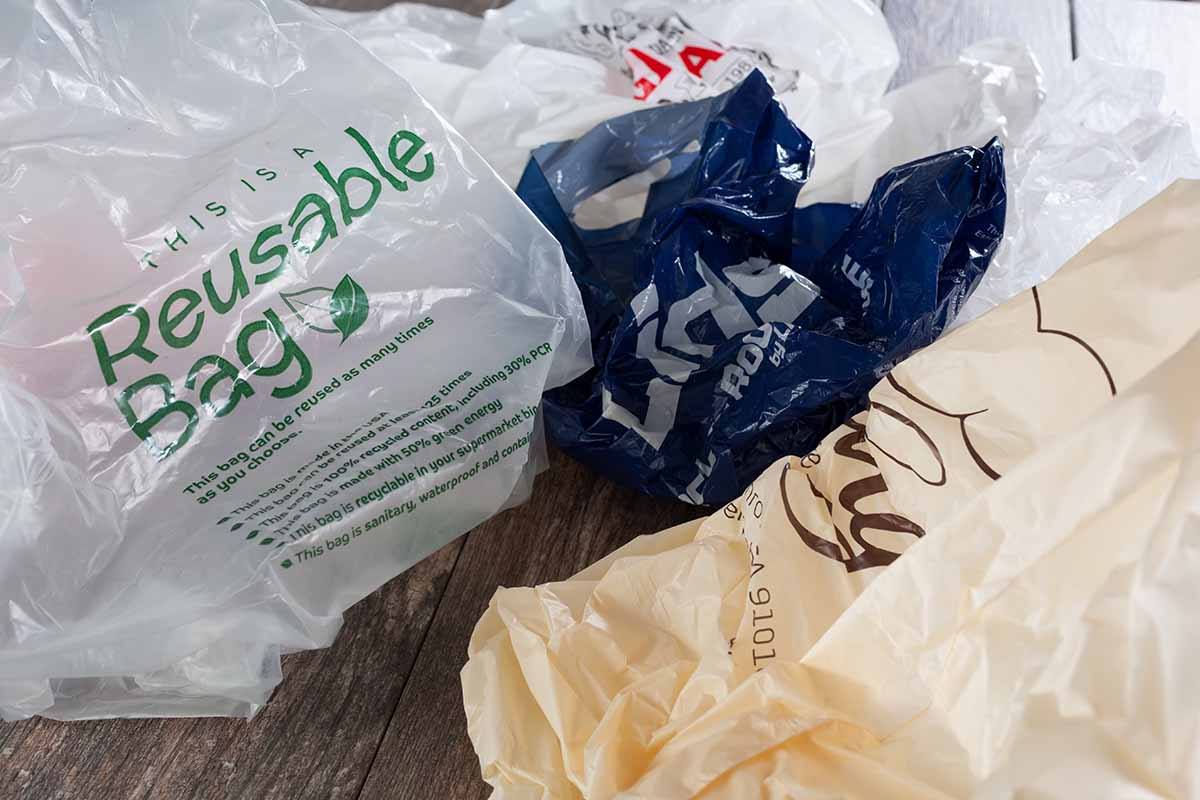
Analysis from a Closed Loop consortium studied numerous state-level methods for reducing bag waste and informed considerations for policymakers. | The Image Party/Shutterstock

A new report on state-level single-use bag laws indicates that New Jersey’s ban has had numerous effects, both positive and negative. 

The Consortium to Reinvent the Retail Bag studied various legislative means of reducing bag waste and how bag fees and bans affected waste and consumer behavior. The group is managed by Closed Loop Partners’ Center for the Circular Economy. 

So far, 12 states have implemented bans on single-use plastic bags: California, Colorado, Connecticut, Delaware, Hawai’i, Maine, New Jersey, New York, Oregon, Rhode Island, Vermont and Washington. In addition, numerous municipalities have banned and/or imposed fees for bag use, including Chicago, New York City and Los Angeles. 

The New Jersey law took effect in May 2022. As the most restrictive U.S. legislation, it prohibits distribution of single-use bags, regardless of material, though it does allow smaller grocers to offer paper bags. While the new analysis shows a significant reduction in consumption of single-use bags, regardless of material, it also indicates that more customers are accumulating too many reusable bags. 

Using the study results, the Consortium also provides a list of policy considerations for reducing waste, environmental impact and costs associated with bags. Among these considerations is enabling customers to bring their own bags or do without. In addition, the group asserts that bag bans alone do not ensure behavior change or reduced environmental impact, and that bag fees are the only legislative tool guaranteed to decrease single-use bag consumption.

Customers amass reusable bags in first year of ban 

Over the first year of the ban, the Consortium sent four surveys to state residents to gauge awareness, understanding and other measures surrounding single-use bags, and received a total of 2,600 responses. The group also analyzed two years of store data — one year before and one year after the ban was implemented — on procurement and sales of single-use bags, as well as for reusable bags of various materials.  

The primary findings were that:

  • Stores gave out 96% fewer bags per week, or about 90 million fewer across 33 stores.
  • During the first four months of the ban, customers were adapting behavior to the new law and sales of reusable bags rose.
  • A year after the ban, nearly all respondents said they owned enough or too many reusable bags; those with too many who wished to dispose of them rose significantly too.

A year after the ban took effect, 91% of those surveyed reported owning enough or too many reusable bags — an increase from 75% at implementation. Further, 16% indicated they had too many reusable bags and wanted to dispose of them, a rise of 11 points from a year earlier.  

The method of shopping also influenced bag use. Online item ordering used a disproportionate number of bags, with curbside pickup and similar methods representing only 6% of average grocery store sales but 32% of reusable bag use. 

Throughout the course of the survey, customer sentiment remained mostly unchanged, with 41% of respondents happy with the legislation a year after implementation, compared to 43% in May 2022. Those expressing confusion about the law dropped by 4 points to 10% over the year. Other emotions expressed were:

  • Frustration: 35%, up 3 points.
  • Anger: 23%, up 1 point.
  • Indifference: 22%, unchanged.

Policy considerations

The survey reinforced the notion that helping customers bring their own bags or go without is the best approach, a key consideration for regulators and policymakers charged with addressing bag waste. Other considerations the Consortium provided include:

  • Create uniform state- or regional-level legislation for a consistent customer experience, to reinforce behavior and ease the burden of retailer compliance.
  • Develop zero- or lower-waste alternatives for pickup and delivery channels.
  • Implement recovery and recycling systems for any bags used, including reusable options.
  • Consider socioeconomic impacts of proposed legislation, including that bag fees disproportionately affect lower income individuals.

Coming soon: New consumer campaign 

To accompany the study, the Consortium plans to launch a new consumer-facing campaign this summer, with details expected within the next month, according to a press release. 

In 2023, the Consortium conducted a three-month pilot project tracking the effects of store signage and employee training on consumer behavior. The project showed a nearly 4.8% decrease in single-use bags across the two studied markets — Denver and Tucson — and a 11.7% reduction in Denver, which has a 10-cent fee on single-use bags.  

A version of this story appeared in Plastics Recycling Update on July 16.
Tags: Policy Now
TweetShare
Antoinette Smith

Antoinette Smith

Antoinette Smith has covered commodity plastics and supply chains for more than a decade, with a special focus on economic impacts and consumer behavior. She brings a balanced, thoughtful view to recycling stories, and isn't afraid to ask "why?" Contact Antoinette at antoinette@dev.resource-recycling.com.

Related Posts

California releases deposit system update draft rules

Groups move to intervene in SB 343 lawsuit

byStefanie Valentic
July 27, 2026

Earth Island Institute and Californians Against Waste have filed to intervene in the federal lawsuit that halted enforcement of California's...

Former president of CRT processor sentenced to prison

Groups say injunction doesn’t settle labeling issues

byStefanie Valentic
July 17, 2026

Californians Against Waste and the National Stewardship Action Council say a federal injunction blocking SB 343 pauses enforcement but still...

US recycling rates rise despite drop in bottles

byAntoinette Smith
July 16, 2026

Although rates saw slight gains over two years, the data highlight the need for policy solutions to unlock growth in...

CarbonLite to open $60 million Pennsylvania plant

Federal judge blocks CA ‘Truth in Recycling’ (SB 343) law

byStefanie Valentic
July 15, 2026

A federal judge has blocked California from enforcing SB 343's recyclability labeling restrictions, ruling the "Truth in Recycling" law is...

SB 54 draft rules generate debate on rates, review

California increases PET market payments

byAntoinette Smith
July 7, 2026

While the state extended the incentive program, the status of a separate bill with similar goals is uncertain.

Two recycled-content bills gain approval in California

California agriculture seeks SB 54 repeal

byStefanie Valentic
July 7, 2026

A coalition of state agriculture stakeholders says the packaging law could add nearly $1,400 a year to household grocery costs...

Load More
Next Post

How AI sorting tech can help meet emerging EPR needs

2026 Buyers’ Guide

Equipment, services and technology suppliers serving the recycling industry.

Browse the Guide

More Posts

State policy is redefining plastics recycling in the US

State policy is redefining plastics recycling in the US

February 19, 2026
California bill would set up EPR for batteries

California bill would set up EPR for batteries

May 12, 2022

In other news: May 2, 2016

May 2, 2016
Closeup of a printed circuitboard

Hardware demand puts new focus on parts harvesting

June 5, 2026

Recycled copper output climbs as market shows surplus

April 6, 2026
Top stories from March 2025

3 factors force e-scrap processing onshore

June 19, 2026

Umicore highlights strength in recycling, catalysis

February 20, 2026

Alpla decries ‘painful impact’ of recycling market pressures

January 19, 2026
Top stories from August 2024

Top stories from August 2024

September 6, 2024
Phonecheck's phone rating and erasing machine.

AI robot grades, erases up to 55 phones an hour

December 7, 2022
Load More

About & Publications

About Us

Staff

Archive

Magazine

Work With Us

Advertise
Jobs
Contact
Terms and Privacy

Newsletter

Get the latest recycling news and analysis delivered to your inbox every week. Stay ahead on industry trends, policy updates, and insights from programs, processors, and innovators.

Subscribe

Welcome Back!

Login to your account below

Forgotten Password?

Retrieve your password

Please enter your username or email address to reset your password.

Log In

Add New Playlist

No Result
View All Result
  • The Latest
  • Analysis
  • Recycling
  • E-Scrap
  • Plastics
  • Policy Now
  • Conferences
    • E-Scrap Conference
    • Plastics Recycling Conference
    • Resource Recycling Conference
    • Textiles Recovery Summit
  • Magazine
  • About Us
  • Advertise
  • Archive
  • Jobs
  • Staff
Subscribe
This website uses cookies. By continuing to use this website you are giving consent to cookies being used. Visit our Privacy and Cookie Policy.