





Resource Recycling
  • The Latest
  • Analysis
    • All
    • Certification Scorecard
    • Industry Announcements
    • Opinion

    ITAD is moving past its adolescent phase: beyond end-of-life

    Rainforest

    Inside the Circle: What the rainforest can teach us about EPR

    Closeup of a printed circuitboard

    Hardware demand puts new focus on parts harvesting

    Rare look inside the world’s largest plastics recycler

    Mass balance matters: Why different rules can lead to different outcomes 

    Certification Scorecard — Week of June 1, 2026

    IT asset disposition and electronics recycling: Now and then

    $60 billion in AI servers will create an ITAD challenge

  • Conferences
    • Resource Recycling Conference
    • Plastics Recycling Conference
    • E-Scrap: The Longevity Conference
    • Textiles Recovery Summit
  • Publications
    • E-Scrap News
    • Plastics Recycling Update
    • Policy Now
    • Resource Recycling
    • Other Topics
      • All Topics
      • Brand Owners
      • Critical Minerals
      • Glass
      • Grant Watch / RFPs
      • Markets
      • Organics
      • Packaging
      • Research
      • Technology
      • Textiles
Subscribe
No Result
View All Result
Resource Recycling
  • The Latest
  • Analysis
    • All
    • Certification Scorecard
    • Industry Announcements
    • Opinion

    ITAD is moving past its adolescent phase: beyond end-of-life

    Rainforest

    Inside the Circle: What the rainforest can teach us about EPR

    Closeup of a printed circuitboard

    Hardware demand puts new focus on parts harvesting

    Rare look inside the world’s largest plastics recycler

    Mass balance matters: Why different rules can lead to different outcomes 

    Certification Scorecard — Week of June 1, 2026

    IT asset disposition and electronics recycling: Now and then

    $60 billion in AI servers will create an ITAD challenge

  • Conferences
    • Resource Recycling Conference
    • Plastics Recycling Conference
    • E-Scrap: The Longevity Conference
    • Textiles Recovery Summit
  • Publications
    • E-Scrap News
    • Plastics Recycling Update
    • Policy Now
    • Resource Recycling
    • Other Topics
      • All Topics
      • Brand Owners
      • Critical Minerals
      • Glass
      • Grant Watch / RFPs
      • Markets
      • Organics
      • Packaging
      • Research
      • Technology
      • Textiles
Subscribe
No Result
View All Result
Resource Recycling
No Result
View All Result
Home Recycling

Women in Circularity: Charlotte Boesch

byMaryEllen Etienne
July 29, 2025
in Recycling

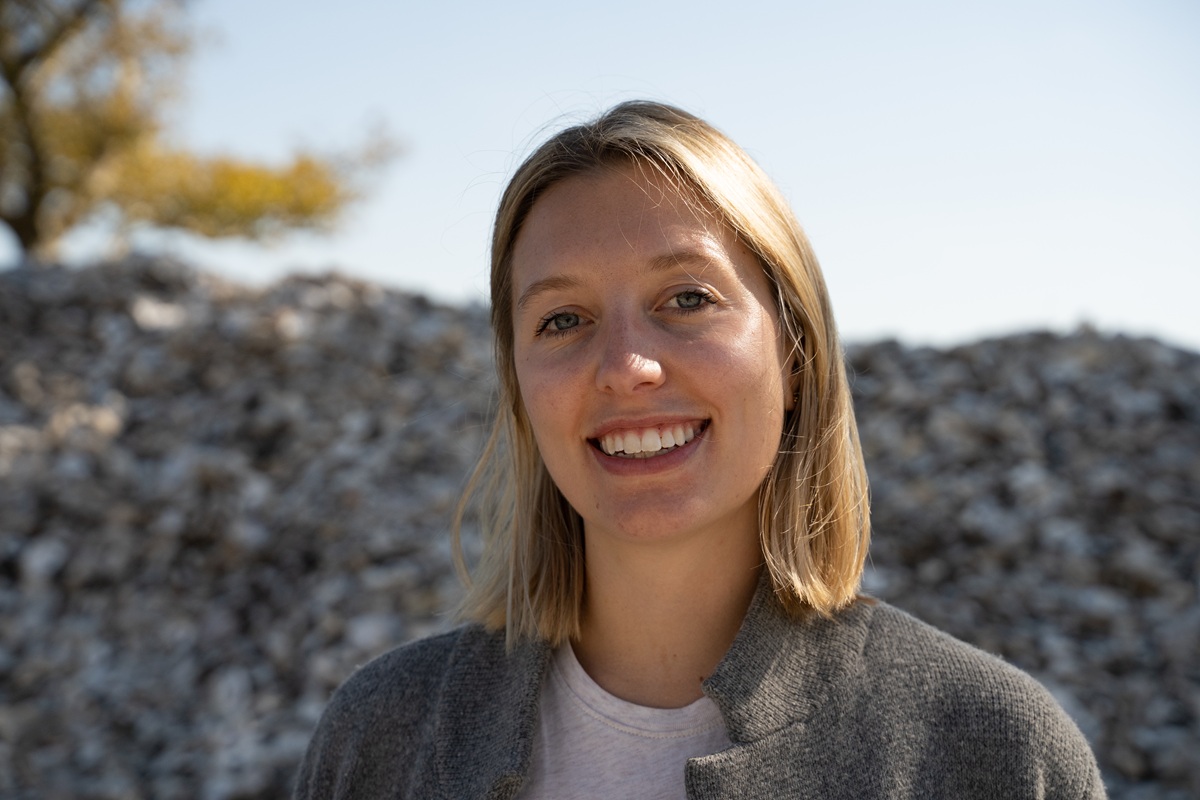
A warm welcome back to “Women in Circularity,” where we shine a light on women moving us toward a circular economy. This month, I was pleased to connect with a regenerative system builder: Charlotte Boesch. Charlotte is a Senior Program Manager for the Billion Oyster Project, a nonprofit dedicated to restoring oyster reefs to New York Harbor through public private partnerships and education initiatives. Charlotte has over a decade of experience in stakeholder engagement and circular systems development.

What sparked your interest in circular economy work and how has your career evolved to reflect that passion?

Growing up, my mother never let food go to waste—every vegetable scrap went into the compost, every leftover found new life in the next meal. This early lesson in resourcefulness planted the seeds for my understanding that “waste” is often just a resource in the wrong place. My passion for circular systems deepened through childhood summers spent clamming in tidal flats and digging in my family’s vegetable garden, where I witnessed firsthand how natural systems operate in perfect cycles. This foundation led me to pursue Anthropology and Environmental Studies at Hamilton College, followed by a Master’s in Food Studies from NYU, where I explored how humans interact with nature through what we grow and eat. My career has evolved from teaching children about local food systems at Stone Barns Center for Food and Agriculture to now managing an innovative circular program in New York City. At Billion Oyster Project, I oversee the transformation of what restaurants typically discard—oyster shells—into the building blocks for marine habitat restoration. It’s the ultimate expression of circular thinking: yesterday’s dinner becomes tomorrow’s living reef.

How is the Billion Oyster Project advancing circularity?

Billion Oyster Project is recycling oyster shells from restaurants—typically destined for landfills—to restore oyster reefs in New York Harbor, creating a local circular loop that benefits both the hospitality industry and marine ecosystems. I manage relationships with over 75 restaurant partners across NYC, collecting more than 300,000 pounds of shells annually that become the foundation for new oyster habitat. We’re shifting how the hospitality industry thinks about waste by demonstrating that their “byproducts” are actually valuable resources. Instead of viewing oyster shells as waste to be hauled away, our partners now see them as valuable materials for habitat restoration. We’ve created a system where the environmental impact of enjoying oysters actually becomes positive—the shells return to create a new oyster habitat that filters water, protects coastlines from storms and supports biodiversity.

Of all the projects you have worked on, is there one that you found especially transformative in terms of its approach to circular design?

The most transformative project I’ve worked on has been developing our restaurant partnership program because it demonstrates how successful circular design must engage every possible stakeholder. The public-private partnership model connects partners at every level—from individual chefs and diners who now see shells as habitat rather than waste and state agencies developing waste diversion policies, to corporate partners that want to align with circular principles and restoration practitioners in coastal cities across the country, scaling a similar model. In a single week, I might work with a Michelin-starred chef passionate about sustainability, chat with a city agency funding organic composting, train restaurant servers on proper shell separation and conduct a field outing with students interested in marine policy. This multi-stakeholder approach means our circular system has roots everywhere — restaurant owners see cost savings and marketing benefits, diners feel good about their environmental impact, city agencies meet waste diversion goals and marine ecologists restore critical habitat. The program succeeds because we’ve made it possible for everyone from back of house staff to government officials to play a meaningful role in closing the loop. When circular design creates space for participants to contribute their unique skills and interests, it becomes both scalable and sustainable.

What emerging trend in the circular economy space are you most energized by, and where do you think the greatest opportunity lies for growth or disruption?

I’m most energized by the growing recognition that marine ecosystems are critical infrastructure to protect and that circular economy solutions can be an answer. Ocean-based circular approaches—like seaweed farming, shellfish aquaculture and marine habitat restoration—offer incredible opportunities to sequester carbon, filter water and create sustainable food systems simultaneously. The greatest opportunity lies in scaling hyperlocal circular solutions that connect urban consumption with regional ecosystem restoration. Our shell recycling program proves that cities can become regenerative rather than extractive when we design systems that give back. We just need to recognize that our waste streams aren’t problems to be managed—they’re resources that can actively heal the ecosystems that sustain us.

What strategies do you find most helpful for staying engaged with sustainability?

For staying engaged with sustainability, I recommend getting your hands dirty—literally. Whether it’s maintaining a home compost system, attending local sustainability meetings or volunteering, there’s no substitute for direct experience to understand how your local community is advancing circularity. Most importantly, you have to live it to whatever extent you can. That means digging in your cupboard and using ingredients up before they expire, getting creative in the kitchen with what you have, joining local Buy Nothing groups and browsing Facebook Marketplace before buying new. Reduce and reuse as much as you can. The most valuable insights come from your own daily practice of closing loops in your own life.

MaryEllen Etienne is the creator of “Women in Circularity.” Etienne works on the Market Transformation and Development team for the U.S. Green Building Council. She has over 20 years of experience in sustainability and is a champion of the circular economy.


 

TweetShare
MaryEllen Etienne

MaryEllen Etienne

MaryEllen Etienne is the creator of Women in Circularity. Etienne is a director of market development for the U.S. Green Building Council, a board member for the National Recycling Coalition, a co-founder of Donify USA and a co-developer of TRUE. She has over 20 years of experience in sustainability and is a champion of the circular economy. View all of the Women in Circularity profiles at womenincircularity.com.

Related Posts

ITAD is moving past its adolescent phase: beyond end-of-life

byDavid Daoud
June 10, 2026

Some leading providers are starting to treat AI-era hardware, lifecycle data and sustainable IT strategy as part of a single,...

Three-bill package aims to revamp Michigan’s bottle return system

byStefanie Valentic
June 9, 2026

Michigan lawmakers introduced a bipartisan three-bill package aimed at strengthening consumer access to bottle deposit refunds and clarifying retailer obligations...

Battery fires still a major risk to recyclers: report

byPaul Lane
June 9, 2026

The June fire report from Ryan Fogelman shows there were 40 incidents in May at facilities in the United States...

GP Recycling offers on-ramp for smaller recyclers

GP Recycling offers on-ramp for smaller recyclers

byAntoinette Smith
June 9, 2026

The company's hubbIT platform is a way for smaller generators to sell plastic, glass and metal bottles to the brokerage,...

How electronics legislation fared this legislative season

NY sends repairability labeling bill to governor

byPaul Lane
June 8, 2026

New York would become the first state in the US with an electronic device repairability labeling requirement law.

DOE commits federal funds toward critical minerals

ABTC wins DOE appeal for Tonopah Flats lithium refinery project

byStefanie Valentic
June 8, 2026

ABTC has won back a DOE grant that was among hundreds terminated last fall.

Load More
Next Post

Lawmakers discuss federal role in plastic recycling

More Posts

How electronics legislation fared this legislative season

NY sends repairability labeling bill to governor

June 8, 2026
House resolution aims to make recyclability central to product design

NY EPR bill fails to advance after third try

June 8, 2026
Illinois expands battery recycling as lithium-ion fire concerns mount

Illinois expands battery recycling as lithium-ion fire concerns mount

May 27, 2026
California extends compostable labeling law

California bills crack down on false recycling, compostable claims

May 29, 2026

Returns are a goldmine of information

May 27, 2026
Recycling industry addresses Beyond Plastics report

Recycling industry addresses Beyond Plastics report

May 26, 2026
Data to verify recycling for Indy 500

Data to verify recycling for Indy 500

May 22, 2026
Federal PACK Act aims to preempt ‘patchwork’ of state laws

House advances Recycling Infrastructure and Accessibility Act

May 21, 2026

WM, Circular Materials announce new Canadian facility

May 21, 2026

Battery fires still a major risk to recyclers: report

June 9, 2026
Load More

About & Publications

About Us

Staff

Archive

Magazine

Work With Us

Advertise
Jobs
Contact
Terms and Privacy

Newsletter

Get the latest recycling news and analysis delivered to your inbox every week. Stay ahead on industry trends, policy updates, and insights from programs, processors, and innovators.

Subscribe

Welcome Back!

Login to your account below

Forgotten Password?

Retrieve your password

Please enter your username or email address to reset your password.

Log In

Add New Playlist

No Result
View All Result
  • The Latest
  • Analysis
  • Recycling
  • E-Scrap
  • Plastics
  • Policy Now
  • Conferences
    • E-Scrap Conference
    • Plastics Recycling Conference
    • Resource Recycling Conference
    • Textiles Recovery Summit
  • Magazine
  • About Us
  • Advertise
  • Archive
  • Jobs
  • Staff
Subscribe
This website uses cookies. By continuing to use this website you are giving consent to cookies being used. Visit our Privacy and Cookie Policy.