



Resource Recycling
  • The Latest
  • Analysis
    • All
    • Certification Scorecard
    • Industry Announcements
    • Opinion
    Top stories from March 2025

    3 factors force e-scrap processing onshore

    Data center boom sets up ITAD growth

    Certification Scorecard — Week of June 15, 2026

    Tzvika Shahaf of Blancco

    Blancco names new SVP of product strategy

    IT security driving plans, reshaping budgets

    Study cuts projected AI server e-waste by 90%

    A call to action: End markets and EPR

    A call to action: End markets and EPR

  • Conferences
    • Resource Recycling Conference
    • Plastics Recycling Conference
    • E-Scrap: The Longevity Conference
    • Textiles Recovery Summit
  • Publications
    • E-Scrap News
    • Plastics Recycling Update
    • Policy Now
    • Resource Recycling
    • Other Topics
      • All Topics
      • Brand Owners
      • Critical Minerals
      • Glass
      • Grant Watch / RFPs
      • Markets
      • Organics
      • Packaging
      • Research
      • Technology
      • Textiles
Subscribe
No Result
View All Result
Resource Recycling
  • The Latest
  • Analysis
    • All
    • Certification Scorecard
    • Industry Announcements
    • Opinion
    Top stories from March 2025

    3 factors force e-scrap processing onshore

    Data center boom sets up ITAD growth

    Certification Scorecard — Week of June 15, 2026

    Tzvika Shahaf of Blancco

    Blancco names new SVP of product strategy

    IT security driving plans, reshaping budgets

    Study cuts projected AI server e-waste by 90%

    A call to action: End markets and EPR

    A call to action: End markets and EPR

  • Conferences
    • Resource Recycling Conference
    • Plastics Recycling Conference
    • E-Scrap: The Longevity Conference
    • Textiles Recovery Summit
  • Publications
    • E-Scrap News
    • Plastics Recycling Update
    • Policy Now
    • Resource Recycling
    • Other Topics
      • All Topics
      • Brand Owners
      • Critical Minerals
      • Glass
      • Grant Watch / RFPs
      • Markets
      • Organics
      • Packaging
      • Research
      • Technology
      • Textiles
Subscribe
No Result
View All Result
Resource Recycling
No Result
View All Result
Home Recycling

EPR program sent to Minnesota gov in budget bill

Marissa HeffernanbyMarissa Heffernan
May 20, 2024
in Recycling
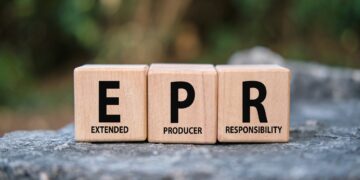
Minnesota sent an EPR bill to its governor in a budget bill. | Rawf8/Shutterstock

Minnesota is poised to be the fifth U.S. state to pass extended producer responsibility for packaging after adding the program language into the 2024 Environment and Natural Resources Budget, which is now on the governor’s desk. 

The text of Packaging Waste and Cost Reduction Act was added into the budget, which re-passed the House on May 17 on a vote of 70-56 after some amendments. On May 19, it was sent to Gov. Tim Walz, a Democrat. Minnesota’s legislative session ended May 20. 

An Environment and Natural Resources Finance and Policy Committee press release noted that  the “EPR provisions are a major step forward in dealing with solid waste by ensuring that packaging producers are responsible for the waste they create and are incentivized to increase recycled content.” 

State Rep. Sydney Jordan, sponsor of the original Packaging Waste and Cost Reduction Act, said in the press release that “across Minnesota, we are inundated with packaging, from our doorsteps to store shelves.” 

“Packaging waste and printed paper now account for 40% of our garbage,” said Jordan, who is also vice chair of the Environment and Natural Resources Finance and Policy Committee. “The burden of managing this ever-growing deluge of packaging waste currently falls on local governments – and taxpayers. Today’s bill takes steps to ensure the producers of this waste are paying their fair share.”

Ameripen, an industry group representing packaging producers, announced that it supports the EPR language in the bill, calling it “unprecedented in its unique framework that aligns with Minnesota’s national leadership on strong recycling and composting infrastructure.”

“Minnesota’s packaging producer responsibility legislation is a fair compromise that establishes a model of shared responsibility and is aligned with Ameripen’s key principles,” said Dan Felton, executive director. “This legislation supports a system that is reliable, efficient and effective.” 

The American Forest and Paper Association opposed the bill, as it has opposed EPR in other states, due to the potential for paper to subsidize the cost of recycling plastic. AF&PA members own two MRFs in Minnesota, a press release noted. 

Dylan de Thomas, vice president of public policy and government affairs team at The Recycling Partnership, worked on the ground in Minnesota to support the bill. He told Resource Recycling that the bill is “the fruit of many, many months of hard negotiations and work.”

“Really, it’s the fruit of many years of stakeholder efforts to be able to deliver an EPR bill that works for Minnesotans,” de Thomas said.

A familiar framework, but no legislated target rates

The EPR program proposed in the budget has several elements now familiar in the U.S. EPR landscape: a needs assessment, a producer responsibility organization, eco-modulation and target reduction, reuse and recycling goals. 

Notable exemptions from the covered material list include paper products used for a newspaper or magazine print publications and covered materials that a producer distributes to another producer.

If enacted, the bill would require producers to choose a producer responsibility organization by Jan. 1, 2025. The PRO would then have to submit a stewardship plan by Oct. 1, 2028. The bill allows for multiple PROs after the first PRO plan expires.

A Producer Responsibility Advisory Board would also be established under the bill, which would have to hold its first meeting by March 1, 2025. 

The needs assessments, which would be due by the end of 2025, would cover existing reduction, reuse, recycling and composting capacity for each covered material; proposals for five-year target goals for those areas; estimations of how much post consumer recycled content is currently used; proposed metrics to measure progress in achieving the target goals; evaluations of investments needed to increase rates; end market research; current contamination levels; and an assessment of intentionally added toxic substances.

A workplace conditions and equity study and a covered materials pollution and cleanup study are also authorized in the bill. 

The commissioner of the state Pollution Control Agency is tasked with establishing statewide recycling, composting, reuse, return and reduction target rates, as well as post-consumer content requirements. 

The PRO will reimburse local programs for the net costs of covered services in a phased-in fashion. By Feb. 1, 2029, the PRO will have to reimburse at least 50% of the annual net costs, rising to 75% by Feb. 1, 2030 and 90% by Feb. 1, 2031. 

Reimbursable costs include the cost to collect, transport and process covered material, adjusting downward for the average fair market value of the covered material in the region. Contamination management and administrative costs are also included.

Finally, the bill notes that “it is the intent of the legislature that if a bottle deposit return system is enacted in the future, it will be harmonized with this act.” 

The original version of the Packaging Waste and Cost Reduction Act included target rates for recycling and composting, source reduction and post consumer recycled content, but those were removed from the final bill text. Instead, the commissioner will set those targets, consulting with the PRO. 

Ameripen lauded that change, stating in this EPR framework, the PRO can “remain focused on core activities without the burdens imposed by EPR laws in other states, such as artificial timelines for arbitrary recycling targets; mandates to fund recycling for massive commercial operations that can manage their own recycling costs or landfilling; and unrelated mandates around packaging composition.” 

“The Minnesota packaging EPR legislation before Governor Walz demonstrates that each state is unique and should approach any recycling, composting and packaging policy by first considering its existing infrastructure and laws,” Ameripen added. “It also reflects compromise, and a reminder that legislative debates do not produce perfect policy, but rather a reflection of what may be possible at any given moment.” 

De Thomas of The Recycling Partnership noted that the targets are going to be set based on the needs assessment, “so I would see it as a necessary functional compromise.”

“It will deliver the strong environmental and economic outcomes you want to see with bills like this,” he added.
Tags: EPRLegislation & Enforcement
TweetShare
Marissa Heffernan

Marissa Heffernan

Marissa Heffernan worked at Resource Recycling from January 2022 through June 2025, first as staff reporter and then as associate editor. Marissa Heffernan started working for Resource Recycling in January 2022 after spending several years as a reporter at a daily newspaper in Southwest Washington. After developing a special focus on recycling policy, they were also the editor of the monthly newsletter Policy Now.

Related Posts

Compliance push drives new Republic organics facility

byStefanie Valentic
June 18, 2026

Republic Services started construction on a 140-acre organics facility in San Bernardino designed to expand Southern California's composting capacity under...

ICIS monthly recycled plastics pulse: Most Oct resin prices stabilize for fall

CA advances PET payments bill, posts DRS recovery rates

byAntoinette Smith
June 18, 2026

A California bill to increase payments to in-state PET reclaimers passed unanimously out of the Senate Environmental Quality Committee this...

CAA seeks industry input on EPR fees

CAA seeks industry input on EPR fees

byAntoinette Smith
June 16, 2026

A new producer steering committee will help involve stakeholders more directly in the fee-setting process as packaging EPR law is...

A call to action: End markets and EPR

A call to action: End markets and EPR

byKatherine Doerr, Goldfinch Environmental
June 16, 2026

State-level EPR schemes must mandate rather than simply incentivizing the use of recycled content, consultant Kat Doerr argues.

Revised CA budget includes $200m for recycling

CAA files California program plan for SB 54

byStefanie Valentic
June 15, 2026

CAA has delivered its California program plan as litigation over the underlying regulations continues and smaller producers scramble to meet...

Australia battery recycling sector could reach A$6.9bn by 2050

Colorado and California bills take aim at battery recycling gaps

byStefanie Valentic
June 12, 2026

Colorado's EV battery EPR law and California's SB 501 together represent a push to bring the full battery supply chain...

Load More
Next Post

Chicago MRF installs robotics to target UBCs

More Posts

IT security driving plans, reshaping budgets

Study cuts projected AI server e-waste by 90%

June 16, 2026
Revised CA budget includes $200m for recycling

CAA files California program plan for SB 54

June 15, 2026
Group updates on UBC-sorting robot’s success

Plastic bale pricing falls while paper, UBCs firm

June 15, 2026
Recycling council emphasizes importance of supply

Sorted: Why recycling isn’t a ‘scam’

June 15, 2026
Rare look inside the world’s largest plastics recycler

TRP launches fund to boost recycling

June 12, 2026
CAA seeks industry input on EPR fees

CAA seeks industry input on EPR fees

June 16, 2026
batteries

WM adds batteries to recycling watch list

June 16, 2026
A call to action: End markets and EPR

A call to action: End markets and EPR

June 16, 2026
ICIS monthly recycled plastics pulse: Most Oct resin prices stabilize for fall

CA advances PET payments bill, posts DRS recovery rates

June 18, 2026
Australia battery recycling sector could reach A$6.9bn by 2050

Colorado and California bills take aim at battery recycling gaps

June 12, 2026
Load More

About & Publications

About Us

Staff

Archive

Magazine

Work With Us

Advertise
Jobs
Contact
Terms and Privacy

Newsletter

Get the latest recycling news and analysis delivered to your inbox every week. Stay ahead on industry trends, policy updates, and insights from programs, processors, and innovators.

Subscribe

Welcome Back!

Login to your account below

Forgotten Password?

Retrieve your password

Please enter your username or email address to reset your password.

Log In

Add New Playlist

No Result
View All Result
  • The Latest
  • Analysis
  • Recycling
  • E-Scrap
  • Plastics
  • Policy Now
  • Conferences
    • E-Scrap Conference
    • Plastics Recycling Conference
    • Resource Recycling Conference
    • Textiles Recovery Summit
  • Magazine
  • About Us
  • Advertise
  • Archive
  • Jobs
  • Staff
Subscribe
This website uses cookies. By continuing to use this website you are giving consent to cookies being used. Visit our Privacy and Cookie Policy.