




Resource Recycling
  • The Latest
  • Analysis
    • All
    • Certification Scorecard
    • Industry Announcements
    • Opinion

    ITAD is moving past its adolescent phase: beyond end-of-life

    Rainforest

    Inside the Circle: What the rainforest can teach us about EPR

    Closeup of a printed circuitboard

    Hardware demand puts new focus on parts harvesting

    Rare look inside the world’s largest plastics recycler

    Mass balance matters: Why different rules can lead to different outcomes 

    Certification Scorecard — Week of June 1, 2026

    IT asset disposition and electronics recycling: Now and then

    $60 billion in AI servers will create an ITAD challenge

  • Conferences
    • Resource Recycling Conference
    • Plastics Recycling Conference
    • E-Scrap: The Longevity Conference
    • Textiles Recovery Summit
  • Publications
    • E-Scrap News
    • Plastics Recycling Update
    • Policy Now
    • Resource Recycling
    • Other Topics
      • All Topics
      • Brand Owners
      • Critical Minerals
      • Glass
      • Grant Watch / RFPs
      • Markets
      • Organics
      • Packaging
      • Research
      • Technology
      • Textiles
Subscribe
No Result
View All Result
Resource Recycling
  • The Latest
  • Analysis
    • All
    • Certification Scorecard
    • Industry Announcements
    • Opinion

    ITAD is moving past its adolescent phase: beyond end-of-life

    Rainforest

    Inside the Circle: What the rainforest can teach us about EPR

    Closeup of a printed circuitboard

    Hardware demand puts new focus on parts harvesting

    Rare look inside the world’s largest plastics recycler

    Mass balance matters: Why different rules can lead to different outcomes 

    Certification Scorecard — Week of June 1, 2026

    IT asset disposition and electronics recycling: Now and then

    $60 billion in AI servers will create an ITAD challenge

  • Conferences
    • Resource Recycling Conference
    • Plastics Recycling Conference
    • E-Scrap: The Longevity Conference
    • Textiles Recovery Summit
  • Publications
    • E-Scrap News
    • Plastics Recycling Update
    • Policy Now
    • Resource Recycling
    • Other Topics
      • All Topics
      • Brand Owners
      • Critical Minerals
      • Glass
      • Grant Watch / RFPs
      • Markets
      • Organics
      • Packaging
      • Research
      • Technology
      • Textiles
Subscribe
No Result
View All Result
Resource Recycling
No Result
View All Result
Home E-Scrap

Connecticut boosts prices it pays to e-scrap firms

byJared Paben
August 13, 2020
in E-Scrap
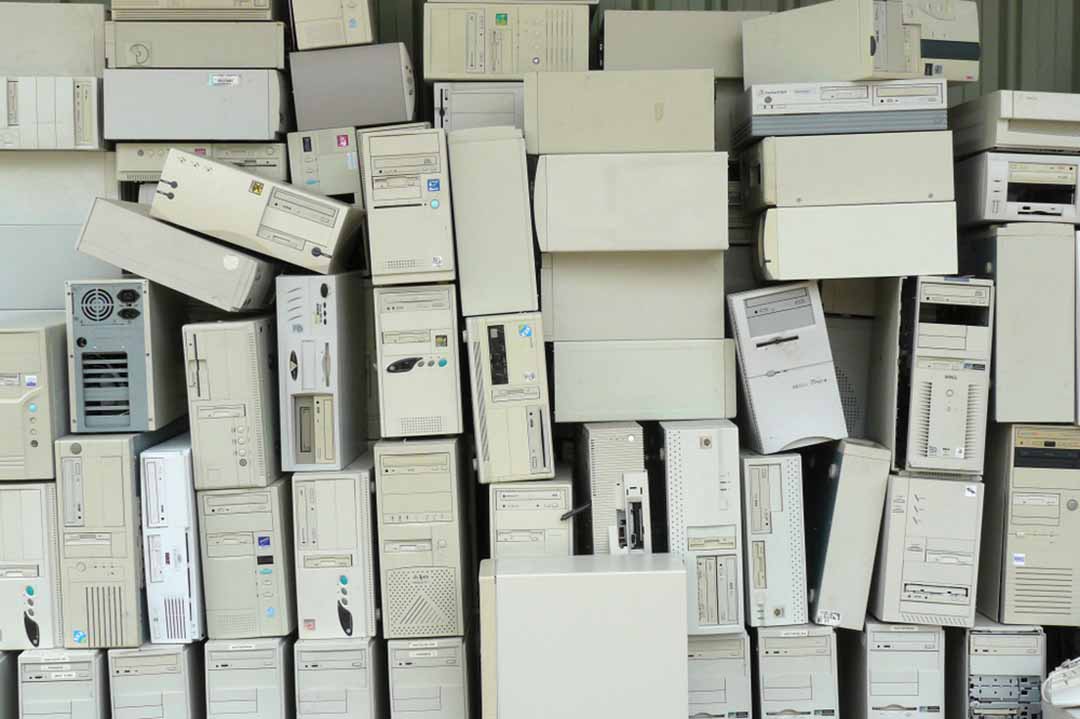
Computer towers collected and stacked for recycling.
Under Connecticut’s extended producer responsibility program, municipalities perform the bulk of e-scrap collections. | Suzanne-B/Shutterstock

Processing companies said multiple factors led them to raise recycling prices in Connecticut this year. Some cost pressures are unique to the state but others are being felt industry wide.

On July 2, the Connecticut Department of Energy and Environmental Protection (DEEP), which administers the state e-scrap program, announced the new recycling prices charged by the four processors permitted by the state program: Ecovanta, ERI, Newtech Recycling and Take 2.

Ecovanta will charge 37.5 cents per pound of material (up from 36.5 cents last year), ERI will charge 39 cents per pound (up from 37.5 cents), Newtech will charge 40.5 cents per pound (up from 39.5 cents), and Take 2 will charge 40 cents per pound (up from 38 cents).

Those prices are in effect for e-scrap collected from July 2020 through June 2021.

Connecticut’s extended producer responsibility (EPR) program covers TVs, monitors, computers and printers. During the 2019 calendar year, Take 2 recycled 6,082,590 pounds of covered e-scrap, Newtech recycled 2,980,990 pounds, ERI recycled 369,820 and Ecovanta recycled 20,537 pounds, according to DEEP.

Under the program, municipalities perform the bulk of e-scrap collections. The DEEP-approved processors then pick up, sort and recycle the material. The processors are allowed to bill OEMs mandated to fund the program for the recycling, charging them a rate approved by DEEP. Alternatively, OEMs can request that processors set aside their brands for recycling by the vendor of their choice; in that case, the processors charge a “separation fee” to cover their collection, sorting and storage costs.

For separation fees over the next year, Ecovanta will charge 29 cents per pound (up from 28 cents last year), ERI will charge 30 cents per pound (flat year over year), Newtech will charge 34.5 cents per pound (up from 33 cents), and Take 2 will 32 cents per pound (up from 31 cents).

Processors submit annual applications to DEEP that include their proposed prices.

Mark Latham, who manages the program at DEEP, noted the applications are a competitive process, and if a price exceeds one standard deviation from the average of all others, then that processor can be eliminated from the program.

He said this year’s rate increases are roughly in line with what the state has seen in previous years, but it’s the first time they’ve hit the 40-cent-per-pound mark.

Factors driving the pricing

The processor applications submitted to DEEP provide insight into some of the factors that go into their prices. Those details are not public under many other state programs.

If the prices are higher than they charge under any other contract or agreement, DEEP asks them to explain why. In this year’s explanations, ERI and Newtech cited a number of reasons, some unique to Connecticut and some not (Ecovanta wrote “n/a” and Take 2 left the space blank).

ERI, which recycles Connecticut electronics at its Holliston, Mass. facility, said heavy CRT volumes, brand sorting and municipal requirements went into this year’s price.

ERI representatives wrote that over the last several years, the company has received a large percentage of CRT display devices through the Connecticut program. The company noted the material it received through the program fell into the following categories and percentages of total weight processed by the firm: CRT TVs (71%), DLP TVs (7%), flat-panel TVs (7%), printers (7%), CPUs (5%), LCD monitors (1%), CRT monitors (1%), laptops (less than 1%) and plasma TVs (less than 1%).

“The heavy percentage of CRTs received from CT municipalities is reflected in our pricing proposal to ensure the [price per pound] is sufficient to cover the costs of properly handling the CRT glass, which ERI sends for glass-to-glass manufacturing,” according to ERI.

Additionally, the brand sorting and unit count requirements under the Connecticut program drive up labor costs. No other client requires ERI to sort material by brand, the application noted.

“This process is time and labor intensive and the increase in costs over standard processing is reflected in our pricing proposal,” the document states.

The company also said it experiences higher collection costs under the state program. Many municipalities don’t have space to store large volumes of e-scrap, so ERI must rent trailers or containers to store them, in addition to providing local governments the gaylords and pallets they need.

Newtech recycles Connecticut electronics at its Somerset, N.J. plant. In its application, Newtech cited three primary factors driving its price this year: ongoing weakness in the commodity market, increasing labor costs, and a shifting collection network.

The document elaborates on the last point, noting that during the past year, a greater percentage of collection points served by Newtech were low-volume and remote sites.

“There is simply a higher cost of business to service these towns,” according to the application.

 

Tags: EPRMarketsProcessors
TweetShare
Jared Paben

Jared Paben

Related Posts

House resolution aims to make recyclability central to product design

NY EPR bill fails to advance after third try

byStefanie Valentic
June 8, 2026

This marks the third session in which the bill cleared the Senate only to stall in the Assembly.

Rainforest

Inside the Circle: What the rainforest can teach us about EPR

byBill Shireman
June 8, 2026

We have a lot to learn from jungles, particularly as we fight the thorny problem of plastic pollution.

CalRecycle withdraws proposed regs for SB 54

Oceana, NRDC, CAW sue CalRecycle over SB 54 regs

byStefanie Valentic
June 5, 2026

The groups allege that the new regulations have too many loopholes for packaging producers.

Rare look inside the world’s largest plastics recycler

Mass balance matters: Why different rules can lead to different outcomes 

bySarah Edwards, Eunomia
June 5, 2026

Mass balance is a critical piece of the recycling puzzle—and one that's important to get right.

Circular Materials to supply PlasCred chem recycling plant

Circular Materials to supply PlasCred chem recycling plant

byAntoinette Smith
June 4, 2026

The planned chemical recycling plant in Alberta, Canada, also has a five-year, fixed price offtake contract, ahead of reaching a...

In My Opinion: Comparing the nation’s first packaging EPR laws

What Maine’s vape EPR law means for recyclers

byStefanie Valentic
June 4, 2026

Maine is the first state to require vape manufacturers to fund end-of-life management for their products. Vape recycler Michael Duckworth...

Load More
Next Post
Mobile devices for e-scrap processing.

Processing research examines new recovery methods

More Posts

House resolution aims to make recyclability central to product design

NY EPR bill fails to advance after third try

June 8, 2026
CalRecycle withdraws proposed regs for SB 54

Oceana, NRDC, CAW sue CalRecycle over SB 54 regs

June 5, 2026
GP Recycling offers on-ramp for smaller recyclers

GP Recycling offers on-ramp for smaller recyclers

June 9, 2026
Rainforest

Inside the Circle: What the rainforest can teach us about EPR

June 8, 2026
Rare look inside the world’s largest plastics recycler

Mass balance matters: Why different rules can lead to different outcomes 

June 5, 2026

Three-bill package aims to revamp Michigan’s bottle return system

June 9, 2026
Circular Materials to supply PlasCred chem recycling plant

Circular Materials to supply PlasCred chem recycling plant

June 4, 2026
How electronics legislation fared this legislative season

NY sends repairability labeling bill to governor

June 8, 2026
Recycling industry addresses Beyond Plastics report

Recycling industry addresses Beyond Plastics report

May 26, 2026
Industry announcements for January 2026

Industry announcements for June 2026

June 1, 2026
Load More

About & Publications

About Us

Staff

Archive

Magazine

Work With Us

Advertise
Jobs
Contact
Terms and Privacy

Newsletter

Get the latest recycling news and analysis delivered to your inbox every week. Stay ahead on industry trends, policy updates, and insights from programs, processors, and innovators.

Subscribe

Welcome Back!

Login to your account below

Forgotten Password?

Retrieve your password

Please enter your username or email address to reset your password.

Log In

Add New Playlist

No Result
View All Result
  • The Latest
  • Analysis
  • Recycling
  • E-Scrap
  • Plastics
  • Policy Now
  • Conferences
    • E-Scrap Conference
    • Plastics Recycling Conference
    • Resource Recycling Conference
    • Textiles Recovery Summit
  • Magazine
  • About Us
  • Advertise
  • Archive
  • Jobs
  • Staff
Subscribe
This website uses cookies. By continuing to use this website you are giving consent to cookies being used. Visit our Privacy and Cookie Policy.