




Resource Recycling
  • The Latest
  • Analysis
    • All
    • Certification Scorecard
    • Industry Announcements
    • Opinion
    Apple Watch on product box.

    Wearables are coming and ITAD isn’t ready

    Certification Scorecard — Week of April 13, 2026

    EV Battery Pack - Sergii Chernov-Shutterstock

    Redwood, Rivian deal fuels US infrastructure plans

    Bloom ESG and e-Stewards roll out critical metals metric

    Colorado regulators suggest mid-range EPR scenario

    Why collaboration on plastic waste still matters

    Battery recycler Ascend Elements files for bankruptcy

    Battery recycler Ascend Elements files for bankruptcy

    EPR fees are a market signal. Here’s what they’re telling you.

    EPR fees are a market signal. Here’s what they’re telling you.

    Wolframite ore, the primary ore of tungsten from Altai, Russia

    Tungsten scrap export controls draw industry attention

    Certification Scorecard — Week of April 6, 2026

  • Conferences
  • Publications
    • E-Scrap News
    • Plastics Recycling Update
    • Policy Now
    • Resource Recycling
    • Other Topics
      • Brand Owners
      • Grant Watch
      • Markets
      • Organics
      • Packaging
      • Research
      • Technology
      • Textiles
      • All Topics
Subscribe
No Result
View All Result
Resource Recycling
  • The Latest
  • Analysis
    • All
    • Certification Scorecard
    • Industry Announcements
    • Opinion
    Apple Watch on product box.

    Wearables are coming and ITAD isn’t ready

    Certification Scorecard — Week of April 13, 2026

    EV Battery Pack - Sergii Chernov-Shutterstock

    Redwood, Rivian deal fuels US infrastructure plans

    Bloom ESG and e-Stewards roll out critical metals metric

    Colorado regulators suggest mid-range EPR scenario

    Why collaboration on plastic waste still matters

    Battery recycler Ascend Elements files for bankruptcy

    Battery recycler Ascend Elements files for bankruptcy

    EPR fees are a market signal. Here’s what they’re telling you.

    EPR fees are a market signal. Here’s what they’re telling you.

    Wolframite ore, the primary ore of tungsten from Altai, Russia

    Tungsten scrap export controls draw industry attention

    Certification Scorecard — Week of April 6, 2026

  • Conferences
  • Publications
    • E-Scrap News
    • Plastics Recycling Update
    • Policy Now
    • Resource Recycling
    • Other Topics
      • Brand Owners
      • Grant Watch
      • Markets
      • Organics
      • Packaging
      • Research
      • Technology
      • Textiles
      • All Topics
Subscribe
No Result
View All Result
Resource Recycling
No Result
View All Result
Home E-Scrap

Connecticut boosts prices it pays to e-scrap firms

byJared Paben
August 13, 2020
in E-Scrap
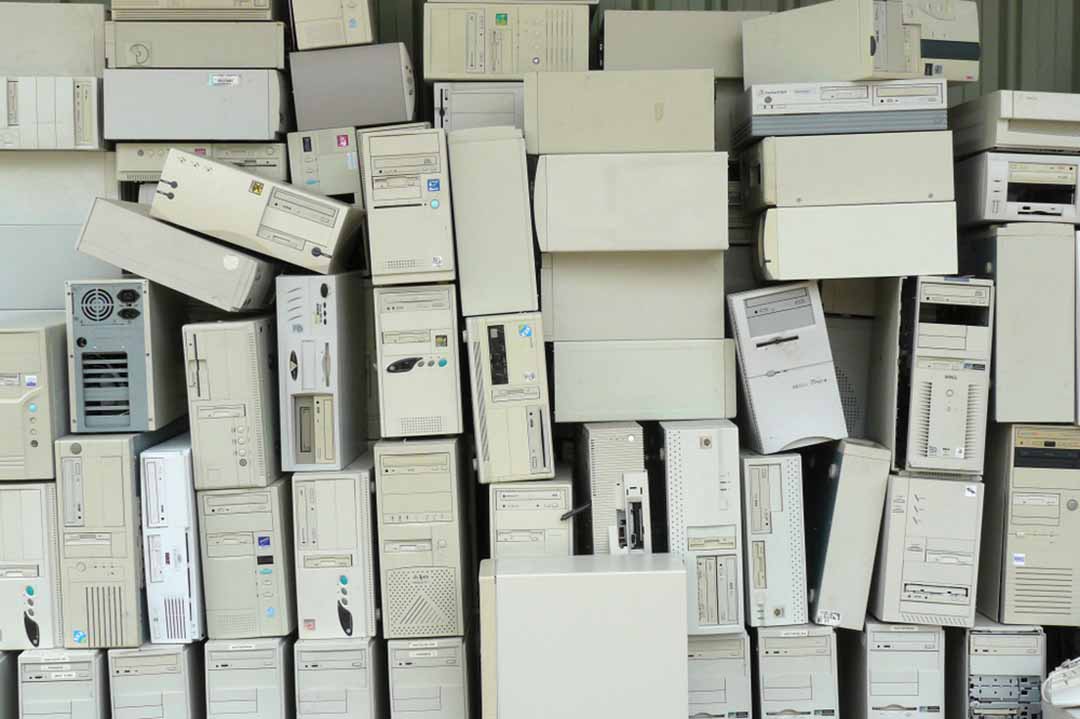
Computer towers collected and stacked for recycling.
Under Connecticut’s extended producer responsibility program, municipalities perform the bulk of e-scrap collections. | Suzanne-B/Shutterstock

Processing companies said multiple factors led them to raise recycling prices in Connecticut this year. Some cost pressures are unique to the state but others are being felt industry wide.

On July 2, the Connecticut Department of Energy and Environmental Protection (DEEP), which administers the state e-scrap program, announced the new recycling prices charged by the four processors permitted by the state program: Ecovanta, ERI, Newtech Recycling and Take 2.

Ecovanta will charge 37.5 cents per pound of material (up from 36.5 cents last year), ERI will charge 39 cents per pound (up from 37.5 cents), Newtech will charge 40.5 cents per pound (up from 39.5 cents), and Take 2 will charge 40 cents per pound (up from 38 cents).

Those prices are in effect for e-scrap collected from July 2020 through June 2021.

Connecticut’s extended producer responsibility (EPR) program covers TVs, monitors, computers and printers. During the 2019 calendar year, Take 2 recycled 6,082,590 pounds of covered e-scrap, Newtech recycled 2,980,990 pounds, ERI recycled 369,820 and Ecovanta recycled 20,537 pounds, according to DEEP.

Under the program, municipalities perform the bulk of e-scrap collections. The DEEP-approved processors then pick up, sort and recycle the material. The processors are allowed to bill OEMs mandated to fund the program for the recycling, charging them a rate approved by DEEP. Alternatively, OEMs can request that processors set aside their brands for recycling by the vendor of their choice; in that case, the processors charge a “separation fee” to cover their collection, sorting and storage costs.

For separation fees over the next year, Ecovanta will charge 29 cents per pound (up from 28 cents last year), ERI will charge 30 cents per pound (flat year over year), Newtech will charge 34.5 cents per pound (up from 33 cents), and Take 2 will 32 cents per pound (up from 31 cents).

Processors submit annual applications to DEEP that include their proposed prices.

Mark Latham, who manages the program at DEEP, noted the applications are a competitive process, and if a price exceeds one standard deviation from the average of all others, then that processor can be eliminated from the program.

He said this year’s rate increases are roughly in line with what the state has seen in previous years, but it’s the first time they’ve hit the 40-cent-per-pound mark.

Factors driving the pricing

The processor applications submitted to DEEP provide insight into some of the factors that go into their prices. Those details are not public under many other state programs.

If the prices are higher than they charge under any other contract or agreement, DEEP asks them to explain why. In this year’s explanations, ERI and Newtech cited a number of reasons, some unique to Connecticut and some not (Ecovanta wrote “n/a” and Take 2 left the space blank).

ERI, which recycles Connecticut electronics at its Holliston, Mass. facility, said heavy CRT volumes, brand sorting and municipal requirements went into this year’s price.

ERI representatives wrote that over the last several years, the company has received a large percentage of CRT display devices through the Connecticut program. The company noted the material it received through the program fell into the following categories and percentages of total weight processed by the firm: CRT TVs (71%), DLP TVs (7%), flat-panel TVs (7%), printers (7%), CPUs (5%), LCD monitors (1%), CRT monitors (1%), laptops (less than 1%) and plasma TVs (less than 1%).

“The heavy percentage of CRTs received from CT municipalities is reflected in our pricing proposal to ensure the [price per pound] is sufficient to cover the costs of properly handling the CRT glass, which ERI sends for glass-to-glass manufacturing,” according to ERI.

Additionally, the brand sorting and unit count requirements under the Connecticut program drive up labor costs. No other client requires ERI to sort material by brand, the application noted.

“This process is time and labor intensive and the increase in costs over standard processing is reflected in our pricing proposal,” the document states.

The company also said it experiences higher collection costs under the state program. Many municipalities don’t have space to store large volumes of e-scrap, so ERI must rent trailers or containers to store them, in addition to providing local governments the gaylords and pallets they need.

Newtech recycles Connecticut electronics at its Somerset, N.J. plant. In its application, Newtech cited three primary factors driving its price this year: ongoing weakness in the commodity market, increasing labor costs, and a shifting collection network.

The document elaborates on the last point, noting that during the past year, a greater percentage of collection points served by Newtech were low-volume and remote sites.

“There is simply a higher cost of business to service these towns,” according to the application.

 

Tags: EPRMarketsProcessors
TweetShare
Jared Paben

Jared Paben

Related Posts

Volatility reshapes outlook for US metals businesses

byScott Snowden
April 15, 2026

Panelists at the ReMA conference in Las Vegas said tariffs, reshoring and geopolitical tension are remaking trade flows, lifting US...

NERC launches hub to promote PCR demand 

byAntoinette Smith
April 15, 2026

The Northeast Recycling Council's PCR Material Demand Hub offers resources for government procurement, material- and product-specific resources, and certification and...

Industry group: Help us find the plastic bale volumes we need

PET bales sink further as other grades firm 

byRecyclingMarkets.net Staff
April 15, 2026

Pricing for HDPE and PP bales rose again, while PET bales remained low, film grades have steadied, and paper and...

Lead battery recycling market set for steady growth

byScott Snowden
April 14, 2026

The global lead battery recycling market is projected to grow steadily through 2034, supported by regulation, automotive replacement cycles and...

GFL acquires SECURE Waste for $6.4bn

byStefanie Valentic
April 13, 2026

GFL Environmental has agreed to acquire SECURE Waste Infrastructure Corp. in a $6.4 billion deal that expands the waste hauler's...

Oregon’s battery EPR bill officially charged for implementation

byStefanie Valentic
April 10, 2026

Oregon Governor Tina Kotek signed HB 4144 into law on April 7, setting into motion the mechanics for an extended...

Load More
Next Post
Mobile devices for e-scrap processing.

Processing research examines new recovery methods

Leading the Charge in Safe Battery Recycling
Sponsored

Leading the Charge in Safe Battery Recycling

byThe Battery Network
April 13, 2026

We’re connecting people, brands, and communities through one nationwide network built to make battery recycling safer, simpler, and more accessible...

Read moreDetails

More Posts

Policy Now | December 2025 – Year-end nears, policy talks continue

Policy Now | December 2025 – Year-end nears, policy talks continue

December 1, 2025

Quebec PRO reflects on first year of packaging EPR

March 30, 2026

Certification scorecard – Week of March 23, 2026

March 24, 2026
Bottle cap design: No need to ‘reinvent the wheel’

Bottle cap design: No need to ‘reinvent the wheel’

June 25, 2025

Amazon, DOE partner on critical materials recovery

April 13, 2026
MRF equipment firm Machinex wins patent fight with rival

Judge blocks four groups from joining Oregon Recycling Act injunction

April 7, 2026

Diversion Dynamics: Secondhand exports slow down fast fashion

March 5, 2026
Miami-Dade backs pilots to grow organics diversion and composting

Miami-Dade backs pilots to grow organics diversion and composting

December 8, 2025
Basel e-scrap rules disrupt larger metal sector

Basel e-scrap rules disrupt larger metal sector

June 26, 2025
Fresh round of plastic treaty talks kick off in Geneva

Fresh round of plastic treaty talks kick off in Geneva

August 6, 2025
Load More

About & Publications

About Us

Staff

Archive

Magazine

Work With Us

Advertise
Jobs
Contact
Terms and Privacy

Newsletter

Get the latest recycling news and analysis delivered to your inbox every week. Stay ahead on industry trends, policy updates, and insights from programs, processors, and innovators.

Subscribe

Welcome Back!

Login to your account below

Forgotten Password?

Retrieve your password

Please enter your username or email address to reset your password.

Log In

Add New Playlist

No Result
View All Result
  • The Latest
  • Analysis
  • Recycling
  • E-Scrap
  • Plastics
  • Policy Now
  • Conferences
    • E-Scrap Conference
    • Plastics Recycling Conference
    • Resource Recycling Conference
    • Textiles Recovery Summit
  • Magazine
  • About Us
  • Advertise
  • Archive
  • Jobs
  • Staff
Subscribe
This website uses cookies. By continuing to use this website you are giving consent to cookies being used. Visit our Privacy and Cookie Policy.