






Resource Recycling
  • The Latest
  • Analysis
    • All
    • Certification Scorecard
    • Industry Announcements
    • Opinion

    ITAD is moving past its adolescent phase: beyond end-of-life

    Rainforest

    Inside the Circle: What the rainforest can teach us about EPR

    Closeup of a printed circuitboard

    Hardware demand puts new focus on parts harvesting

    Rare look inside the world’s largest plastics recycler

    Mass balance matters: Why different rules can lead to different outcomes 

    Certification Scorecard — Week of June 1, 2026

    IT asset disposition and electronics recycling: Now and then

    $60 billion in AI servers will create an ITAD challenge

  • Conferences
    • Resource Recycling Conference
    • Plastics Recycling Conference
    • E-Scrap: The Longevity Conference
    • Textiles Recovery Summit
  • Publications
    • E-Scrap News
    • Plastics Recycling Update
    • Policy Now
    • Resource Recycling
    • Other Topics
      • All Topics
      • Brand Owners
      • Critical Minerals
      • Glass
      • Grant Watch / RFPs
      • Markets
      • Organics
      • Packaging
      • Research
      • Technology
      • Textiles
Subscribe
No Result
View All Result
Resource Recycling
  • The Latest
  • Analysis
    • All
    • Certification Scorecard
    • Industry Announcements
    • Opinion

    ITAD is moving past its adolescent phase: beyond end-of-life

    Rainforest

    Inside the Circle: What the rainforest can teach us about EPR

    Closeup of a printed circuitboard

    Hardware demand puts new focus on parts harvesting

    Rare look inside the world’s largest plastics recycler

    Mass balance matters: Why different rules can lead to different outcomes 

    Certification Scorecard — Week of June 1, 2026

    IT asset disposition and electronics recycling: Now and then

    $60 billion in AI servers will create an ITAD challenge

  • Conferences
    • Resource Recycling Conference
    • Plastics Recycling Conference
    • E-Scrap: The Longevity Conference
    • Textiles Recovery Summit
  • Publications
    • E-Scrap News
    • Plastics Recycling Update
    • Policy Now
    • Resource Recycling
    • Other Topics
      • All Topics
      • Brand Owners
      • Critical Minerals
      • Glass
      • Grant Watch / RFPs
      • Markets
      • Organics
      • Packaging
      • Research
      • Technology
      • Textiles
Subscribe
No Result
View All Result
Resource Recycling
No Result
View All Result
Home Analysis

EPR fees are a market signal. Here’s what they’re telling you.

byChristine Yeager
April 10, 2026
in Analysis, Plastics, Recycling
EPR fees are a market signal. Here’s what they’re telling you.

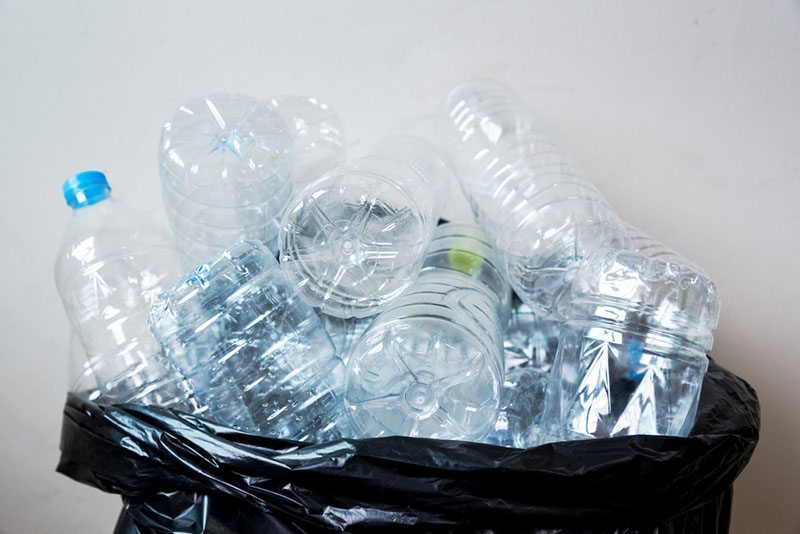
Cagkan Sayin / Shutterstock

For years, packaging decisions in the United States were made based on commodity costs and on-shelf visibility, ignoring end-of-life costs entirely. Most producers still do not know the true cost of their packaging to the system. Extended producer responsibility (EPR) fees will tell them, and for some packaging categories, the number is not small.

Having worked inside one of the world’s largest consumer goods companies and as an early team member of the organization that is now setting EPR fees across multiple states, I have watched these two worlds operate in parallel for years. That gap is closing faster than most corporate packaging teams realize. 

Companies currently building their 2028 packaging roadmaps are making decisions that will determine their EPR cost structure when full multi-state programs are live. California’s 2032 deadline requiring all packaging sold into the state to be recyclable or compostable is only four to six planning cycles away, depending on your company’s innovation cadence.

What EPR fees actually measure

EPR fees are not arbitrary. In Colorado and Oregon, where programs are now invoicing producers, fee rates are set through a structured process that accounts for actual system costs: collection, sorting, processing and delivery to responsible end markets. 

Circular Action Alliance, the approved producer responsibility organization (PRO) across active state programs, sets fees based on anticipated program costs and material-level recovery economics. The methodology skews fees toward materials that cost more to recover, and that lack a verified commodity market to offset those costs.

The 2026 Colorado fee schedule makes the signal explicit. According to CAA Colorado’s publicly filed program plan, interim base dues for non-collected materials can reach up to $1.60 per pound for rigid plastics. Flexible films and laminates run up to around 70 cents per pound. 

The final 2026 dues schedule confirms rates directionally consistent with and in some cases exceeding those estimates. These high-cost items are not obscure materials. They include flexible film laminates that touch nearly every CPG category, from chip bags and coffee pouches to pet food packaging and personal care sachets. 

They include PVC and polystyrene rigid plastics common in food service and medical packaging. They even include wood-based packaging found in produce, wine and specialty retail.

Recyclable materials, by contrast, sit at a fraction of those rates: corrugated cardboard in the single digits per pound, aluminum containers just a few cents per pound, and clear PET bottles around 15 cents per pound. 

The spread between a recyclable format and a non-collected one can exceed $1.50 per pound. For producers with significant volume in any of these formats, that differential is not a rounding error.

Additionally, California’s requirements incrementally intensify the need for a recyclable portfolio. SB 54 requires all packaging sold into the state to be recyclable or compostable by 2032. CalRecycle can levy civil penalties up to $50,000 per day per violation for non-compliance. 

Critically, California’s definition of “recyclable” requires that a material be collected, sorted and have a verified end market at scale—a label claim based on access to collection alone does not satisfy that standard. Many materials currently labeled as recyclable will not meet this requirement, and these thresholds will continue to rise over the coming years.

Recyclability is valuable, and profitable, in more than one way. Consumers are already paying attention to the label. According to NielsenIQ, 36% of consumers actively try to purchase products with easy-to-recycle packaging, and products carrying sustainability claims grew 34% faster than those without between 2018 and 2022. 

EPR programs are now setting a regulatory floor that will determine whether those claims hold up. The gap between what a label says and what the system can actually process into a reusable material is exactly where fees accumulate.

What the signal is telling you

The fee differential is not punitive in design. It reflects a real cost that existed long before EPR, one that municipalities and taxpayers absorbed invisibly through landfill tipping fees and underfunded recycling systems. EPR makes that cost visible and routes it back to the producers whose packaging decisions created it.

The hardest-hit formats by fee rate are predictable if you know what to look for: any flexible film with multiple polymer layers, foam food service ware, small format packaging two inches or less on two sides, and any rigid plastic that lacks a domestic commodity market for recovered material. 

Certified compostable materials face a different kind of exposure. Compostable materials don’t have the highest fee rates, but face the risk of a not-collected classification in states where industrial composting infrastructure doesn’t exist to verify an end market. 

These categories are not marginal. They represent a significant share of packaging volume across the industry.

The companies getting ahead of this are mapping their portfolios against state-specific recyclability classifications, modeling where fees are hitting hardest, and asking their design and supply chain teams questions that sustainability departments alone cannot answer. 

What is the cumulative fee differential if we stay in this format across seven states? What is the break-even point on transitioning to a non-plastic, recyclable alternative? Which of our materials are close enough to recyclability that industry infrastructure investment could change the classification?

Those are financial planning questions. EPR has made them urgent.

Taking action

EPR fees tell you which parts of your portfolio are exposed. Industry coalitions and infrastructure investors are already working to move some of today’s high-fee materials into viable recovery pathways, targeting formats like polypropylene cups, paper cups, and flexible films where responsible end markets remain thin. The question is whether your company is contributing to that work and benefiting from it, or waiting to pay the fees that result from not engaging.

The producers who treat these fees as strategic input and engage with that infrastructure work will build cost advantages that compound as programs mature across more states. Those who wait for perfect information and systems built solely with EPR fees will be reacting to invoices rather than planning around them.

EPR is not asking companies to be perfect. It is asking them to be honest about what their packaging actually costs the system, and to start making decisions accordingly.

Tags: EPR
TweetShare
Christine Yeager

Christine Yeager

Christine Yeager is the founder of CSY Impact Consulting, helping brands and service providers navigate EPR compliance and circular economy strategy. A former early team member at the Circular Action Alliance, she brings direct experience from inside the systems now setting fees across US states. She hosts the Change Cycle Podcast, ranked in the top 25% of business management podcasts. Learn more at csyimpact.com.

Related Posts

House resolution aims to make recyclability central to product design

NY EPR bill fails to advance after third try

byStefanie Valentic
June 8, 2026

This marks the third session in which the bill cleared the Senate only to stall in the Assembly.

Rainforest

Inside the Circle: What the rainforest can teach us about EPR

byBill Shireman
June 8, 2026

We have a lot to learn from jungles, particularly as we fight the thorny problem of plastic pollution.

CalRecycle withdraws proposed regs for SB 54

Oceana, NRDC, CAW sue CalRecycle over SB 54 regs

byStefanie Valentic
June 5, 2026

The groups allege that the new regulations have too many loopholes for packaging producers.

Rare look inside the world’s largest plastics recycler

Mass balance matters: Why different rules can lead to different outcomes 

bySarah Edwards, Eunomia
June 5, 2026

Mass balance is a critical piece of the recycling puzzle—and one that's important to get right.

Circular Materials to supply PlasCred chem recycling plant

Circular Materials to supply PlasCred chem recycling plant

byAntoinette Smith
June 4, 2026

The planned chemical recycling plant in Alberta, Canada, also has a five-year, fixed price offtake contract, ahead of reaching a...

In My Opinion: Comparing the nation’s first packaging EPR laws

What Maine’s vape EPR law means for recyclers

byStefanie Valentic
June 4, 2026

Maine is the first state to require vape manufacturers to fund end-of-life management for their products. Vape recycler Michael Duckworth...

Load More
Next Post

Oregon's battery EPR bill officially charged for implementation

More Posts

How electronics legislation fared this legislative season

NY sends repairability labeling bill to governor

June 8, 2026
House resolution aims to make recyclability central to product design

NY EPR bill fails to advance after third try

June 8, 2026
Industry announcements for January 2026

Industry announcements for June 2026

June 1, 2026
California extends compostable labeling law

California bills crack down on false recycling, compostable claims

May 29, 2026
Illinois expands battery recycling as lithium-ion fire concerns mount

Illinois expands battery recycling as lithium-ion fire concerns mount

May 27, 2026

Returns are a goldmine of information

May 27, 2026
Recycling industry addresses Beyond Plastics report

Recycling industry addresses Beyond Plastics report

May 26, 2026
Data to verify recycling for Indy 500

Data to verify recycling for Indy 500

May 22, 2026
Federal PACK Act aims to preempt ‘patchwork’ of state laws

House advances Recycling Infrastructure and Accessibility Act

May 21, 2026

WM, Circular Materials announce new Canadian facility

May 21, 2026
Load More

About & Publications

About Us

Staff

Archive

Magazine

Work With Us

Advertise
Jobs
Contact
Terms and Privacy

Newsletter

Get the latest recycling news and analysis delivered to your inbox every week. Stay ahead on industry trends, policy updates, and insights from programs, processors, and innovators.

Subscribe

Welcome Back!

Login to your account below

Forgotten Password?

Retrieve your password

Please enter your username or email address to reset your password.

Log In

Add New Playlist

No Result
View All Result
  • The Latest
  • Analysis
  • Recycling
  • E-Scrap
  • Plastics
  • Policy Now
  • Conferences
    • E-Scrap Conference
    • Plastics Recycling Conference
    • Resource Recycling Conference
    • Textiles Recovery Summit
  • Magazine
  • About Us
  • Advertise
  • Archive
  • Jobs
  • Staff
Subscribe
This website uses cookies. By continuing to use this website you are giving consent to cookies being used. Visit our Privacy and Cookie Policy.