Resource Recycling
  • The Latest
  • Analysis
    • All
    • Certification Scorecard
    • Industry Announcements
    • Opinion
    NJ’s PCR delay risks making its own excuse permanently true

    NJ’s PCR delay risks making its own excuse permanently true

    E-scrap magnet recycling company scales up

    Why only some rare-earth sources are economically viable

    e-Stewards to develop an ITAD-specific standard

    Certification scorecard — week of Sept. 21

    Who should pay for lithium-ion battery fire damage?

    America’s critical-materials buildout has a feedstock problem

    Certification scorecard – week of Sept. 14

  • Conferences
    • Resource Recycling Conference
    • Plastics Recycling Conference
    • E-Scrap: The Longevity Conference
    • Textiles Recovery Summit
  • Publications
    • E-Scrap News
    • Plastics Recycling Update
    • Policy Now
    • Resource Recycling
    • Other Topics
      • All Topics
      • Brand Owners
      • Critical Minerals
      • Glass
      • Grant Watch / RFPs
      • Markets
      • Organics
      • Packaging
      • Research
      • Technology
      • Textiles
Subscribe
No Result
View All Result
Resource Recycling
No Result
View All Result
Home E-Scrap

E-scrap exports boost China’s battery recycling industry

Colin StaubbyColin Staub
August 2, 2018
in E-Scrap
li-ion batteries

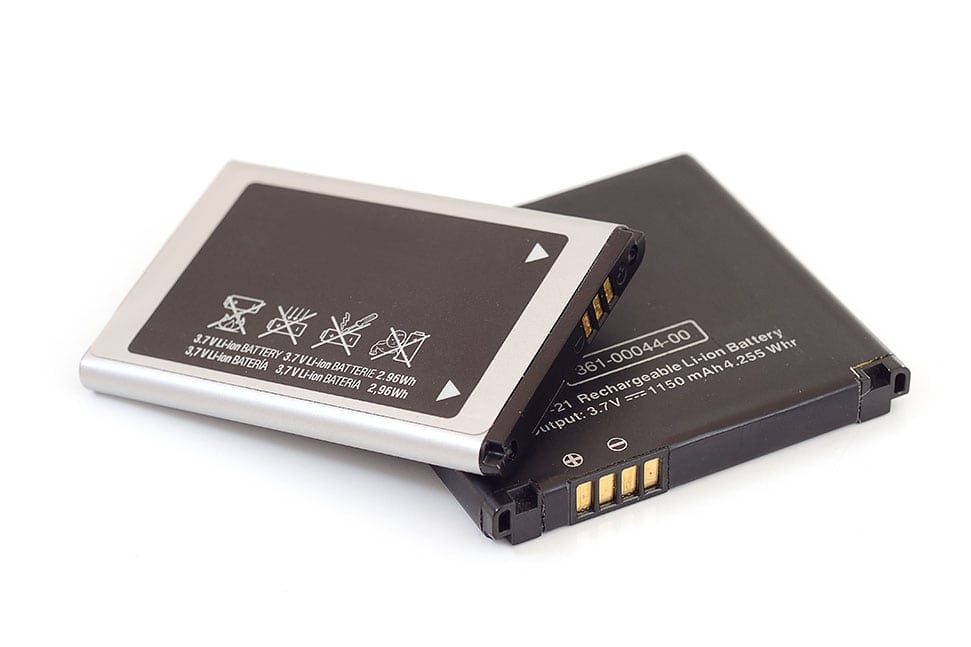
Global e-scrap flows have helped China dominate lithium-ion battery recycling but have hampered similar efforts in North America, according to a recently published report.

This year, nearly two-thirds of the lithium-ion battery volume recycled globally will be done in China, according to an analysis titled “The lithium-ion battery end-of-life market 2018-2025,” completed by U.K. research firm Circular Energy Storage. The report is for sale on the company’s website.

This year, 179,000 metric tons of lithium-ion batteries will reach end-of-life globally, and 83 percent of them will come from portable electronics, such as laptops and smartphones, and power tools. Out of the 97,000 metric tons that will be recycled this year, 90 percent will come from portable devices, the report states.

Several factors have contributed to China recycling more than twice the weight of lithium-ion batteries recycled by the rest of the world.

“Batteries are exported to China as part of electronic devices which will be refurbished and sold as reused devices,” the report states. “We estimate that about 75 percent of smartphones, tablets and laptops traded for reuse in Europe and North America will be processed in China.”

The movement of batteries to China means North American and European companies are at a disadvantage.

“These companies are missing out on the large volumes that their Asian competitors benefit from, which don’t provide the necessary economies of scale required to compete now and in the future,” the report states. “With few batteries to recycle it has been hard to build up both efficient plants, and sustainable streams of material, which has left an impression that recycling of lithium-ion batteries cannot be done.”

But there has been exponential growth in lithium-ion batteries use in electronics, and the report indicates there may now be a critical mass of material available to feed large recycling operations, provided the end-of-life devices don’t make their way to Asia. The report estimates the end-of-life volume of lithium-ion batteries will increase from 169,000 metric tons this year to 721,000 metric tons in 2025.

And there is a growing demand for materials used to manufacture new batteries – cobalt, for instance, has shot sky-high in price and OEMs are looking to recycling companies for cheaper sourcing of the metal.

Despite the challenges, a number of North American companies have entered the lithium-ion battery recycling business. For instance, American Manganese patented a process it plans to use to recycle batteries from electric vehicles, and a joint venture between U.S. and South Korean companies recently launched to process batteries from a variety of sources, including e-scrap.

Although large-format lithium-ion batteries in electric vehicles are a growing segment of the market, nearly half the end-of-life batteries that will be available for recycling in the next several years will come from electronic devices.

Photo credit: Art65395/Shutterstock
 

Tags: AsiaCritical MineralsResearch

TweetShare
Colin Staub

Colin Staub

Colin Staub was a reporter and associate editor at Resource Recycling until August 2025.

Related Posts

E-scrap magnet recycling company scales up

Why only some rare-earth sources are economically viable

byDavid Daoud
September 24, 2026

Rare-earth recycling economics depend on several factors, and there is no single price or date that makes the process pencil...

Bridge Green, Hartree partner on mineral processing deal

Bridge Green, Hartree partner on mineral processing deal

byPaul Lane
September 21, 2026

The agreement will see Bridge Green’s lithium carbonate sold to and marketed by Hartree.

America’s critical-materials buildout has a feedstock problem

byDavid Daoud
September 18, 2026

As the US invests in critical-minerals capacity will facilities have enough material to process?

Canada Plastics Pact reports 2024 progress

Trade tensions shift global mineral partnerships 

byPaul Lane
September 15, 2026

Canada is seeking new trade partners amid worsening US relations, while South Korea is trying to tap into deep Asian...

Spin-off lets Linca focus on battery mineral recovery

Critical mineral policy shift creates opportunity

byPaul Lane
September 14, 2026

Government leaders are calling for minerals to stay onshore, but industry leaders say more public investment would maximize the ability...

Cyclic Materials’ Arizona mineral facility opens

byPaul Lane
September 9, 2026

The Mesa property will perform commercial-scale rare earth mineral recycling.

Load More
Next Post
computer towers

U.S. e-scrap recycling rate drops

2026 Buyers’ Guide

Equipment, services and technology suppliers serving the recycling industry.

Browse the Guide

More Posts

Ten e-scrap projects receive federal prize funds

Recycling rates for rare earths could double by 2040

July 17, 2026
Intel sign outside of company building.

Intel’s CapEx tops $20B on server demand while PC volume shrinks

July 29, 2026
Feds to develop repairable computer donation program

The whitebox blind spot in PC recycling

April 24, 2026
Textile EPR and the definition of recycling

Textile Exchange reports progress in production

September 22, 2026

America’s critical-materials buildout has a feedstock problem

September 18, 2026

Microsoft confirms PC sales slump

August 4, 2026
Data erasure firm expands wearable device capabilities

Apple hits 30% recycled content, debuts new recovery tech

April 17, 2026

In other news: May 2, 2016

May 2, 2016
Closeup of a printed circuitboard

Hardware demand puts new focus on parts harvesting

June 5, 2026
The electronics recycling industry is undergoing a transformation from labor-intensive manual operations to highly automated, AI-driven facilities that use advanced robotics, cleaner chemistry and digital tracking systems to extract critical materials.

The cyber-physical MRF: AI and robotics reshape e-waste recovery

February 12, 2026
Load More

About & Publications

About Us

Staff

Archive

Magazines

Work With Us

Advertise
Jobs
Contact
Terms and Privacy

Newsletters

Get the latest recycling news and analysis delivered to your inbox every week. Stay ahead on industry trends, policy updates, and insights from programs, processors, and innovators.

Subscribe

Welcome Back!

Login to your account below

Forgotten Password?

Retrieve your password

Please enter your username or email address to reset your password.

Log In

Add New Playlist

No Result
View All Result
  • The Latest
  • Analysis
  • Recycling
  • E-Scrap
  • Plastics
  • Policy Now
  • Conferences
    • E-Scrap Conference
    • Plastics Recycling Conference
    • Resource Recycling Conference
    • Textiles Recovery Summit
  • Magazines
  • About Us
  • Advertise
  • Archive
  • Jobs
  • Staff
Subscribe
This website uses cookies. By continuing to use this website you are giving consent to cookies being used. Visit our Privacy and Cookie Policy.
-
00:00
00:00

Queue

Update Required Flash plugin
-
00:00
00:00