


Resource Recycling
  • The Latest
  • Analysis
    • All
    • Certification Scorecard
    • Industry Announcements
    • Opinion
    Apple Watch on product box.

    Wearables are coming and ITAD isn’t ready

    Certification Scorecard — Week of April 13, 2026

    EV Battery Pack - Sergii Chernov-Shutterstock

    Redwood, Rivian deal fuels US infrastructure plans

    Bloom ESG and e-Stewards roll out critical metals metric

    Colorado regulators suggest mid-range EPR scenario

    Why collaboration on plastic waste still matters

    Battery recycler Ascend Elements files for bankruptcy

    Battery recycler Ascend Elements files for bankruptcy

    EPR fees are a market signal. Here’s what they’re telling you.

    EPR fees are a market signal. Here’s what they’re telling you.

    Wolframite ore, the primary ore of tungsten from Altai, Russia

    Tungsten scrap export controls draw industry attention

    Certification Scorecard — Week of April 6, 2026

  • Conferences
  • Publications

    Other Topics

    Textiles
    Organics
    Packaging
    Glass
    Brand Owners

    Metals
    Technology
    Research
    Markets
    Grant Watch

    All Topics

Subscribe
No Result
View All Result
Resource Recycling
  • The Latest
  • Analysis
    • All
    • Certification Scorecard
    • Industry Announcements
    • Opinion
    Apple Watch on product box.

    Wearables are coming and ITAD isn’t ready

    Certification Scorecard — Week of April 13, 2026

    EV Battery Pack - Sergii Chernov-Shutterstock

    Redwood, Rivian deal fuels US infrastructure plans

    Bloom ESG and e-Stewards roll out critical metals metric

    Colorado regulators suggest mid-range EPR scenario

    Why collaboration on plastic waste still matters

    Battery recycler Ascend Elements files for bankruptcy

    Battery recycler Ascend Elements files for bankruptcy

    EPR fees are a market signal. Here’s what they’re telling you.

    EPR fees are a market signal. Here’s what they’re telling you.

    Wolframite ore, the primary ore of tungsten from Altai, Russia

    Tungsten scrap export controls draw industry attention

    Certification Scorecard — Week of April 6, 2026

  • Conferences
  • Publications

    Other Topics

    Textiles
    Organics
    Packaging
    Glass
    Brand Owners

    Metals
    Technology
    Research
    Markets
    Grant Watch

    All Topics

Subscribe
No Result
View All Result
Resource Recycling
No Result
View All Result
Home E-Scrap

Technology targets a growing segment of e-scrap stream

Colin StaubbyColin Staub
November 9, 2017
in E-Scrap
Technology targets a growing segment of e-scrap stream

Larry Reaugh, American Manganese

Experts predict large-format lithium-ion batteries will show up more regularly in the scrap electronics stream in the coming years, and a Canadian company is looking at the trend as an opportunity.

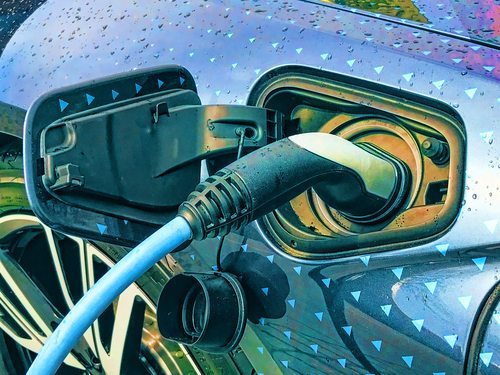
Large lithium-ion batteries in particular are expected to grow more prevalent as electric vehicle (EV) market growth continues. British Columbia-based American Manganese is employing hydrometallurgy in response to the need for end-of-life management as well as supply of metals for battery manufacturing.

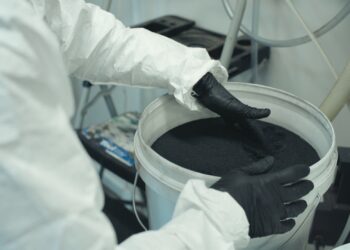
Although the batteries are still in the early stages of entering the waste stream, their sheer value and predicted growth has the company convinced there’s already a critical mass. In an interview, a leader from the company said its process targets the “cathode” section of large-format lithium-ion products. That portion of the battery contains manganese, cobalt and other metals.

“It’s the most valuable part of the battery. This one singular item probably represents 25 to 30 percent of the value of the battery,” said Larry Reaugh, president and CEO of American Manganese, in an interview with E-Scrap News.

The publicly traded company is looking to scale up its proprietary hydrometallurgical process and create a pilot plant, which would be the model for portable processing operations that would be produced in British Columbia and sold and transported to customers’ locations. The pilot plant will cost about $5 million, Reaugh said. He anticipates a commercial plant is about two years down the line.

Reaugh said a plant using his company’s technology could have a throughput of up to 20 tons per day, a very small volume in mining terms, and could be “very lucrative.” Although disassembly will require more operating space, the processing plants he plans to build and sell would be relatively small due to the concentrated cathode feedstock.

Reaugh has a mining background, and his company picked up a low-grade manganese mining property in Arizona several years ago. The grades were 2 to 3 percent, he said, which was low enough that “anywhere else in the world, you wouldn’t even look at that.”

Other countries have higher-grade deposits, meaning that in order to capitalize on the deposits, mining operations in the U.S. need technology to compete internationally. Reaugh’s company worked with a Canadian firm, Kemetco Research, and developed a technical solution to produce manganese metal. But, Reaugh said, “the price defeated us,” and his company hasn’t moved forward with the Arizona project.

Instead, Kemetco informed Reaugh of a different possible application for the same technology: targeting cathode materials from lithium-ion batteries.

Proprietary process

Cathodes vary in material makeup. Battery chemistries include lithium cobalt, lithium nickel manganese cobalt, lithium manganese, lithium nickel cobalt aluminum and more. End-of-life recovery does not currently focus on isolating those various materials, Reaugh said.

“Right now, they’re being burned. You get some cobalt out, 40 to 60 percent, and the rest of it, aluminum, manganese, all goes into slag, which is a waste product,” he said. “That’s not a solution.”

American Manganese is employing a process that allows recovery of all those different battery chemistries, Reaugh said. Its technique is a hydrometallurgical process similar to what is found in a mining circuit, he explained. It uses thickeners, tanks and pumps, to separate the metals contained in the cathode.

The process has extracted 92 percent of the lithium, and Reaugh said he anticipates it can reach 100 percent lithium recovery if the metal is cycled through the process multiple times.

“We’ve been able to get out 100 percent of the cathode materials,” he explained. “It’s been extremely successful.”

Reaugh said the company plans to file its patent this week, which he said will be a major milestone.

“We’ll eventually file in China and Europe and any other country that’s going to be leaning heavily into the lithium-ion battery space, and I think everybody is eventually,” he said.

A 1,000-pound lithium cobalt battery has about $6,000 worth of cathode material within it, Reaugh said. A similar-sized nickel manganese cobalt battery has about $3,500 worth, and lower-end nickel cobalt aluminum battery has $1,600 to $1,700 worth in it.

“Those are big numbers,” Reaugh said, noting his processing cost will be around 25 to 30 cents per pound, plus a battery disassembly cost that is not certain yet. “There’s a lot of profit in it.”

Cobalt is currently priced at $27.67 per pound.

Specific waste stream

The company is focused on EV battery recycling and is currently not looking to recover materials from the wider lithium-ion stream. The market is there — Reaugh described Apple consuming $230 million of cathode materials each year — but he described difficulties in recovering the array of batteries in the consumer electronics stream. Reaugh pointed to the varying shapes and sizes of lithium-ion batteries.

“They’re going to have to standardize the batteries, so that somebody can take them apart,” Reaugh said.

The EV battery stream is anticipated to grow exponentially in the coming years, as electric car sales continue to increase and countries including China set goals for electric vehicle usage. A battery recycling expert recently described challenges in identifying and separating the batteries, as well as making battery recycling pencil out financially.

But even now, Reaugh said there is enough of a stream for EV battery recycling to be profitable. He estimated there were roughly 280,000 spent EV batteries entering the waste stream globally in 2015. “It’s not like you need a million batteries,” he said.

American Manganese doesn’t anticipate trouble obtaining the feedstock, even though it is a very specific waste stream.

“I think the manufacturers, to be very honest with you, will come to us,” Reaugh said, describing how manufacturers and consumers alike currently have to pay a tip fee to get rid of the batteries at recycling yards, where they often are transferred for smelting. “In reality, we could take it off his hands for nothing, or we might even be able to pay him something. So I think, if you’re trying to get the cost down on your batteries, that’s one way to do it, is to deal with us.”

 

Tags: CanadaCritical MineralsProcessors

TweetShare
Colin Staub

Colin Staub

Colin Staub was a reporter and associate editor at Resource Recycling until August 2025.

Related Posts

Aduro losses nearly double on year

Aduro losses nearly double on year

byAntoinette Smith
April 15, 2026

Amid rising expenses for R&D, hiring and scaling efforts, nine-month YTD losses were CAD $14.416 million compared to a loss...

EV Battery Pack - Sergii Chernov-Shutterstock

Redwood, Rivian deal fuels US infrastructure plans

byStefanie Valentic
April 15, 2026

Batteries that are no longer ideal for powering a vehicle still have substantial capacity left. Automobile manufacturer Rivian and battery...

Bloom ESG and e-Stewards roll out critical metals metric

byDavid Daoud
April 15, 2026

The two groups announced the upgrade to their jointly developed Environmental Benefits Calculator.

German demo plant targets lithium recovery from battery scrap

byScott Snowden
April 10, 2026

Tozero has opened a demo plant processing 1,500 metric tons of battery scrap yearly, recovering lithium, graphite and nickel-cobalt to...

Wolframite ore, the primary ore of tungsten from Altai, Russia

Tungsten scrap export controls draw industry attention

byDavid Daoud
April 9, 2026

Businesses that rely on tungsten are urging the U.S. Department of Commerce to consider export controls on tungsten scrap.

Rice researchers use lemon juice to boost battery recycling

byScott Snowden
April 9, 2026

Rice researchers reported a battery recycling process that uses plasma and mild solvents to recover most metals from black mass...

Load More
Next Post

Proponents say ‘Zero Waste’ act unlocks economic opportunity

Leading the Charge in Safe Battery Recycling
Sponsored

Leading the Charge in Safe Battery Recycling

byThe Battery Network
April 13, 2026

We’re connecting people, brands, and communities through one nationwide network built to make battery recycling safer, simpler, and more accessible...

Read moreDetails

More Posts

Recycling Partnership CEO stepping down

April 15, 2026
Battery recycler Ascend Elements files for bankruptcy

Battery recycler Ascend Elements files for bankruptcy

April 13, 2026
EPR fees are a market signal. Here’s what they’re telling you.

EPR fees are a market signal. Here’s what they’re telling you.

April 10, 2026
Industry group: Help us find the plastic bale volumes we need

PET bales sink further as other grades firm 

April 15, 2026
Colorado regulators suggest mid-range EPR scenario

Why collaboration on plastic waste still matters

April 13, 2026

GFL acquires SECURE Waste for $6.4bn

April 13, 2026

WM opens new $60m MRF in Indy

April 10, 2026

Amazon, DOE partner on critical materials recovery

April 13, 2026

Bloom ESG and e-Stewards roll out critical metals metric

April 15, 2026
Solarcycle starts up Georgia recycling plant

S3399 signals a shift in how states are tackling solar panel waste

April 6, 2026
Load More

About & Publications

About Us

Staff

Archive

Magazine

Work With Us

Advertise
Jobs
Contact
Terms and Privacy

Newsletter

Get the latest recycling news and analysis delivered to your inbox every week. Stay ahead on industry trends, policy updates, and insights from programs, processors, and innovators.

Subscribe

Welcome Back!

Login to your account below

Forgotten Password?

Retrieve your password

Please enter your username or email address to reset your password.

Log In

Add New Playlist

No Result
View All Result
  • The Latest
  • Analysis
  • Recycling
  • E-Scrap
  • Plastics
  • Policy Now
  • Conferences
    • E-Scrap Conference
    • Plastics Recycling Conference
    • Resource Recycling Conference
    • Textiles Recovery Summit
  • Magazine
  • About Us
  • Advertise
  • Archive
  • Jobs
  • Staff
Subscribe
This website uses cookies. By continuing to use this website you are giving consent to cookies being used. Visit our Privacy and Cookie Policy.