



Resource Recycling
  • The Latest
  • Analysis
    • All
    • Certification Scorecard
    • Industry Announcements
    • Opinion

    ITAD is moving past its adolescent phase: beyond end-of-life

    Rainforest

    Inside the Circle: What the rainforest can teach us about EPR

    Closeup of a printed circuitboard

    Hardware demand puts new focus on parts harvesting

    Rare look inside the world’s largest plastics recycler

    Mass balance matters: Why different rules can lead to different outcomes 

    Certification Scorecard — Week of June 1, 2026

    IT asset disposition and electronics recycling: Now and then

    $60 billion in AI servers will create an ITAD challenge

  • Conferences
    • Resource Recycling Conference
    • Plastics Recycling Conference
    • E-Scrap: The Longevity Conference
    • Textiles Recovery Summit
  • Publications
    • E-Scrap News
    • Plastics Recycling Update
    • Policy Now
    • Resource Recycling
    • Other Topics
      • All Topics
      • Brand Owners
      • Critical Minerals
      • Glass
      • Grant Watch / RFPs
      • Markets
      • Organics
      • Packaging
      • Research
      • Technology
      • Textiles
Subscribe
No Result
View All Result
Resource Recycling
  • The Latest
  • Analysis
    • All
    • Certification Scorecard
    • Industry Announcements
    • Opinion

    ITAD is moving past its adolescent phase: beyond end-of-life

    Rainforest

    Inside the Circle: What the rainforest can teach us about EPR

    Closeup of a printed circuitboard

    Hardware demand puts new focus on parts harvesting

    Rare look inside the world’s largest plastics recycler

    Mass balance matters: Why different rules can lead to different outcomes 

    Certification Scorecard — Week of June 1, 2026

    IT asset disposition and electronics recycling: Now and then

    $60 billion in AI servers will create an ITAD challenge

  • Conferences
    • Resource Recycling Conference
    • Plastics Recycling Conference
    • E-Scrap: The Longevity Conference
    • Textiles Recovery Summit
  • Publications
    • E-Scrap News
    • Plastics Recycling Update
    • Policy Now
    • Resource Recycling
    • Other Topics
      • All Topics
      • Brand Owners
      • Critical Minerals
      • Glass
      • Grant Watch / RFPs
      • Markets
      • Organics
      • Packaging
      • Research
      • Technology
      • Textiles
Subscribe
No Result
View All Result
Resource Recycling
No Result
View All Result
Home E-Scrap

EPA considers factoring devices into US recycling rate

byJared Paben
April 22, 2021
in E-Scrap
EPA considers factoring devices into US recycling rate

If electronics are repaired, refurbished or remanufactured, should their weight be counted in the U.S. recycling rate?

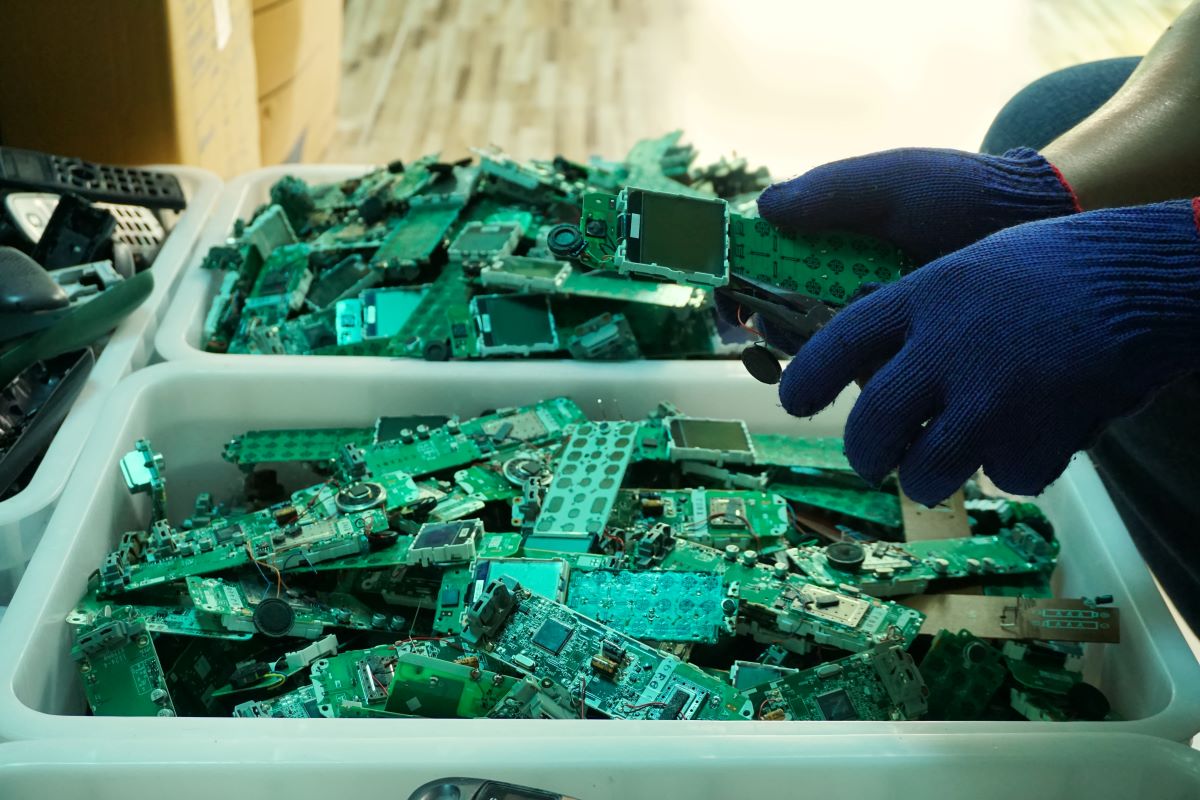
That’s just one of many questions the EPA is grappling with as it seeks to define exactly what “recycling rate” will mean. Last fall, the agency released a national recycling rate goal of 50% by 2030. Using current methodologies, the EPA estimates the U.S. has a 32% recycling rate. For electronics, specifically, it was 38.5% in 2018. In that calculation, EPA is counting “selected consumer electronics,” which includes “products such as TVs, VCRs, DVD players, video cameras, stereo systems, telephones and computer equipment.”

But the EPA is considering changing the recycling rate calculation methodologies. In particular, the agency is examining which sources of material, types of materials, management pathways and destinations to count in the recycling rate. Not surprisingly, among the 108 comments from different recycling industry stakeholders, advice differed markedly.

Tracking repair and refurbishment

One of the questions EPA asked was whether the repair, refurbishment and remanufacturing of goods should be counted in the national recycling rate. Opinions were split.

The Washington Department of Ecology, which regulates the state’s extended producer responsibility program for electronics, urged the EPA not to count repair, refurbishment and remanufacturing as “recycling.”

“This could be counted as recovery. It depends on whether this material is in the regulated solid waste stream,” wrote Laurie Davies of the Department of Ecology. “Count this material if it is entering solid waste handling activities, and it is made into a usable product from one that was discarded.”

The National Recycling Coalition (NRC) noted that reuse is higher on the waste management hierarchy than recycling but argued that counting reuse in the recycling rate would just lead to more confusion among the public.

“There are numerous material management pathways and each ought to be properly characterized and counted,” group President Bob Gedert wrote. “Combined, the various methods of material management may add up to some environmental, economic, and social benefits, but they all should not be called Recycling and then characterized by a single Recycling Rate.”

The National Waste & Recycling Association (NWRA) argued that the recycling rate should be limited to mechanical recycling activities, excluding reuse and refurbishment. But NWRA recommended EPA track and annually report the amount of material diverted from the waste stream by repair and refurbishment activities.

The Baltimore County, Md. Bureau of Solid Waste Management said that while it strongly encourages repair and refurbishment, the activities shouldn’t be added to the recycling rate until the EPA develops measurement criteria for them.

Others urged the EPA to include reuse activities in the annual recycling number.

The Institute of Scrap Recycling Industries (ISRI) wrote that it considers repair and refurbishment of electronics as a recycling activity.

“ISRI considers those options that lead to the creation of commodities that are incorporated into new products or materials by manufacturers or, in the case of electronics, lead to their extended usability,” wrote Adina Renee Adler of ISRI. “ISRI recognizes reuse, repair, refurbishment and remanufacturing as recycling.”

Gary Liss, a well-known zero waste consultant, argued that repair and refurbishment should be included in the recycling rate because of its position on the zero waste hierarchy of highest and best use.

And the New York Department of Sanitation, which is the nation’s largest municipal sanitation department and runs large e-scrap collection programs in partnership with ERI, told the EPA it considers all diverted electronics collected through its e-scrap programs in New York City’s recycling rate.

More support on counting e-scrap recycling

There was more support – although not unanimous – for continuing to count e-scrap recycling in the national recycling rate.

“Electronics and e-waste should be included in the recycling rate calculation as these materials are considered MSW and typically are recycled,” wrote Michael Jensen of Waste Management, the largest residential garbage and recyclables hauler in North America.

The Maryland Recycling Network included electronics on a list of materials the group said the EPA should factor into the recycling rate.

“These materials, when generated by either households or businesses, are traditionally included in EPA’s and virtually all state recycling rates,” according to the group. “They are the materials normally handled by local governments as part of their solid waste management responsibilities.”

In their comments, a number of environmental advocacy groups highlighted toxic materials found within electronics. The Center for Biological Diversity, for example, argued the EPA shouldn’t count e-scrap recycling in the U.S. recycling rate because of the risk those substances pose to public health and to the environment.

 

Tags: Repair & ReuseResearch
TweetShare
Jared Paben

Jared Paben

Related Posts

Chemical recycling roundup: New plant, partnerships

Polystyrene’s circular future is already taking shape

byJustin Riney, Polystyrene Recycling Alliance
May 29, 2026

Justin Riney of the Polystyrene Recycling Alliance explores a study conducted with the Resource Recycling Systems consultancy.

What Netflix’s ‘Plastic Detox’ gets wrong – and right

byKeith Loria
April 23, 2026

Advocates are excited about the attention brought on plastics by the documentary, but scientists say more nuance is needed.

Google pilots reuse kits to extend device life

byScott Snowden
April 21, 2026

Google, Back Market and Closing the Loop pilot a reuse model pairing ChromeOS Flex with e-scrap recovery, extending device life...

Hawaii trials asphalt made with plastic debris and nets

Hawaii trials asphalt made with plastic debris and nets

byScott Snowden
April 20, 2026

Researchers at Hawaii Pacific University test asphalt made with fishing nets and plastic debris, with early results showing no increase...

Amazon, DOE partner on critical materials recovery

byScott Snowden
April 13, 2026

DOE and Amazon will study recovery of graphite from textiles and gallium from IT hardware, aiming to strengthen US supply...

Rice researchers use lemon juice to boost battery recycling

byScott Snowden
April 9, 2026

Rice researchers reported a battery recycling process that uses plasma and mild solvents to recover most metals from black mass...

Load More
Next Post
Adam Shine

In My Opinion: Vaccines bring bright future to processors

More Posts

How electronics legislation fared this legislative season

NY sends repairability labeling bill to governor

June 8, 2026
House resolution aims to make recyclability central to product design

NY EPR bill fails to advance after third try

June 8, 2026
Illinois expands battery recycling as lithium-ion fire concerns mount

Illinois expands battery recycling as lithium-ion fire concerns mount

May 27, 2026
California extends compostable labeling law

California bills crack down on false recycling, compostable claims

May 29, 2026

Returns are a goldmine of information

May 27, 2026
Recycling industry addresses Beyond Plastics report

Recycling industry addresses Beyond Plastics report

May 26, 2026
Data to verify recycling for Indy 500

Data to verify recycling for Indy 500

May 22, 2026
Federal PACK Act aims to preempt ‘patchwork’ of state laws

House advances Recycling Infrastructure and Accessibility Act

May 21, 2026

WM, Circular Materials announce new Canadian facility

May 21, 2026

Battery fires still a major risk to recyclers: report

June 9, 2026
Load More

About & Publications

About Us

Staff

Archive

Magazine

Work With Us

Advertise
Jobs
Contact
Terms and Privacy

Newsletter

Get the latest recycling news and analysis delivered to your inbox every week. Stay ahead on industry trends, policy updates, and insights from programs, processors, and innovators.

Subscribe

Welcome Back!

Login to your account below

Forgotten Password?

Retrieve your password

Please enter your username or email address to reset your password.

Log In

Add New Playlist

No Result
View All Result
  • The Latest
  • Analysis
  • Recycling
  • E-Scrap
  • Plastics
  • Policy Now
  • Conferences
    • E-Scrap Conference
    • Plastics Recycling Conference
    • Resource Recycling Conference
    • Textiles Recovery Summit
  • Magazine
  • About Us
  • Advertise
  • Archive
  • Jobs
  • Staff
Subscribe
This website uses cookies. By continuing to use this website you are giving consent to cookies being used. Visit our Privacy and Cookie Policy.