Resource Recycling
  • The Latest
  • Analysis
    • All
    • Certification Scorecard
    • Industry Announcements
    • Opinion
    NJ’s PCR delay risks making its own excuse permanently true

    NJ’s PCR delay risks making its own excuse permanently true

    E-scrap magnet recycling company scales up

    Why only some rare-earth sources are economically viable

    e-Stewards to develop an ITAD-specific standard

    Certification scorecard — week of Sept. 21

    Who should pay for lithium-ion battery fire damage?

    America’s critical-materials buildout has a feedstock problem

    Certification scorecard – week of Sept. 14

  • Conferences
    • Resource Recycling Conference
    • Plastics Recycling Conference
    • E-Scrap: The Longevity Conference
    • Textiles Recovery Summit
  • Publications
    • E-Scrap News
    • Plastics Recycling Update
    • Policy Now
    • Resource Recycling
    • Other Topics
      • All Topics
      • Brand Owners
      • Critical Minerals
      • Glass
      • Grant Watch / RFPs
      • Markets
      • Organics
      • Packaging
      • Research
      • Technology
      • Textiles
Subscribe
No Result
View All Result
Resource Recycling
No Result
View All Result
Home E-Scrap

Firms develop battery-in-device processing system

byJared Paben
January 4, 2024
in E-Scrap
Firms develop battery-in-device processing system

Sending battery-containing devices through the shredder is typically a no-no for several reasons, but manually removing and taping batteries prior to shredding the rest of the device is labor intensive. A newly unveiled processing system addresses the conundrum. 

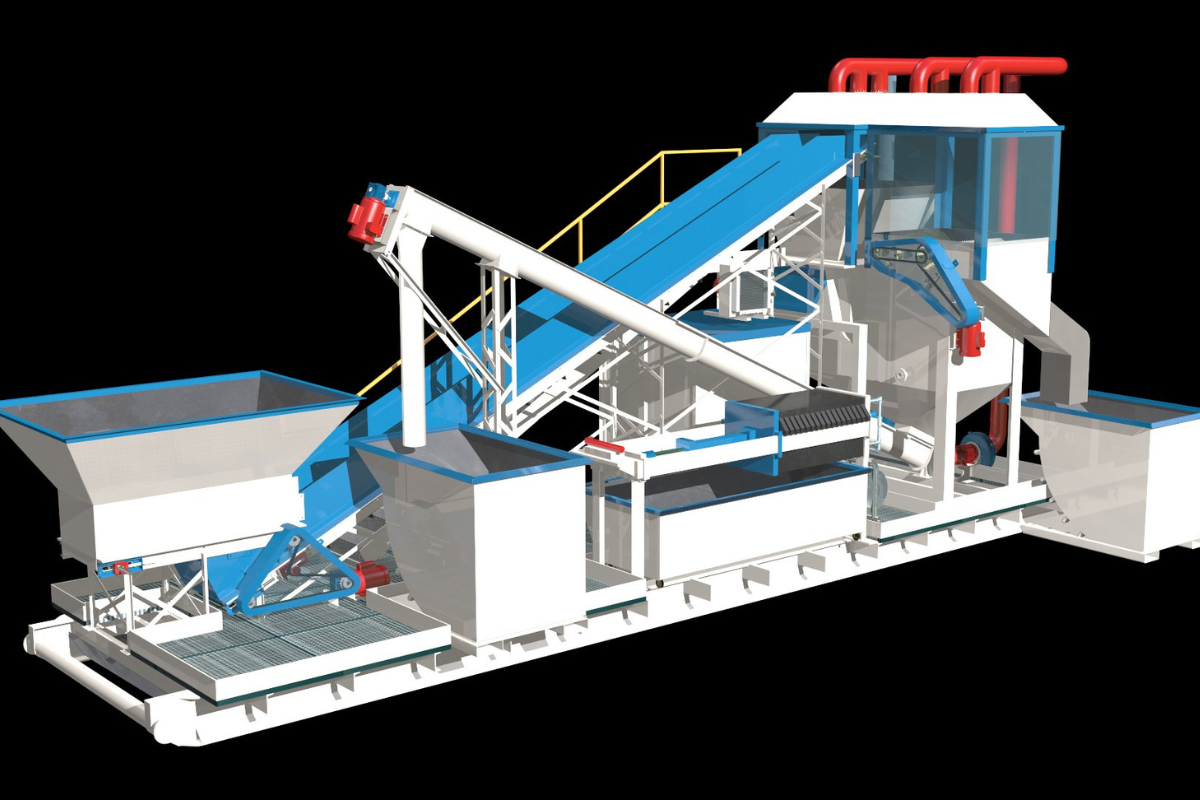
Gloyd Recycling Solutions, in partnership with Archimedes Industry Advisory and Investments (AIAI), in December announced their Battery-In-Device-Shredder system, model 23 (BIDS23). The system shreds battery-containing devices and sorts materials into three fractions, based on their density: plastics, metals and black mass. 

Jeff Gloyd, founder of Gloyd Recycling Solutions and a partner at engineering consulting firm AIAI, said after batteries and battery containing devices are separated from bulk feedstock, the intentions are to allow facilities to avoid the labor needed to remove batteries and tape terminals and to reduce fire risk associated with storing and shipping batteries. The system, which includes a wet shredder and an emissions scrubber, safely shreds batteries, removes hazardous gasses emitted from them and recovers the commodities. 

“I truly believe that something like this can change the status of recycling electronics today,” said Gloyd, who noted the proliferation of batteries in new device types and in devices that previously didn’t have them. “There’s more of this material and there needs to be a solution that reduces risk to facilities and staff and allows warehouses to operate more efficiently. I’m hoping this system can be part of the solution.” 

Battery market requirements drive R&D

Two years of research and engineering went into developing BIDS23, Gloyd said. It was driven by the need to solve a pervasive problem in the e-scrap industry. 

Downstream recycling outlets for batteries mostly consist of large-scale facilities that want big volumes of sorted batteries, with a hefty appetite for large and metals-heavy electric vehicle (EV) batteries. Those outlets are not as interested in the multitude of small-battery-containing consumer devices in the end-of-life stream. In addition to computers and mobile phones, that stream includes earbuds, e-cigarettes, toys and other small electronic items.  

“We’re throwing this stuff away in record numbers, inside record numbers of devices, and that’s where I’ve seen the challenge within our industry,” Gloyd said.

Existing battery recycling outlets don’t like the lower metals content and the presence of non-desired battery chemistries and organics in consumer electronics battery recycling, Gloyd noted. As a result, upstream suppliers are faced with finding battery containing material, then manually removing batteries from devices and sorting and taping them, with little to no value proposition. 

And even if workers are 100% accurate at removing batteries from devices, the fact that the batteries are then stored en masse presents a risk of potentially devastating fires, Gloyd noted. 

Designed for relatively low volumes of up to 1 ton per hour (depending on the feed streams), the BIDS23 system uses a small wet shredder, followed by a density-modified water tank to sort the shredded output into three streams. The plastics and other light materials float, the metals (steel, aluminum, copper and circuit boards) sink, and the black mass (shredded batteries) becomes a slurry suspended in the water. The system, which recirculates the water, recovers all three fractions.  

BIDS23 also has a proprietary wet scrub emissions control system that captures off-gassing from battery shredding. 

BIDS23 requires 1 or 1.5 full-time-equivalent employees to operate, Gloyd estimated. The system is delivered on a semi-truck trailer and is ready to go after it’s bolted down, plugged in and filled with water, he said. 

“It’s an incredible value from a plug-and-play perspective,” he said.  

Lead times are currently about six months from purchase to delivery, he estimated.

Tags: Batteries
TweetShare
Jared Paben

Jared Paben

Related Posts

Facility fires remain high across US, Canada in August

byPaul Lane
September 23, 2026

Despite high August numbers, the latest Fire Rover report indicated there may be overall progress in slowing the number of...

Bridge Green, Hartree partner on mineral processing deal

Bridge Green, Hartree partner on mineral processing deal

byPaul Lane
September 21, 2026

The agreement will see Bridge Green’s lithium carbonate sold to and marketed by Hartree.

Who should pay for lithium-ion battery fire damage?

byDavid Daoud
September 21, 2026

Fires continue to be a major threat to the recycling industry, even as states explore new policy solutions.

America’s critical-materials buildout has a feedstock problem

byDavid Daoud
September 18, 2026

As the US invests in critical-minerals capacity will facilities have enough material to process?

Spin-off lets Linca focus on battery mineral recovery

Critical mineral policy shift creates opportunity

byPaul Lane
September 14, 2026

Government leaders are calling for minerals to stay onshore, but industry leaders say more public investment would maximize the ability...

Battery fire risk isn’t going away. Insurance is responding

Vape ban awaits California governor’s signature

byStefanie Valentic
September 10, 2026

California's vape ban was written to close the exact loophole that let disposable devices survive a ban in the UK.

Load More
Next Post
Canadian facility scales up rare earth magnet recycling

Canadian facility scales up rare earth magnet recycling

2026 Buyers’ Guide

Equipment, services and technology suppliers serving the recycling industry.

Browse the Guide

More Posts

Ten e-scrap projects receive federal prize funds

Recycling rates for rare earths could double by 2040

July 17, 2026
Closeup of a printed circuitboard

Hardware demand puts new focus on parts harvesting

June 5, 2026
Data erasure firm expands wearable device capabilities

Apple hits 30% recycled content, debuts new recovery tech

April 17, 2026

In other news: May 2, 2016

May 2, 2016

Microsoft confirms PC sales slump

August 4, 2026
Intel sign outside of company building.

Intel’s CapEx tops $20B on server demand while PC volume shrinks

July 29, 2026
Apple store

Apple leads on inputs, faces questions on ITAD

May 1, 2026

AI and the changing economics of retired hardware

June 12, 2026

America’s critical-materials buildout has a feedstock problem

September 18, 2026
Textile EPR and the definition of recycling

Textile Exchange reports progress in production

September 22, 2026
Load More

About & Publications

About Us

Staff

Archive

Magazines

Work With Us

Advertise
Jobs
Contact
Terms and Privacy

Newsletters

Get the latest recycling news and analysis delivered to your inbox every week. Stay ahead on industry trends, policy updates, and insights from programs, processors, and innovators.

Subscribe

Welcome Back!

Login to your account below

Forgotten Password?

Retrieve your password

Please enter your username or email address to reset your password.

Log In

Add New Playlist

No Result
View All Result
  • The Latest
  • Analysis
  • Recycling
  • E-Scrap
  • Plastics
  • Policy Now
  • Conferences
    • E-Scrap Conference
    • Plastics Recycling Conference
    • Resource Recycling Conference
    • Textiles Recovery Summit
  • Magazines
  • About Us
  • Advertise
  • Archive
  • Jobs
  • Staff
Subscribe
This website uses cookies. By continuing to use this website you are giving consent to cookies being used. Visit our Privacy and Cookie Policy.
-
00:00
00:00

Queue

Update Required Flash plugin
-
00:00
00:00