






Resource Recycling
  • The Latest
  • Analysis
    • All
    • Certification Scorecard
    • Industry Announcements
    • Opinion
    SERI works to restore faith in certifications

    Building a defensible E-scrap evidence file

    tires

    The most important decision in tire recycling happens before the shredder

    Intel sign outside of company building.

    Intel’s CapEx tops $20B on server demand while PC volume shrinks

    Google sign on company building with blue sky and clouds above.

    Inside Alphabet’s Q2 results: More capital spending and cloud backlog

    Alpek closing Pennsylvania RPET plant

    Alpek seizing on war-related opportunity 

    Our top stories from March 2023

    Iron Mountain’s data center report: Strong on power, quiet on hardware

  • Conferences
    • Resource Recycling Conference
    • Plastics Recycling Conference
    • E-Scrap: The Longevity Conference
    • Textiles Recovery Summit
  • Publications
    • E-Scrap News
    • Plastics Recycling Update
    • Policy Now
    • Resource Recycling
    • Other Topics
      • All Topics
      • Brand Owners
      • Critical Minerals
      • Glass
      • Grant Watch / RFPs
      • Markets
      • Organics
      • Packaging
      • Research
      • Technology
      • Textiles
Subscribe
No Result
View All Result
Resource Recycling
  • The Latest
  • Analysis
    • All
    • Certification Scorecard
    • Industry Announcements
    • Opinion
    SERI works to restore faith in certifications

    Building a defensible E-scrap evidence file

    tires

    The most important decision in tire recycling happens before the shredder

    Intel sign outside of company building.

    Intel’s CapEx tops $20B on server demand while PC volume shrinks

    Google sign on company building with blue sky and clouds above.

    Inside Alphabet’s Q2 results: More capital spending and cloud backlog

    Alpek closing Pennsylvania RPET plant

    Alpek seizing on war-related opportunity 

    Our top stories from March 2023

    Iron Mountain’s data center report: Strong on power, quiet on hardware

  • Conferences
    • Resource Recycling Conference
    • Plastics Recycling Conference
    • E-Scrap: The Longevity Conference
    • Textiles Recovery Summit
  • Publications
    • E-Scrap News
    • Plastics Recycling Update
    • Policy Now
    • Resource Recycling
    • Other Topics
      • All Topics
      • Brand Owners
      • Critical Minerals
      • Glass
      • Grant Watch / RFPs
      • Markets
      • Organics
      • Packaging
      • Research
      • Technology
      • Textiles
Subscribe
No Result
View All Result
Resource Recycling
No Result
View All Result
Home E-Scrap

CDC offers tips to avoid e-scrap mercury exposure

Antoinette SmithbyAntoinette Smith
January 16, 2025
in E-Scrap
CDC offers tips to avoid e-scrap mercury exposure

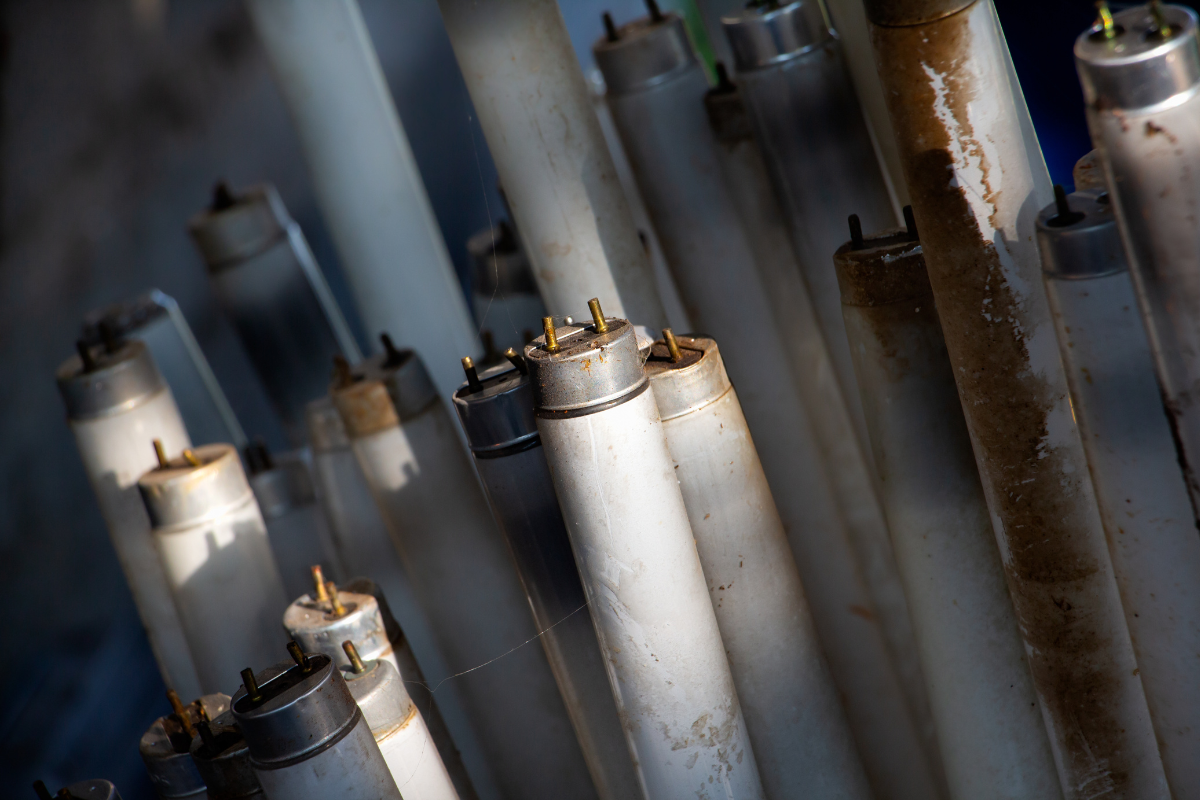
A recent report from a U.S. occupational safety unit found significant levels of mercury vapor throughout an Ohio e-scrap and lamp recycling facility, leading the team to provide recommendations for protecting worker health.

The federal Centers for Disease Control and Prevention’s National Institute for Occupational Safety and Health conducted a site visit in April 2023, after the employer expressed concerns about mercury exposure. Over two days, the CDC collected 171 air samples and tested the urine of all employees, according to the report. The facility wasn’t identified in the report.

Of the 14 urine samples, six had mercury levels above recommended exposure limits. In addition, five of six workers in lamp recycling areas had personal air exposure above the recommended levels. 

The team found that one worker with no direct involvement in lamp recycling had elevated urine mercury levels. “This finding suggests that contamination of nonproduction areas can affect nonproduction workers,” the report’s authors wrote. 

The study noted that elevated mercury levels correlated with worker tenure and primary language. The workers with elevated levels had been working there for a median length of eight months, four of them did not speak English, and five reported symptoms consistent with mercury toxicity. 

“These findings align with broader occupational health literature, which identifies language barriers and job tenure as factors influencing health and safety,” according to the study.

Mercury exposure can cause serious health issues including neurological problems and kidney damage. Symptoms include metallic or bitter taste, difficulty thinking and personality changes.  

As a result of crushing and processing lamps and other objects that may contain mercury, e-scrap workers face particular risk, the CDC said. Inhaling vapor and dust leads to rapid absorption into the bloodstream, and chronic exposure even at low levels can lead to cumulative effects. 

As a result of the study, the team provided several recommendations for mitigating mercury exposure: 

  • Installing ventilation over the conveyor in the lamp room and conducting maintenance of the facility’s heating, ventilation and air conditioning systems.
  • Implementing a workflow progressing from clean to dirty zones to prevent the spread of mercury to clean areas.
  • Providing training in workers’ preferred languages.
  • Standardizing use of recommended PPE.
  • Enforcing safety protocols.

“As the electronic waste recycling industry continues to grow, it is important for employers to evaluate mercury exposure and safeguard employees using a hierarchy of controls,” the authors wrote. “Health departments should consider monitoring occupational mercury exposure in recycling facilities, and clinicians should be aware of the potential for mercury toxicity among workers in these settings.”

Team identifies improper PPE use, language barriers

During the site visit, the CDC observed lamp room workers loading bulbs containing mercury onto a conveyor belt to be crushed. A sorting machine divided the bulbs into glass, metal and mercury dust. The facility also had a retort furnace to extract mercury from dust, but it was not in use at the time. Workers in the battery and ballast areas prepared metal and graphite electrodes to be shipped to other facilities for reuse or recycling.

The workers’ protective equipment included reusable respirators made of a flexible material with a tight seal and replaceable filter cartridges, the CDC noted. However, the investigators observed inconsistent or improper use of recommended PPE throughout the facility. For example, in the lamp room where respirators are mandatory, workers removed their respirators or wore them incorrectly, such as one employee using an N95 respirator with one of the straps cut off, “severely compromising the respirator’s seal.” 

The CDC team also observed only sporadic use of gloves and protective clothing. In follow-up interviews, some workers reported challenges with the fit and comfort of their equipment, while others cited a lack of understanding of the proper use and maintenance of equipment. 

Language barriers appeared to exacerbate these issues, as training and communication were not always provided in workers’ preferred languages, the team found. Similarly, the workers with the highest levels of mercury tended to be primarily Spanish-speaking.


Tags: Policy NowProcessors
TweetShare
Antoinette Smith

Antoinette Smith

Antoinette Smith has covered commodity plastics and supply chains for more than a decade, with a special focus on economic impacts and consumer behavior. She brings a balanced, thoughtful view to recycling stories, and isn't afraid to ask "why?" Contact Antoinette at antoinette@dev.resource-recycling.com.

Related Posts

California releases deposit system update draft rules

Groups move to intervene in SB 343 lawsuit

byStefanie Valentic
July 27, 2026

Earth Island Institute and Californians Against Waste have filed to intervene in the federal lawsuit that halted enforcement of California's...

Former president of CRT processor sentenced to prison

Groups say injunction doesn’t settle labeling issues

byStefanie Valentic
July 17, 2026

Californians Against Waste and the National Stewardship Action Council say a federal injunction blocking SB 343 pauses enforcement but still...

US recycling rates rise despite drop in bottles

byAntoinette Smith
July 16, 2026

Although rates saw slight gains over two years, the data highlight the need for policy solutions to unlock growth in...

CarbonLite to open $60 million Pennsylvania plant

Federal judge blocks CA ‘Truth in Recycling’ (SB 343) law

byStefanie Valentic
July 15, 2026

A federal judge has blocked California from enforcing SB 343's recyclability labeling restrictions, ruling the "Truth in Recycling" law is...

SB 54 draft rules generate debate on rates, review

California increases PET market payments

byAntoinette Smith
July 7, 2026

While the state extended the incentive program, the status of a separate bill with similar goals is uncertain.

Two recycled-content bills gain approval in California

California agriculture seeks SB 54 repeal

byStefanie Valentic
July 7, 2026

A coalition of state agriculture stakeholders says the packaging law could add nearly $1,400 a year to household grocery costs...

Load More
Next Post

News from Republic Services, Recycle Utah and more

2026 Buyers’ Guide

Equipment, services and technology suppliers serving the recycling industry.

Browse the Guide

More Posts

State policy is redefining plastics recycling in the US

State policy is redefining plastics recycling in the US

February 19, 2026
Closeup of a printed circuitboard

Hardware demand puts new focus on parts harvesting

June 5, 2026
Apple store

Apple leads on inputs, faces questions on ITAD

May 1, 2026
Analysis: circular design still elusive in laptops

PC shipments grew in Q1, but questions remain

April 23, 2026

In other news: May 2, 2016

May 2, 2016

Recycled copper output climbs as market shows surplus

April 6, 2026
Mexican Coke bottler to invest $1bn in ops this year

Mexican Coke bottler to invest $1bn in ops this year

March 25, 2026
Ten e-scrap projects receive federal prize funds

Recycling rates for rare earths could double by 2040

July 17, 2026

ITAD is moving past its adolescent phase: beyond end-of-life

June 10, 2026
L-R: Koichiro Nishimura, CEO of ERI Japan and Manager, ITOCHU; John Shegerian, Chairman & CEO of ERI; and Daisuke Inoue, Deputy General Manager, ITOCHU, celebrate the announcement of ERI Japan.

ERI enters Japan through joint venture with Itochu

March 24, 2026
Load More

About & Publications

About Us

Staff

Archive

Magazine

Work With Us

Advertise
Jobs
Contact
Terms and Privacy

Newsletter

Get the latest recycling news and analysis delivered to your inbox every week. Stay ahead on industry trends, policy updates, and insights from programs, processors, and innovators.

Subscribe

Welcome Back!

Login to your account below

Forgotten Password?

Retrieve your password

Please enter your username or email address to reset your password.

Log In

Add New Playlist

No Result
View All Result
  • The Latest
  • Analysis
  • Recycling
  • E-Scrap
  • Plastics
  • Policy Now
  • Conferences
    • E-Scrap Conference
    • Plastics Recycling Conference
    • Resource Recycling Conference
    • Textiles Recovery Summit
  • Magazine
  • About Us
  • Advertise
  • Archive
  • Jobs
  • Staff
Subscribe
This website uses cookies. By continuing to use this website you are giving consent to cookies being used. Visit our Privacy and Cookie Policy.