



Resource Recycling
  • The Latest
  • Analysis
    • All
    • Certification Scorecard
    • Industry Announcements
    • Opinion
    SERI works to restore faith in certifications

    Building a defensible E-scrap evidence file

    tires

    The most important decision in tire recycling happens before the shredder

    Intel sign outside of company building.

    Intel’s CapEx tops $20B on server demand while PC volume shrinks

    Google sign on company building with blue sky and clouds above.

    Inside Alphabet’s Q2 results: More capital spending and cloud backlog

    Alpek closing Pennsylvania RPET plant

    Alpek seizing on war-related opportunity 

    Our top stories from March 2023

    Iron Mountain’s data center report: Strong on power, quiet on hardware

  • Conferences
    • Resource Recycling Conference
    • Plastics Recycling Conference
    • E-Scrap: The Longevity Conference
    • Textiles Recovery Summit
  • Publications
    • E-Scrap News
    • Plastics Recycling Update
    • Policy Now
    • Resource Recycling
    • Other Topics
      • All Topics
      • Brand Owners
      • Critical Minerals
      • Glass
      • Grant Watch / RFPs
      • Markets
      • Organics
      • Packaging
      • Research
      • Technology
      • Textiles
Subscribe
No Result
View All Result
Resource Recycling
  • The Latest
  • Analysis
    • All
    • Certification Scorecard
    • Industry Announcements
    • Opinion
    SERI works to restore faith in certifications

    Building a defensible E-scrap evidence file

    tires

    The most important decision in tire recycling happens before the shredder

    Intel sign outside of company building.

    Intel’s CapEx tops $20B on server demand while PC volume shrinks

    Google sign on company building with blue sky and clouds above.

    Inside Alphabet’s Q2 results: More capital spending and cloud backlog

    Alpek closing Pennsylvania RPET plant

    Alpek seizing on war-related opportunity 

    Our top stories from March 2023

    Iron Mountain’s data center report: Strong on power, quiet on hardware

  • Conferences
    • Resource Recycling Conference
    • Plastics Recycling Conference
    • E-Scrap: The Longevity Conference
    • Textiles Recovery Summit
  • Publications
    • E-Scrap News
    • Plastics Recycling Update
    • Policy Now
    • Resource Recycling
    • Other Topics
      • All Topics
      • Brand Owners
      • Critical Minerals
      • Glass
      • Grant Watch / RFPs
      • Markets
      • Organics
      • Packaging
      • Research
      • Technology
      • Textiles
Subscribe
No Result
View All Result
Resource Recycling
No Result
View All Result
Home Plastics

PCR bottle mandate approved in California

Colin StaubbyColin Staub
September 18, 2019
in Plastics
Committee issues food-contact recycling decisions
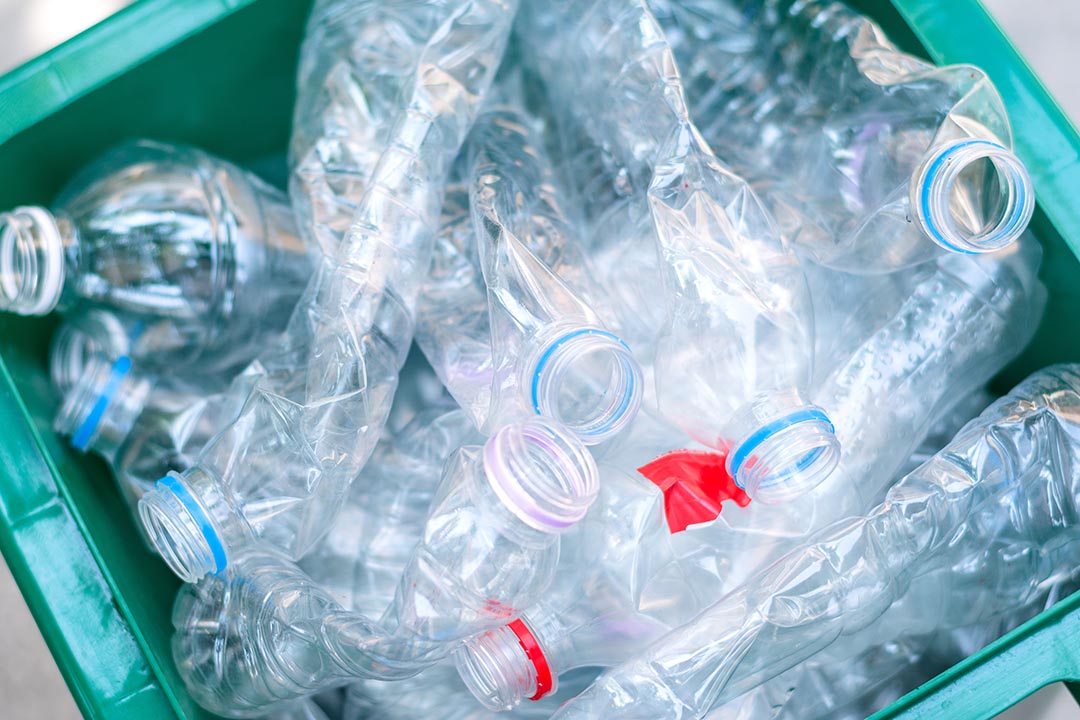
Beverage bottles will be subject to phased-in recycled plastic mandates, if AB 792 is signed by the governor. | Myibean/Shutterstock

A recycled plastic requirement for beverage container producers cleared the California legislature last week. But comprehensive legislation reducing single-use packaging failed to advance.

Building recycled plastic demand

Producers of most plastic beverage containers sold in California will need to include 10% recycled plastic across their product offerings by 2021 and 50% by 2030.

Assembly Bill 792 cleared the California State Assembly on a 60-12 vote on Friday, which was the final day for lawmakers to pass bills before the session closed.

Under the bill, plastic bottles that are covered under the state’s container redemption program will be subject to phased-in recycled plastic mandates. Manufacturers’ usage will be evaluated across the company’s entire product line sold in California, meaning not all of a company’s containers will need to include recycled plastic as long as the overall percentage meets the mandate.

The percentages and timeline were softened multiple times during the course of the bill’s development. It originally set a 100% recycled plastic mandate by 2035. Later, that was reduced to a maximum of 75% by 2030. The mandate was further reduced to 50% by 2030 in the final version that passed last week.

A legislative analysis of the bill put the mandates in the context of major beverage companies voluntarily increasing their recycled plastic use. Coca-Cola and PepsiCo, for example, have announced recycled feedstock goals in recent years.

“While these goals indicate that incorporating additional recycled content is possible, currently the vast majority of plastic beverage containers contain little to no recycled content,” the analysis states.

In previous hearings on the bill, proponents said the bill would build demand for recycled plastic, creating an industry that could even outpace the bill’s content requirements. Opponents pointed to insufficient collection infrastructure.

Nestlé Waters North America, which initially opposed the bill, released a statement praising the passage of the final legislation.

Describing the bill as “ambitious and workable,” the company pointed to one change in particular that influenced its position shift. In the final text, the California Department of Resources Recycling and Recovery (CalRecycle) must, at least annually and at most twice per year at the request of the beverage industry, consider whether the requirements are realistic in light of a variety of factors. The agency will analyze market conditions, the availability of recycled plastic, the capacity of recycling and processing infrastructure, and more.

Upon a request from beverage manufacturers, CalRecycle must consider the petition within 60 days, according to the bill. If the agency determines the requirements are unrealistic, CalRecycle has the authority to reduce or suspend the recycled plastic mandate.

In a release, Charles Broll, executive vice president and general counsel of Nestlé Waters North America, said the company “appreciates that legislative leaders worked with industry and environmental groups to create this landmark piece of legislation.”

The bill now goes to Gov. Gavin Newsom for a signature. According to Assemblyman Phil Ting, who sponsored the bill, the governor has until Oct. 13 to act.

Aggressive single-use material policies are on pause

Meanwhile, sweeping legislation in California that would have set aggressive recycling mandates on a range of items failed to advance.

Assembly Bill 1080 and its companion bill, Senate Bill 54, were not voted on by the end of the day Friday, the deadline to approve legislation. That means the bills, which would have set substantial recycling and source-reduction requirements on single-use packaging, are dead for now.

The legislation requires CalRecycle to, by 2024, develop and adopt regulations that will require all single-use packaging and “priority single-use products” sold in California to be recyclable or compostable by 2030. It also requires producers source reduce their single-use products “to the maximum extent feasible.”

Additionally, the bills mandate that the state “achieve and maintain” a 75% reduction of the waste generated from these single-use products. This can be met through source reduction, recycling or composting.

Besides single-use packaging, the bill identifies “priority single-use products” as foodservice ware such as plates, bowls, cups, utensils, stirrers and straws.

How these goals would carried through is largely up to CalRecycle, which would be required “to conduct extensive outreach to stakeholders and local agencies.” CalRecycle would look into certain “specified regulator measures” that reduce single-use materials. One such measure that’s laid out in the bill is extended producer responsibility (EPR). The legislation “authorizes CalRecycle to allow producers to implement extended producer responsibility programs if the program meets certain criteria and is approved by CalRecycle,” according to a bill analysis from the Senate Environmental Committee.

Other specific regulator measures outlined in the bill text include recyclability labeling requirements, deposit systems, rolling out reusable and refillable delivery systems, advanced disposal fees, incentive programs and more.

The legislation went through numerous iterations during the session, up to and including several key revisions in the past week. In one significant change, the legislation moved from covering specifically single-use plastic materials to being written as a “material neutral” bill: The legislation was rewritten to cover single-use products made from any material, including paper and metals.

That change was key to lessening opposition from some major players in the plastics industry. The American Chemistry Council (ACC) changed its position from “opposed” to “neutral,” after the changes to include all materials under the policy, Plastics News reported earlier this month. And chemical giant Dow came out in support of the bill after that change. These changes, however, spurred additional industry groups to oppose the bill, as more manufacturing sectors would be subject to the law.

In a statement following the bill’s failure to advance, ACC said it urges lawmakers “to continue working on this issue and address key issues such as the need for funding to expand and improve the state’s recycling infrastructure and updating the state’s solid waste laws to ensure that innovative chemical recycling technologies are part of the solution.”

Tags: CaliforniaLegislation & EnforcementMarkets
TweetShare
Colin Staub

Colin Staub

Colin Staub was a reporter and associate editor at Resource Recycling until August 2025.

Related Posts

Spin-off lets Linca focus on battery mineral recovery

GAO: Policy, tech updates needed to bolster domestic mineral supply

byPaul Lane
July 30, 2026

Federal investigators say short- and long-term solutions are needed to decrease the nation’s reliance upon foreign-based minerals.

The State of Oregon seal at a park in Salem, Ore.

MRM bids to run Oregon EPR for second year 

byPaul Lane
July 28, 2026

The company won the competitive process for 2026, but was the only company to apply for the 2027 PRO post.

California releases deposit system update draft rules

Groups move to intervene in SB 343 lawsuit

byStefanie Valentic
July 27, 2026

Earth Island Institute and Californians Against Waste have filed to intervene in the federal lawsuit that halted enforcement of California's...

Alpek closing Pennsylvania RPET plant

Alpek seizing on war-related opportunity 

byAntoinette Smith
July 27, 2026

The world's largest PET producer saw a big increase in spot volumes during Q2 thanks to supply chain disruptions, and...

U.S. Capitol building in Washington, D.C.

House committees advance critical mineral bills

byPaul Lane
July 27, 2026

Congressional votes earlier this month advanced three bills that would expand the nation’s critical mineral recycling capabilities. A subcommittee within...

Waste Connections company truck on an urban street.

Waste Connections sees Q2 lift on recycled commodity values

byStefanie Valentic
July 24, 2026

Waste Connections topped second-quarter expectations and raised its full-year outlook, citing a second straight quarter of rising recycled commodity values.

Load More
Next Post

Tariffs weaken manufacturing, business confidence

2026 Buyers’ Guide

Equipment, services and technology suppliers serving the recycling industry.

Browse the Guide

More Posts

State policy is redefining plastics recycling in the US

State policy is redefining plastics recycling in the US

February 19, 2026

Umicore highlights strength in recycling, catalysis

February 20, 2026

Alpla decries ‘painful impact’ of recycling market pressures

January 19, 2026
California bill would set up EPR for batteries

California bill would set up EPR for batteries

May 12, 2022

In other news: May 2, 2016

May 2, 2016
Unilever shifting focus to flexibles targets

Unilever shifting focus to flexibles targets

March 23, 2026
TechDump employee at work tearing down a device.

How a county-processor contract addresses equity

September 1, 2022
Spin-off lets Linca focus on battery mineral recovery

GAO: Policy, tech updates needed to bolster domestic mineral supply

July 30, 2026
Top stories from March 2025

3 factors force e-scrap processing onshore

June 19, 2026
Closeup of a printed circuitboard

Hardware demand puts new focus on parts harvesting

June 5, 2026
Load More

About & Publications

About Us

Staff

Archive

Magazine

Work With Us

Advertise
Jobs
Contact
Terms and Privacy

Newsletter

Get the latest recycling news and analysis delivered to your inbox every week. Stay ahead on industry trends, policy updates, and insights from programs, processors, and innovators.

Subscribe

Welcome Back!

Login to your account below

Forgotten Password?

Retrieve your password

Please enter your username or email address to reset your password.

Log In

Add New Playlist

No Result
View All Result
  • The Latest
  • Analysis
  • Recycling
  • E-Scrap
  • Plastics
  • Policy Now
  • Conferences
    • E-Scrap Conference
    • Plastics Recycling Conference
    • Resource Recycling Conference
    • Textiles Recovery Summit
  • Magazine
  • About Us
  • Advertise
  • Archive
  • Jobs
  • Staff
Subscribe
This website uses cookies. By continuing to use this website you are giving consent to cookies being used. Visit our Privacy and Cookie Policy.