




Resource Recycling
  • The Latest
  • Analysis
    • All
    • Certification Scorecard
    • Industry Announcements
    • Opinion
    SERI works to restore faith in certifications

    Building a defensible E-scrap evidence file

    tires

    The most important decision in tire recycling happens before the shredder

    Intel sign outside of company building.

    Intel’s CapEx tops $20B on server demand while PC volume shrinks

    Google sign on company building with blue sky and clouds above.

    Inside Alphabet’s Q2 results: More capital spending and cloud backlog

    Alpek closing Pennsylvania RPET plant

    Alpek seizing on war-related opportunity 

    Our top stories from March 2023

    Iron Mountain’s data center report: Strong on power, quiet on hardware

  • Conferences
    • Resource Recycling Conference
    • Plastics Recycling Conference
    • E-Scrap: The Longevity Conference
    • Textiles Recovery Summit
  • Publications
    • E-Scrap News
    • Plastics Recycling Update
    • Policy Now
    • Resource Recycling
    • Other Topics
      • All Topics
      • Brand Owners
      • Critical Minerals
      • Glass
      • Grant Watch / RFPs
      • Markets
      • Organics
      • Packaging
      • Research
      • Technology
      • Textiles
Subscribe
No Result
View All Result
Resource Recycling
  • The Latest
  • Analysis
    • All
    • Certification Scorecard
    • Industry Announcements
    • Opinion
    SERI works to restore faith in certifications

    Building a defensible E-scrap evidence file

    tires

    The most important decision in tire recycling happens before the shredder

    Intel sign outside of company building.

    Intel’s CapEx tops $20B on server demand while PC volume shrinks

    Google sign on company building with blue sky and clouds above.

    Inside Alphabet’s Q2 results: More capital spending and cloud backlog

    Alpek closing Pennsylvania RPET plant

    Alpek seizing on war-related opportunity 

    Our top stories from March 2023

    Iron Mountain’s data center report: Strong on power, quiet on hardware

  • Conferences
    • Resource Recycling Conference
    • Plastics Recycling Conference
    • E-Scrap: The Longevity Conference
    • Textiles Recovery Summit
  • Publications
    • E-Scrap News
    • Plastics Recycling Update
    • Policy Now
    • Resource Recycling
    • Other Topics
      • All Topics
      • Brand Owners
      • Critical Minerals
      • Glass
      • Grant Watch / RFPs
      • Markets
      • Organics
      • Packaging
      • Research
      • Technology
      • Textiles
Subscribe
No Result
View All Result
Resource Recycling
No Result
View All Result
Home Recycling

Research probes Canadian source-separation strategies

Colin StaubbyColin Staub
September 25, 2018
in Recycling

The Continuous Improvement Fund (CIF) recently looked into the efficiency of using collection-vehicle drivers to pick out contamination and other approaches that could lead to cleaner streams of recyclables.

Cleaning at the curb

In one study, the CIF, an Ontario, Canada industry-funded group that has invested more than $50 million into infrastructure and research projects, explored whether it is efficient for collection truck drivers to attempt to remove contaminants from recycling loads at the curb.

To carry out the study, a driver collected material on a dual-stream collection route, and the driver didn’t make significant efforts to remove contaminants. On a subsequent collection date, the same driver would collect on the same route and “applied additional effort to leave contamination at the curb,” according to CIF.

In both cases, the material was weighed and sorted at the MRF to determine its contamination level.

CIF found that additional sorting required the driver to stop for an average of 52 seconds, roughly 33 seconds longer than stopping time without driver-sorting efforts. When the material was evaluated at the MRF, researchers found the additional efforts from the driver resulted in a 1.2 percentage point increase in contamination being removed before the material arrived at the MRF.

Given the time increase, the study determined it’s not an efficient way to fight dirty recyclables.

“It is concluded that additional curbside sorting is not a cost-effective strategy to reduce contamination and residue levels at MRFs,” CIF found, adding that “the additional time spent sorting would significantly increase curbside collection costs.”

Outreach and education programs, along with investment in additional MRF equipment to increase sortation, “ultimately prove to be the most cost effective strategy rather than trying to achieve artificially low curbside contamination levels,” according to CIF.

Split cart evaluation

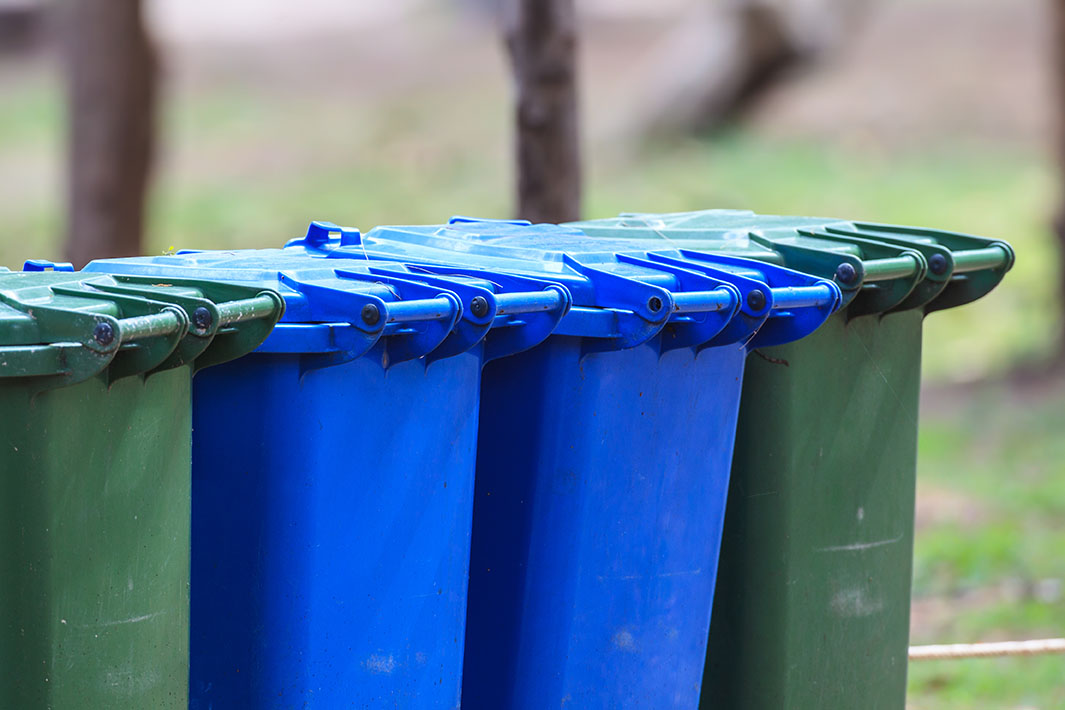
In August, CIF weighed the efficacy of split recycling carts, which have different compartments for the fiber stream and all other materials. The study looked at the municipal program in Sault Ste. Marie, which contracts with Green for Life Environmental (GFL) for recycling collection.

The evaluation was conducted as the municipality and its hauling contractor celebrated five years of using the split carts.

It found the 95-gallon split carts are effective at maintaining low contamination levels, reducing some of the challenges often found in dual-stream programs. The Sault Ste. Marie program achieved a 66 percent diversion rate.

Contamination at the curb was under 13 percent in the program, and cross contamination within the carts made up just 1 percent of the problem. The most common challenge was plastics not accepted by the program, such as Nos. 3-7, making it into the containers compartment.

Although most residents were sorting material into the carts correctly, there was still a contamination challenge during collection: After the carts were dumped into collection trucks, cross contamination increased from 1 percent up to 2.7 percent. According to CIF, this could be happening during transit or when the carts were being loaded into the truck.

Overall, the municipality and hauler were “both satisfied with the move to split-body 95-gallon recycling carts” and noted that although it might not work in every municipality, it has proved to be “a very effective alternative collection method that can be applied in both large and small communities.”

Communities switch to dual-stream

Two Canadian municipalities recently asked CIF for funding to help support their program shifts from single- to dual-stream recycling. In August, CIF wrote about both cases.

The Township of Drummond-North Elmsley, Ontario decided to move away from single-stream recycling after its MRF contractor quoted higher processing costs, according to CIF. Switching to dual-stream would lower processing costs by 25 percent, compared with the price increase proposed by the contractor.

The program will switch from weekly single-stream collection to an alternating system in which fiber is collected in the cart one week and containers the following week. This system was chosen “to achieve a zero financial impact on collection costs,” according to CIF. The municipality is working to roll out additional receptacles for households to store material between the longer collection intervals.

“The Township forecasts a return on investment in less than 3 years from this program change,” CIF wrote.

Northumberland County, Ontario is planning a similar shift. Resource Recycling previously wrote more about the county’s dual-stream plans, which county officials anticipate will lead to a net savings in recycling program costs due to higher recyclables revenue and avoided tip fees.

Photo credit: nate samui/Shutterstock

 

Tags: CanadaCollectionResearch
TweetShare
Colin Staub

Colin Staub

Colin Staub was a reporter and associate editor at Resource Recycling until August 2025.

Related Posts

Facility fires on pace to match 2025

byPaul Lane
July 29, 2026

The mid-year report from Fire Rover found the number of fire incidents remains elevated compared to historical averages.

Wisconsin opens e-recycling grant process

byPaul Lane
July 28, 2026

Funds are available for collection programs as the state touts growth in electronic recycling in its latest annual report.

Penn State professor Maryam Shahri speaks at the PROP conference in Lancaster, Pennsylvania July 23, 2026.

How to get more people to recycle

byBrian Clark Howard
July 24, 2026

Harness the power of behavioral marketing, panelists said at the PROP conference in Pennsylvania.

MTA loses track of recycling, costing NYC Transit $800,000

byStefanie Valentic
July 23, 2026

A new MTA inspector general report finds NYC Transit lost nearly $800,000 after years of mishandled recycling and the contractor...

Cascade Asset Management sees higher sales volumes

Sorted: Restoring mineral supplies, one junk drawer at a time

byPaul Lane
July 20, 2026

Industry experts say educating businesses and their customers about how to turn in used electronic devices can free up useful...

Federal funds boost critical mineral research efforts

Federal funds boost critical mineral research efforts

byPaul Lane
July 16, 2026

A Midwest consortium plans to use the money to build up domestic mineral recovery and processing efforts.

Load More
Next Post

OCC levels out after chaotic price swings

2026 Buyers’ Guide

Equipment, services and technology suppliers serving the recycling industry.

Browse the Guide

More Posts

Low chip prices hurt processor’s resale revenues

Low chip prices hurt processor’s resale revenues

May 10, 2023

Certification Scorecard — Week of July 27, 2026

July 29, 2026
In Our Opinion: Coalitions: The EPR Differentiator

Inside NAW’s constitutional case against packaging EPR

July 6, 2026
RIT researchers develop AI-based textile recycling system

CA expects first textile EPR deadline

June 30, 2026

NERC forum explores textile reuse

June 30, 2026
Emerging technology holds the key to rare earth recovery

Emerging technology holds the key to rare earth recovery

June 1, 2026

PP cups now ‘widely recyclable’ with increased acceptance

February 3, 2026
Report: Battery ‘retirement tide’ nears

Report: Battery ‘retirement tide’ nears

March 13, 2025
Closeup of a lithium-ion battery.

Here are the rules on handling lithium-ion batteries

February 13, 2020
Our top stories from February 2025

Our top stories from February 2025

March 5, 2025
Load More

About & Publications

About Us

Staff

Archive

Magazine

Work With Us

Advertise
Jobs
Contact
Terms and Privacy

Newsletter

Get the latest recycling news and analysis delivered to your inbox every week. Stay ahead on industry trends, policy updates, and insights from programs, processors, and innovators.

Subscribe

Welcome Back!

Login to your account below

Forgotten Password?

Retrieve your password

Please enter your username or email address to reset your password.

Log In

Add New Playlist

No Result
View All Result
  • The Latest
  • Analysis
  • Recycling
  • E-Scrap
  • Plastics
  • Policy Now
  • Conferences
    • E-Scrap Conference
    • Plastics Recycling Conference
    • Resource Recycling Conference
    • Textiles Recovery Summit
  • Magazine
  • About Us
  • Advertise
  • Archive
  • Jobs
  • Staff
Subscribe
This website uses cookies. By continuing to use this website you are giving consent to cookies being used. Visit our Privacy and Cookie Policy.