




Resource Recycling
  • The Latest
  • Analysis
    • All
    • Certification Scorecard
    • Industry Announcements
    • Opinion
    Top stories from March 2025

    3 factors force e-scrap processing onshore

    Data center boom sets up ITAD growth

    Certification Scorecard — Week of June 15, 2026

    Tzvika Shahaf of Blancco

    Blancco names new SVP of product strategy

    IT security driving plans, reshaping budgets

    Study cuts projected AI server e-waste by 90%

    A call to action: End markets and EPR

    A call to action: End markets and EPR

  • Conferences
    • Resource Recycling Conference
    • Plastics Recycling Conference
    • E-Scrap: The Longevity Conference
    • Textiles Recovery Summit
  • Publications
    • E-Scrap News
    • Plastics Recycling Update
    • Policy Now
    • Resource Recycling
    • Other Topics
      • All Topics
      • Brand Owners
      • Critical Minerals
      • Glass
      • Grant Watch / RFPs
      • Markets
      • Organics
      • Packaging
      • Research
      • Technology
      • Textiles
Subscribe
No Result
View All Result
Resource Recycling
  • The Latest
  • Analysis
    • All
    • Certification Scorecard
    • Industry Announcements
    • Opinion
    Top stories from March 2025

    3 factors force e-scrap processing onshore

    Data center boom sets up ITAD growth

    Certification Scorecard — Week of June 15, 2026

    Tzvika Shahaf of Blancco

    Blancco names new SVP of product strategy

    IT security driving plans, reshaping budgets

    Study cuts projected AI server e-waste by 90%

    A call to action: End markets and EPR

    A call to action: End markets and EPR

  • Conferences
    • Resource Recycling Conference
    • Plastics Recycling Conference
    • E-Scrap: The Longevity Conference
    • Textiles Recovery Summit
  • Publications
    • E-Scrap News
    • Plastics Recycling Update
    • Policy Now
    • Resource Recycling
    • Other Topics
      • All Topics
      • Brand Owners
      • Critical Minerals
      • Glass
      • Grant Watch / RFPs
      • Markets
      • Organics
      • Packaging
      • Research
      • Technology
      • Textiles
Subscribe
No Result
View All Result
Resource Recycling
No Result
View All Result
Home Recycling

A hot topic for recyclers: Battery-related fires

Antoinette SmithbyAntoinette Smith
May 13, 2025
in Recycling
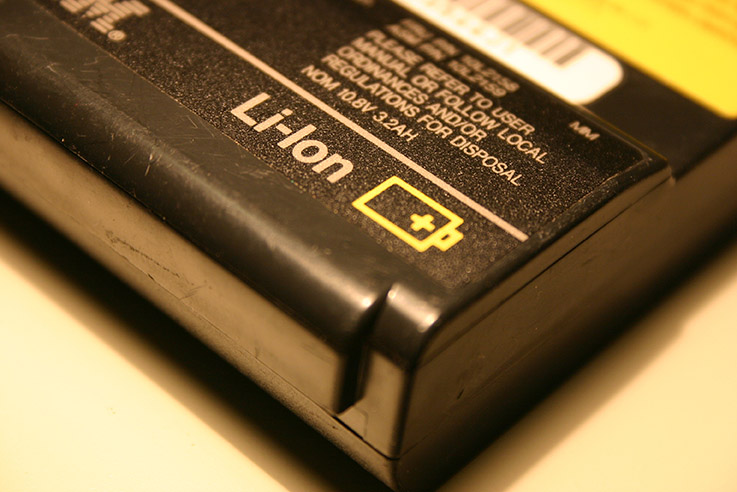
Close-up of a Li-ion battery.

At the workshops, experts will discuss how to reduce risks associated with lithium-ion batteries

A recent webinar presented by the Northeast Recycling Council explored industry and federal efforts to improve consumer education and reduce fire risks. | Allyson-Kitts/Shutterstock

Many MRF operators cite batteries as their greatest challenge, and for good reason. Fires at waste management facilities have been steadily increasing in recent years, many traced back to improper disposal of household batteries. 

During a May 7 webinar hosted by the Northeast Recycling Council, speakers from two information technology asset disposal firms as well as the U.S. EPA explored a wide range of efforts to help improve consumer education and reduce fire risks. 

Various analyses, done with both public and private funds, have explored battery-related fire trends. For example, the EPA conducted a 2021 study showing the increasing incidence of lithium-ion battery fires in waste management and recycling between 2013 and 2020. The most recent study by fire detection equipment supplier Fire Rover showed that in 2024, publicly reported fires at U.S. and Canadian MRFs and transfer stations increased by 20% on the year to reach their highest recorded level. 

Also in 2024, the National Waste and Recycling Association estimated that more than 5,000 fires occur each year at recycling facilities, linking many of them to improperly discarded lithium-ion batteries. 

Yet despite the broad availability of data, quantifying battery-related fires is an imperfect science.

“We know it’s a massive undercount,” said Jessica Young, chief of the recycling and generator branch at the EPA’s Office of Resource Conservation and Recovery, during the webinar. 

“Underreporting of fires is a significant barrier to understanding the issue fully,” added moderator Christina Seibert, executive director of the Solid Waste Agency of Northern Cook County in Illinois.

Each analysis employs its own methodology, but they all largely rely on public reporting of fires, and not all fires are reported, Young said. Further, analysts must also determine whether the blaze was related to an improperly managed battery, which may prove challenging.

Regardless of the methodology, it’s clear that fires are occurring more often. A report from Call2Recycle found a sharp increase in the number of products containing embedded batteries, which pose a unique danger because consumers may not realize a greeting card or a vape pen contains a battery. 

And the number of lithium-ion batteries placed on the U.S. market is expected to grow, Young said, citing data from analytics firm Circular Energy Storage. 

Meanwhile, North American capacity to process these batteries is “quite insignificant,” according to a report from consultancy Deloitte and the American Chemical Society, though the U.S. is working on expanding capacity.

Nevertheless, public education remains inconsistent, and consumers have varying degrees of access to battery recycling services, said panelist Joe Lange, plant general manager at Wisconsin-based Universal Recycling Technologies.

Some areas prohibit disposing of batteries in household trash, and while a ban provides a clear message to residents, localities must build ongoing education and awareness about battery recycling — as well as the risks of mismanagement, Seibert said: “There’s a lot to be done around behavior change and messaging to make people realize it’s a safety concern.” 

Emerging detection technologies 

Waste handlers can use manual or automated detection to identify devices that are likely to contain batteries, Lange said. Even so, current processes result in a high rate of false positives, and standardization is limited, he added.

Panelist David Hirschler, chief sustainability officer at ERI, agreed, saying that more than 60% of devices his company flags for containing a battery may not actually have one. Based in California, ERI is developing a process using X-ray density analysis to detect embedded batteries within electronics. 

Other research is exploring how to shred battery-embedded devices most effectively. And while no standard has yet emerged, Hirschler and Lange both said the most likely process will be compartmentalized, similar to the technique used to segregate mercury and other harmful materials from plasma-screen TVs before the device enters a shredder. 

Adaptive design 

While advances in detection are vital to reducing battery-related fires, device design changes are important as well, the panelists said. 

Electronics manufacturers are making strides toward increasing repairability, whether by choice or by legislation. One example is Apple’s switch to a more easily removed battery adhesive, which took the company years to develop. 

But manufacturers may resist design changes for reasons both valid and less so, Hirschler said. ERI frequently discusses the issue with OEMs, who cite quality and durability concerns, he added. 

There’s “tons” of ongoing research into alternative battery materials that pose less of a fire risk than lithium and could ease dependence on lithium-rich countries, Hirschler said. But most of the solutions are meant for larger-format batteries, such as those used in energy storage and occasionally electric vehicles. 

Federal initiatives to increase collection, recycling

The EPA is working on a proposal to establish a new category of universal waste specifically tailored to lithium batteries, Young said. The new category would improve safety standards and reduce fires from mismanaged end-of-life lithium batteries, promote battery recycling and align industry best practices to harmonize battery management, according to the agency’s website. 

Although the change in administration has delayed the proposal — originally scheduled for June 2025 — an updated schedule will be included with the spring regulatory agenda from the Office of Management and Budget, she said. 

Among its efforts to increase industry engagement and community education, the EPA has held a series of working sessions on household battery collection and recycling. The agency includes recordings of past working sessions on its site.  

In addition, the Infrastructure and Jobs Act has provided grants to bolster domestic supply chains for battery manufacturing and recycling. However, whether funding changes are permanent or regulations will change is still a significant unknown for federal agencies, Young acknowledged. 

In the end, Lange said, everyone in the product life cycle has a role in managing end-of-life lithium batteries – from OEMs to consumers to recyclers. 

Every community in the U.S. must work to amplify a unified message to keep embedded batteries out of curbside collections, to help reduce fires and the associated risks to communities and waste management workers, Young said. 

Tags: Hard-to-Recycle Materials
TweetShare
Antoinette Smith

Antoinette Smith

Antoinette Smith has been at Resource Recycling Inc., since June 2024, after several years of covering commodity plastics and supply chains, with a special focus on economic impacts. She can be contacted at antoinette@dev.resource-recycling.com.

Related Posts

batteries

WM adds batteries to recycling watch list

byPaul Lane
June 16, 2026

Putting batteries on its “Recycle Right” list could help WM mitigate fires they cause at collection facilities, according to company...

Small plastic recovery trial to begin in California

byPaul Lane
June 16, 2026

The Smalls Consortium’s work on recovering small-format plastics could help shape recycling efforts nationwide.

Float-sink technology at the Quantum Lifecycle Partners facility in Toronto, Canada enables the processing of e-plastics.

E-plastics recovery line opens in Canada

byPaul Lane
April 28, 2026

Toronto-based Quantum Lifecycle Partners is helping close the gap on North American e-plastic processing.

Data erasure firm expands wearable device capabilities

Apple hits 30% recycled content, debuts new recovery tech

byStefanie Valentic
April 17, 2026

Apple hit a record 30% recycled content across all 2025 products while debuting two new recovery technologies it's now sharing...

Independents complement primary PRO in state EPR

byAntoinette Smith
April 6, 2026

Separate producer responsibility organizations for specialized packaging such as petroleum products can help ensure success for everyone, according to the...

Maryland PaintCare launch press conference in Annapolis

Maryland’s paint recycling program opens

byBrian Clark Howard
April 2, 2026

The state is the latest to launch a stewardship program with PaintCare.

Load More
Next Post

California deposit expansion spurs glass pilot projects

More Posts

State policy drives tire recycling investment in Southeast

State policy drives tire recycling investment in Southeast

December 23, 2025

AI servers reshape ITAD sector, recyclers brace for new wave

March 9, 2026
Analysis: Lenovo enters circular IT, ITAD territory

Analysis: Lenovo enters circular IT, ITAD territory

December 3, 2025
Sundry Photography / Shutterstock

Iron Mountain acquires ITAD firm Wisetek

September 25, 2024
Boliden kept recycled material use steady

Boliden kept recycled material use steady

March 14, 2024
DOE commits federal funds toward critical minerals

ABTC wins DOE appeal for Tonopah Flats lithium refinery project

June 8, 2026
CalRecycle withdraws proposed regs for SB 54

Oceana, NRDC, CAW sue CalRecycle over SB 54 regs

June 5, 2026
Rare look inside the world’s largest plastics recycler

Mass balance matters: Why different rules can lead to different outcomes 

June 5, 2026

Certification Scorecard — Week of May 25, 2026

May 27, 2026
Niagara acquires rPlanet Earth assets in California

Niagara acquires rPlanet Earth assets in California

May 15, 2026
Load More

About & Publications

About Us

Staff

Archive

Magazine

Work With Us

Advertise
Jobs
Contact
Terms and Privacy

Newsletter

Get the latest recycling news and analysis delivered to your inbox every week. Stay ahead on industry trends, policy updates, and insights from programs, processors, and innovators.

Subscribe

Welcome Back!

Login to your account below

Forgotten Password?

Retrieve your password

Please enter your username or email address to reset your password.

Log In

Add New Playlist

No Result
View All Result
  • The Latest
  • Analysis
  • Recycling
  • E-Scrap
  • Plastics
  • Policy Now
  • Conferences
    • E-Scrap Conference
    • Plastics Recycling Conference
    • Resource Recycling Conference
    • Textiles Recovery Summit
  • Magazine
  • About Us
  • Advertise
  • Archive
  • Jobs
  • Staff
Subscribe
This website uses cookies. By continuing to use this website you are giving consent to cookies being used. Visit our Privacy and Cookie Policy.