



Resource Recycling
  • The Latest
  • Analysis
    • All
    • Certification Scorecard
    • Industry Announcements
    • Opinion
    MP Materials breaks ground on rare earth magnet campus in North Texas

    How critical mineral alliances aim to shape the future of e-scrap metals

    Certification Scorecard — Week of May 18, 2026

    Aurubis: Thefts involved scrap sample manipulation

    Metals and electronics recyclers report growth

    Plastic packaging

    Why SB 54 source reduction planning is becoming the industry’s most challenging EPR test

    Recycler cites market pressure in short-term closure

    AI, data anxiety push enterprises to destroy working devices: report

    Before the Bin: America’s textile waste problem starts in your closet

  • Conferences
    • Resource Recycling Conference
    • Plastics Recycling Conference
    • E-Scrap: The Longevity Conference
    • Textiles Recovery Summit
  • Publications
    • E-Scrap News
    • Plastics Recycling Update
    • Policy Now
    • Resource Recycling
    • Other Topics
      • Brand Owners
      • Critical Minerals
      • Glass
      • Grant Watch
      • Markets
      • Organics
      • Packaging
      • Research
      • Technology
      • Textiles
      • All Topics
Subscribe
No Result
View All Result
Resource Recycling
  • The Latest
  • Analysis
    • All
    • Certification Scorecard
    • Industry Announcements
    • Opinion
    MP Materials breaks ground on rare earth magnet campus in North Texas

    How critical mineral alliances aim to shape the future of e-scrap metals

    Certification Scorecard — Week of May 18, 2026

    Aurubis: Thefts involved scrap sample manipulation

    Metals and electronics recyclers report growth

    Plastic packaging

    Why SB 54 source reduction planning is becoming the industry’s most challenging EPR test

    Recycler cites market pressure in short-term closure

    AI, data anxiety push enterprises to destroy working devices: report

    Before the Bin: America’s textile waste problem starts in your closet

  • Conferences
    • Resource Recycling Conference
    • Plastics Recycling Conference
    • E-Scrap: The Longevity Conference
    • Textiles Recovery Summit
  • Publications
    • E-Scrap News
    • Plastics Recycling Update
    • Policy Now
    • Resource Recycling
    • Other Topics
      • Brand Owners
      • Critical Minerals
      • Glass
      • Grant Watch
      • Markets
      • Organics
      • Packaging
      • Research
      • Technology
      • Textiles
      • All Topics
Subscribe
No Result
View All Result
Resource Recycling
No Result
View All Result
Home Recycling

Report finds path forward for compostable packaging

byKeith Loria
April 28, 2026
in Plastics, Recycling
California extends compostable labeling law

Black Salmon / Shutterstock

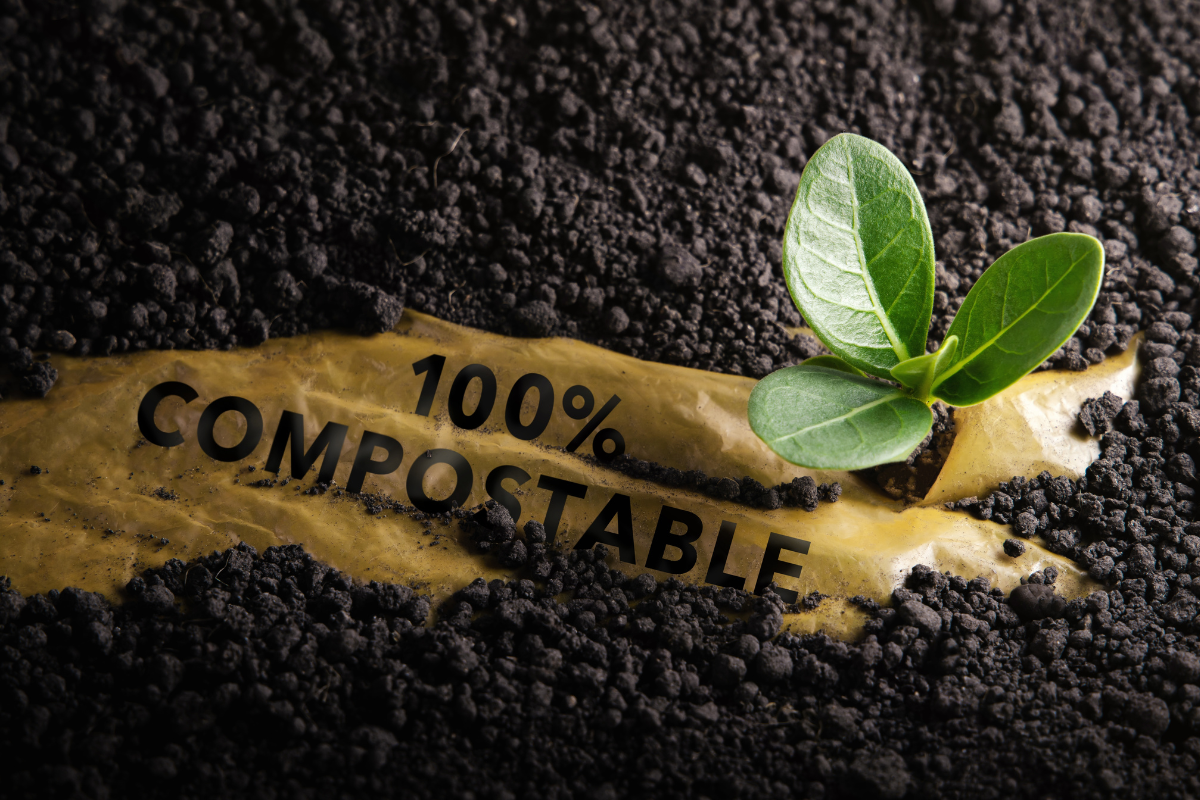
A new report by Closed Loop Partners’ Composting Consortium, which examined five years of research, field testing and cross-industry collaboration, revealed best practices for compostable packaging recovery and composting infrastructure in the US.

Caroline Barry, senior program manager at Closed Loop Partners, said the Composting Consortium’s work, led by Closed Loop Partners’ Center for the Circular Economy, uncovered critical insights into how compostable materials perform outside of controlled environments.

“The Composting Consortium unearthed numerous insights on compostable packaging disintegration––many of which were brought to light during our field tests,” she said. “What surprised us most was not that certified compostable packaging could successfully disintegrate in real-world composting systems, but how clearly the data showed that disintegration performance is closely tied to operating conditions.”

In what was the largest singular field test of certified, food-contact compostable packaging in North America, compostable plastics averaged 98% disintegration by surface area, while compostable fiber averaged 83%, with both exceeding industry thresholds.

“One finding that challenged common assumptions was the performance of compostable plastics,” Barry said. “In many parts of the industry, there has been a persistent concern that compostable packaging—particularly compostable plastics—do not break down quickly enough for facilities with shorter processing timelines. Our field data helped challenge that assumption.”

She noted that by approximately 47 days into the composting process, compostable plastics had already reached 98% disintegration on average, while compostable fiber reached roughly 78%.

“That midpoint result is important because it speaks directly to the operational concerns of compost manufacturers managing for throughput, efficiency and product quality,” Barry said.

The research also highlighted widely held beliefs about fiber-based materials.

“The study also surfaced a more nuanced point about compostable fiber packaging,” she said. “Fiber is often viewed as the more benign material in composting systems, yet our data showed that compostable plastics, on average, disintegrated more consistently across the composting technologies and operating environments we studied.”

While the findings do not suggest one material is universally better than another, the report does highlight the importance of process conditions.

“That does not suggest compostable plastics are inherently superior,” she said. “Rather, it points to a more important operational reality that certain compostable fiber formats may require stronger process conditions including sufficient agitation, turning and consistent moisture to break down effectively in compost piles.”

Beyond material performance, contamination remains a major operational challenge for composters.

“On average, composters in our study spent 21% of operating costs on contamination removal, and conventional plastics accounted for 85% of the contamination they received by volume,” Barry said.

That reality, she explained, shifts the conversation away from consumer behavior alone and toward system-level solutions.

“There are certainly upstream steps that matter—clearer differentiation between compostable and non-compostable packaging, better alignment across accepted-material lists and stronger coordination across brands, municipalities, haulers and processors,” she said. “But if the question is what is most realistic in the near term, targeted investment is one of the most immediate levers available.”

The Consortium has already taken steps in that direction through its national Composting Consortium Grant Program.

“We supported eight municipal and composter-led projects designed to expand access, strengthen infrastructure and improve regional recovery capacity,” Barry said.

Despite progress, achieving a standardized national system remains a work in progress.

“The US has made meaningful progress over the last five years, but there is still a lot of work needed to achieve a truly standardized national system for compostable packaging acceptance,” she said, pointing out that composting in the US is still highly localized, with acceptance decisions influenced by facility conditions, policy and infrastructure.

“Acceptance decisions are shaped by facility configuration, permitting conditions, end-market requirements, contamination tolerance, collection system design and local policy,” Barry said. “Acknowledging the landscape of the US composting system, the goal should not be a one-size-fits-all national mandate. What matters more is building greater consistency where it counts.”

For brands investing in compostable packaging today, the biggest opportunity Closed Loop Partners sees is to approach it not simply as a packaging material decision, but as part of a broader organics recovery strategy.

“Collaboration will be critical to moving the needle,” Barry said. “The more brands can engage early and directly with the broader recovery ecosystem, the more progress can be made.”

Ultimately, the Consortium’s work underscores a central lesson that compostable packaging can only succeed when the systems around it are designed to support it.
Tags: OrganicsPaper Fiber
TweetShare
Keith Loria

Keith Loria

Related Posts

PP bales rise, paper grades edge higher

byRecyclingMarkets.net Staff
May 11, 2026

The national average price of post-consumer PET beverage bottles and jars rose marginally in May, now averaging 2.24 cents per...

Canadian city walks back fee on paper coffee cups

Recycling access for paper cups hits 20% of US

byPaul Lane
May 11, 2026

This figure represents a quadrupling in the past decade, spurred by significant investment and action.

APR, industry groups testify on overcapacity

APR, industry groups testify on overcapacity

byAntoinette Smith
May 8, 2026

Steve Alexander, CEO of APR, pointed to China as driving global oversupply despite fluctuating PET imports to the US and...

Fiber producers push for June price increases

Fiber producers push for June price increases

byAntoinette Smith
May 5, 2026

Ahead of the announcements, International Paper, Smurfit Westrock and others pointed to a sudden rise in demand, higher costs and...

Waste Connections sees Q1 recycled commodity rise

byStefanie Valentic
April 27, 2026

Waste Connections reported Q1 2026 revenue of $2.371 billion, up 6.4% year over year, with recycled commodity revenue posting its...

PCA keeping focus on virgin fiber products

byAntoinette Smith
April 27, 2026

Despite recent recycled paper acquisitions, Packaging Corporation of America will still lean on strength and flexibility of its virgin paper...

Load More
Next Post
Float-sink technology at the Quantum Lifecycle Partners facility in Toronto, Canada enables the processing of e-plastics.

E-plastics recovery line opens in Canada

More Posts

Bottle bill backers see opportunity for action

PET collapse exposes gaps in US recycling infrastructure

May 15, 2026
Revised CA budget includes $200m for recycling

Revised CA budget includes $200m for recycling

May 20, 2026
Plastic packaging

Why SB 54 source reduction planning is becoming the industry’s most challenging EPR test

May 19, 2026

Before the Bin: America’s textile waste problem starts in your closet

May 19, 2026
Aurubis: Thefts involved scrap sample manipulation

Metals and electronics recyclers report growth

May 20, 2026
Niagara acquires rPlanet Earth assets in California

Niagara acquires rPlanet Earth assets in California

May 15, 2026
Industry descends on DC to fight for PET

Industry descends on DC to fight for PET

May 13, 2026
Recycler cites market pressure in short-term closure

AI, data anxiety push enterprises to destroy working devices: report

May 19, 2026
Retail aisle with paper and plastic packaging.

Loblaw’s recyclability push could reshape packaging design across North America

May 14, 2026

Price increases help end user offset higher OCC

December 10, 2024
Load More

About & Publications

About Us

Staff

Archive

Magazine

Work With Us

Advertise
Jobs
Contact
Terms and Privacy

Newsletter

Get the latest recycling news and analysis delivered to your inbox every week. Stay ahead on industry trends, policy updates, and insights from programs, processors, and innovators.

Subscribe

Welcome Back!

Login to your account below

Forgotten Password?

Retrieve your password

Please enter your username or email address to reset your password.

Log In

Add New Playlist

No Result
View All Result
  • The Latest
  • Analysis
  • Recycling
  • E-Scrap
  • Plastics
  • Policy Now
  • Conferences
    • E-Scrap Conference
    • Plastics Recycling Conference
    • Resource Recycling Conference
    • Textiles Recovery Summit
  • Magazine
  • About Us
  • Advertise
  • Archive
  • Jobs
  • Staff
Subscribe
This website uses cookies. By continuing to use this website you are giving consent to cookies being used. Visit our Privacy and Cookie Policy.