





Resource Recycling
  • The Latest
  • Analysis
    • All
    • Certification Scorecard
    • Industry Announcements
    • Opinion

    Certification scorecard for the week of March 9, 2026

    Diversion Dynamics: Secondhand exports slow down fast fashion

    Certification scorecard for the week of March 2, 2026

    Industry announcements for January 2026

    Industry Announcements for March 2026

    HP receives ocean plastics certification

    HP Inc. earnings point to memory inflation challenge

    Certification scorecard for the week of Feb. 23, 2026

    Umicore highlights strength in recycling, catalysis

    Apto, Tusaar partner on rare earths recovery

    Apto, Tusaar partner on rare earths recovery

    Certification scorecard for the week of Feb. 16, 2026

  • Conferences
  • Publications

    Other Topics

    Textiles
    Organics
    Packaging
    Glass
    Brand Owners

    Metals
    Technology
    Research
    Markets
    Grant Watch

    All Topics

Subscribe
No Result
View All Result
Resource Recycling
  • The Latest
  • Analysis
    • All
    • Certification Scorecard
    • Industry Announcements
    • Opinion

    Certification scorecard for the week of March 9, 2026

    Diversion Dynamics: Secondhand exports slow down fast fashion

    Certification scorecard for the week of March 2, 2026

    Industry announcements for January 2026

    Industry Announcements for March 2026

    HP receives ocean plastics certification

    HP Inc. earnings point to memory inflation challenge

    Certification scorecard for the week of Feb. 23, 2026

    Umicore highlights strength in recycling, catalysis

    Apto, Tusaar partner on rare earths recovery

    Apto, Tusaar partner on rare earths recovery

    Certification scorecard for the week of Feb. 16, 2026

  • Conferences
  • Publications

    Other Topics

    Textiles
    Organics
    Packaging
    Glass
    Brand Owners

    Metals
    Technology
    Research
    Markets
    Grant Watch

    All Topics

Subscribe
No Result
View All Result
Resource Recycling
No Result
View All Result
Home Analysis

Diversion Dynamics: Secondhand exports slow down fast fashion

Stefanie ValenticbyStefanie Valentic
March 5, 2026
in Analysis, Plastics, Recycling

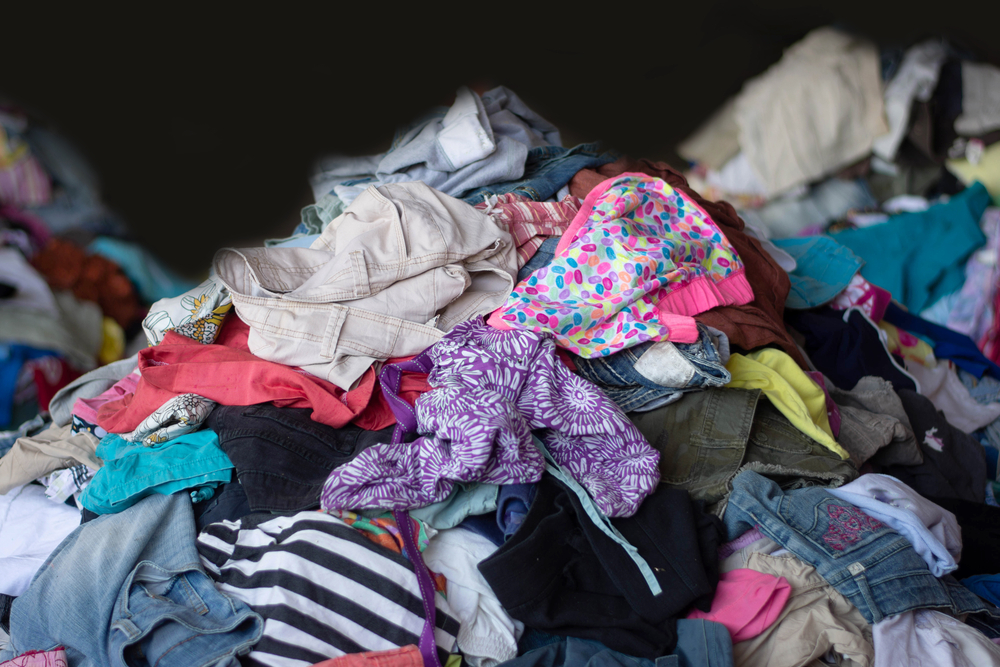
Neenawat Khenyothaa / Shutterstock

Conference season has a cadence that industry professionals know well. The packed schedules, the badge swaps, the hallway conversations that turn into the most industry-moving parts of the event. And somewhere between sessions, there’s that inevitable moment: you realize the jacket you’ve been wearing to every panel for the past two years has seen better days.

So, you do what any on-the-move professional would do. You run to the nearest retailer, grab something that looks the part and move on. The blazer gets compliments. You get home, toss it in the wash, and just like that, it’s pilling. Into the donation bin it goes.

It’s a cycle many of us have participated in without giving it much thought. But what actually happens to that jacket after it lands in the bin? For many in the waste and recycling industry, the assumption is that it gets sorted, resold locally or, in the worst case, ends up in a landfill somewhere overseas. The reality is far more complicated, and far more interesting, than that narrative indicates.

That’s the story that Lisa Jepsen, CEO of Garson & Shaw, a secondhand wholesaler, is working to unravel. 

At the 2026 Textile Recovery Summit in San Diego the week of February 23, organized by Resource Recycling, Inc.,  Jepsen walked me through the data, the economics and the geopolitical environment of the secondhand clothing trade to a market dominated by fast fashion, the retail industry’s strategy to produce cheaply made, quickly discarded clothing at low price points for consumers focused on the latest trend.

Secondhand clothing is a market that supports millions of livelihoods while fast fashion interests try to discredit the trade, one that, in developing countries, isn’t a last resort, but a lifeline for many.

A false narrative

From her perspective, the “waste narrative” around used clothing exports is largely a myth pushed by fast fashion interests, particularly in the United States. Jepsen explained that research in Guatemala found only 8% to 12% of unsorted used clothing is non-wearable, and is less than 5% for sorted goods. 

“Some people want to give that narrative so that fast fashion can keep selling their stuff in these countries, because it’s very cheap, of course, and it’s in competition with our used clothing,” she said.

Guatemala is the largest importer of used textiles from the US, and across markets like Ghana and Central America, a single bale of secondhand clothing can ripple through an entire local economy, supporting an estimated 3 million people who buy, repair, upcycle and resell what arrives in those shipments. 

But the sector is navigating a growing set of obstacles. Import and export bans in some countries are slowing the flow of goods, and rising shipping costs tied to tariffs have stretched transit times to as long as 40 days from the US to Central America, tightening margins for wholesalers already operating on thin financials. 

“Many countries where they ban import of used clothing say that it will be a threat to the local textile industry, but the fact is that the local textile industry is exporting all their clothes,” noted Jepsen.” People in this country cannot afford to buy these clothes.”

Still, she remains firm: the secondhand clothing trade isn’t just a workaround for overconsumption, it’s one of the most practical solutions to it, and a meaningful economic engine for the third-world communities that depend on it most.

“The mom who is alone with her kids, they are very entrepreneurial, and they can make a living from…one bale that they will buy from an importer that can actually provide them with income so that they can put the child in school, they can get food on the table,” Jepsen said.

Closing the loop on fast fashion

Building a stronger secondhand market, one that can compete with fast fashion’s grip on global consumers and overconsumption, will require shifting how the public thinks about what they own, what they discard and what happens when they clear their closets. That work, Jepsen says, begins before textiles reach the donation bin.

“Educating the public is also very important, explaining that this is actually a good thing to do, to reuse,” she says. “And people also sometimes don’t understand that when they are donating to Goodwill, for example, or put clothes in the bin, then they think that it will be given away to somebody, but they don’t know that it’s a big business.”

Part of that education gap extends to what actually happens to secondhand shipments once they reach their destination. The narrative that donated clothing piles up in overseas landfills has persisted, and Jepsen is tired of it.

“It’s really, really important that the clothing actually gets to the market where it can be reused. That is our most important message,” she says.

And the conversation doesn’t stop at donation habits. Jepsen sees reuse as a principle that needs to be woven into how consumers think about textiles from the very beginning, before a garment is ever sorted, baled or shipped.

“We really want to promote reuse before recycling, because that is the only right thing to do,” she says.

That urgency becomes even clearer when you consider what goes into making new clothing in the first place. Fast fashion’s appeal is its price point, but the true cost runs much deeper.

“There’s really a lot of water used if you make a t-shirt, for example, and also the chemical system in this and the pesticides to grow the cotton,” she explains. “And there’s so much environmental impact of the production of new clothes that it’s nearly a sin not to reuse.” 

The dynamic, in the end, is pretty straightforward, and one the recycling industry knows well. The highest and best use of materials is an obvious solution, one that keeps bales from heading to the landfill and provides a lifeline for families in developing countries.


Tags: MarketsTextilesTrade & Tariffs
TweetShare
Stefanie Valentic

Stefanie Valentic

Stefanie Valentic is an award-winning journalist who has covered the waste and recycling industry for more than five years. Throughout her career, she has led editorial teams and served as a keynote speaker, moderator and panelist at numerous trade shows and conferences.

Related Posts

E-scrap export pause urged to keep rare earth scrap in US

E-scrap export pause urged to keep rare earth scrap in US

byScott Snowden
March 11, 2026

A CFR report and March 9 panel urged an innovation-led US critical minerals strategy, from ‘urban mining’ and recycling to...

How rising fuel and memory prices are impacting ITAD’s margins

How rising fuel and memory prices are impacting ITAD’s margins

byDavid Daoud
March 10, 2026

Current war in Iran is resulting in a noticeable change in cost pressures and risk considerations in electronics and IT...

Northeast recycled commodity values hit 5-year lows

Northeast recycled commodity values hit 5-year lows

byAntoinette Smith
March 6, 2026

While most recycled commodity values continued to fall during the quarter, they did so at a slower pace, according to...

Common goal of responsible end markets: transparency 

Common goal of responsible end markets: transparency 

byAntoinette Smith
March 5, 2026

Panelists from state government, Circular Action Alliance and a reclaimer explored the particulars of REMs at the 2026 Plastics Recycling...

Panelists: Textile recycling requires more automation

Panelists: Textile recycling requires more automation

byEditorial Staff
March 3, 2026

A workshop at the Textile Recycling Summit in San Diego explored how much automation could be deployed in sorting and...

Borealis, Borouge aim to bolster PE, PP recycling in Indonesia

byPaul Lane
February 27, 2026

Plastics recycling in the Southeast Asian nation focuses on PET and on industrial and commercial waste, while post‑consumer polyolefin packaging...

Load More
Next Post
Northeast recycled commodity values hit 5-year lows

Northeast recycled commodity values hit 5-year lows

More Posts

Pile of e-scrap for recycling.

Glencore project in the works at former BlueOak site

August 8, 2019
PET bales stacked for recycling.

Evergreen closing RPET plants in Ohio, New York

February 24, 2026
ERI and ReElement partner on rare earth magnet recovery

ERI and ReElement partner on rare earth magnet recovery

November 26, 2025
California disk drive firm reports recycling metrics

California disk drive firm reports recycling metrics

April 25, 2024
Operator sees resale pricing back at pre-pandemic levels

Operator sees resale pricing back at pre-pandemic levels

July 20, 2023
EPA takes a closer look at lithium-ion batteries

EPA takes a closer look at lithium-ion batteries

June 7, 2023
Data center server room

Processor’s profits boosted by pivot to data center work

August 19, 2021
Court documents show photos of the 5R facility in West Bend.

5R CRT cleanup costs fall to landlord and taxpayers

March 11, 2021
2019 E-Scrap Conference and Trade Show

Meet the Speakers: Megan Tabb of Synergy Electronics Recycling

July 29, 2019
APR weighs in on three hot topics

CalRecycle reopens comments for SB 54 rules

August 27, 2025
Load More

About & Publications

About Us

Staff

Archive

Magazine

Work With Us

Advertise
Jobs
Contact
Terms and Privacy

Newsletter

Get the latest recycling news and analysis delivered to your inbox every week. Stay ahead on industry trends, policy updates, and insights from programs, processors, and innovators.

Subscribe

Welcome Back!

Login to your account below

Forgotten Password?

Retrieve your password

Please enter your username or email address to reset your password.

Log In

Add New Playlist

No Result
View All Result
  • The Latest
  • Analysis
  • Recycling
  • E-Scrap
  • Plastics
  • Policy Now
  • Conferences
    • E-Scrap Conference
    • Plastics Recycling Conference
    • Resource Recycling Conference
    • Textiles Recovery Summit
  • Magazine
  • About Us
  • Advertise
  • Archive
  • Jobs
  • Staff
Subscribe
This website uses cookies. By continuing to use this website you are giving consent to cookies being used. Visit our Privacy and Cookie Policy.