




Resource Recycling
  • The Latest
  • Analysis
    • All
    • Certification Scorecard
    • Industry Announcements
    • Opinion
    SERI works to restore faith in certifications

    Building a defensible E-scrap evidence file

    tires

    The most important decision in tire recycling happens before the shredder

    Intel sign outside of company building.

    Intel’s CapEx tops $20B on server demand while PC volume shrinks

    Google sign on company building with blue sky and clouds above.

    Inside Alphabet’s Q2 results: More capital spending and cloud backlog

    Alpek closing Pennsylvania RPET plant

    Alpek seizing on war-related opportunity 

    Our top stories from March 2023

    Iron Mountain’s data center report: Strong on power, quiet on hardware

  • Conferences
    • Resource Recycling Conference
    • Plastics Recycling Conference
    • E-Scrap: The Longevity Conference
    • Textiles Recovery Summit
  • Publications
    • E-Scrap News
    • Plastics Recycling Update
    • Policy Now
    • Resource Recycling
    • Other Topics
      • All Topics
      • Brand Owners
      • Critical Minerals
      • Glass
      • Grant Watch / RFPs
      • Markets
      • Organics
      • Packaging
      • Research
      • Technology
      • Textiles
Subscribe
No Result
View All Result
Resource Recycling
  • The Latest
  • Analysis
    • All
    • Certification Scorecard
    • Industry Announcements
    • Opinion
    SERI works to restore faith in certifications

    Building a defensible E-scrap evidence file

    tires

    The most important decision in tire recycling happens before the shredder

    Intel sign outside of company building.

    Intel’s CapEx tops $20B on server demand while PC volume shrinks

    Google sign on company building with blue sky and clouds above.

    Inside Alphabet’s Q2 results: More capital spending and cloud backlog

    Alpek closing Pennsylvania RPET plant

    Alpek seizing on war-related opportunity 

    Our top stories from March 2023

    Iron Mountain’s data center report: Strong on power, quiet on hardware

  • Conferences
    • Resource Recycling Conference
    • Plastics Recycling Conference
    • E-Scrap: The Longevity Conference
    • Textiles Recovery Summit
  • Publications
    • E-Scrap News
    • Plastics Recycling Update
    • Policy Now
    • Resource Recycling
    • Other Topics
      • All Topics
      • Brand Owners
      • Critical Minerals
      • Glass
      • Grant Watch / RFPs
      • Markets
      • Organics
      • Packaging
      • Research
      • Technology
      • Textiles
Subscribe
No Result
View All Result
Resource Recycling
No Result
View All Result
Home Analysis Opinion

In My Opinion: Fixing US recycling infrastructure is key

byJoe Vaillancourt, Cyclyx
October 4, 2022
in Opinion
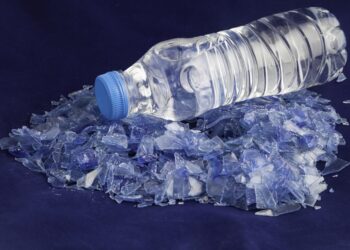
The leader of Cyclyx suggests recycling infrastructure will play a key role in effective plastics circularity. | Josep Curto/Shutterstock

Public support for recycling is nearly universal, yet today the U.S. is recycling less than it did in 2018. Only 6% of all plastic was recycled last year. This comes despite widespread attention on the vast amount of waste plastic that ends up in landfills and the ocean, harming wildlife and the environment.

The decline in plastic recycling makes no sense given widespread support but is easily explained: The recycling infrastructure in the U.S. is broken. If we want to recycle more and waste less, the country needs a completely new system to get the job done.

Joe Vallaincourt
Joe Vallaincourt

Adding to the challenge, consumers are not well informed about what plastics can and cannot be recycled, what steps to take to recycle and where to do so. We need education, awareness and convenient support systems to help households and communities make more plastic recycling possible.

Lacking investment

Another issue with our current recycling system is access and investment. Recycling is a service that competes with local government funds for education, health and housing.

Recently, the U.S. EPA announced $375 million for recycling, reuse and waste prevention programs. That is a major down payment, but it will take years and many billions of new infrastructure investment dollars to change the system to have the desired impact.

The good news is there are technologies to recycle nearly all plastics. Leveraging traditional methods, such as mechanical recycling, and newer technologies, known as chemical recycling, there is almost no plastic we cannot recycle. This includes the hard-to-recycle plastics that currently end up in landfills.

But before we get to the recycling process, we need to change how we manage the stream of plastic waste, so that said waste can be used as feedstock, or source material, for the production of virgin-equivalent plastics.

Today, the recycling system in the U.S. is broken, and as a result, most plastic waste never has a chance of being recycled, and thus industry continues to make new virgin materials for the manufacture of plastics.

What’s missing is a system that diverts all plastic waste from landfills and a means to sort and identify the various recycling options and outlets where the plastic waste can be channeled.

Without this, our collective recycling efforts are more feel-good efforts than effective, and we will never be able to significantly increase the recyclability of plastic waste. If managed properly, plastic waste can be a meaningful resource for our industrial economy with positive impacts to our environment.

Finding a solution

Cyclyx, the company I am proud to lead, has developed a real-world solution. We have combined technical know-how, new supply chains, the design and development of new and unique processing facilities and a consortium-based business model to bring real change to the plastic recycling industry.

To provide the missing link in the system, Cyclyx is partnering with many companies across a broad set of industries and communities to access and capture all kinds of plastic waste, much of which is currently deemed non-recyclable. From there, we combine the power of our plastic characterization data, predictive modeling and unique recipe compounding to understand the composition of the plastic waste streams and identify the appropriate recycling outlet.

The access to plastic waste our consortium provides, combined with our innovative capabilities to analyze large volumes of plastic waste, allows us to divert more waste from landfills and into their best use, bridging the gap between recycling and waste management efforts – and bringing us one step closer to closing the loop on recycling and transforming plastic waste into a valuable resource.

Our goal is to recycle 90% of waste plastics. We recently launched an exciting effort, 10 to 90, a series of new take-back, education and engagement programs designed to divert more low-quality plastic waste from landfills into our system, where they can be recycled and turned back into valuable products.

The 10 to 90 initiative will be rolled out in collaboration with cities, retail establishments, corporations and universities in an effort to improve access and increase the recycling rate at the community level. If we can accelerate plastic recycling at the local level, we can raise recycling rates at the global level, improving the environment for all.

We can’t wait any longer for today’s outdated infrastructure to catch up. Scalable solutions like ours will enable us to take meaningful steps toward ending the global plastic waste crisis.


Joe Vaillancourt is the CEO of Cyclyx.

The views and opinions expressed are those of the author and do not imply endorsement by Resource Recycling, Inc. If you have a subject you wish to cover in an op-ed, please send a short proposal to news@dev.resource-recycling.com for consideration.


 

TweetShare
Joe Vaillancourt, Cyclyx

Joe Vaillancourt, Cyclyx

Related Posts

SERI works to restore faith in certifications

Building a defensible E-scrap evidence file

byMarcio Villanova
August 6, 2026

A pickup record confirms movement, but buyers need distinct evidence for custody, media sanitization, treatment, downstream disposition and unresolved exceptions.

tires

The most important decision in tire recycling happens before the shredder

byPaul Downey, Pliteq
August 3, 2026

Contamination gets the attention, but classification is the bottleneck that actually decides who wins.

Innovation. Partnership. Circular value.

Innovation. Partnership. Circular value.

bySibanye-Stillwater
August 1, 2026

As industries around the world accelerate their transition towards a circular economy, precious metals recycling is evolving from a necessary...

GFL raises 2026 guidance as Q2 revenue climbs 16.3%

byStefanie Valentic
July 30, 2026

GFL Environmental Inc. (NYSE: GFL) (TSX: GFL) reported second-quarter revenue of $1.95 billion, up 16.3% from $1.68 billion a year...

Spin-off lets Linca focus on battery mineral recovery

GAO: Policy, tech updates needed to bolster domestic mineral supply

byPaul Lane
July 30, 2026

Federal investigators say short- and long-term solutions are needed to decrease the nation’s reliance upon foreign-based minerals.

WM’s Q2 recycling and renewable energy EBITDA jumps

byStefanie Valentic
July 29, 2026

WM's recycling and renewable energy businesses drove nearly 33% EBITDA growth in Q2, even as commodity prices softened and the...

Load More
Next Post

Judge dismisses claims against 7-Eleven's recyclable labels

2026 Buyers’ Guide

Equipment, services and technology suppliers serving the recycling industry.

Browse the Guide

More Posts

Low chip prices hurt processor’s resale revenues

Low chip prices hurt processor’s resale revenues

May 10, 2023

Certification Scorecard — Week of July 27, 2026

July 29, 2026
In Our Opinion: Coalitions: The EPR Differentiator

Inside NAW’s constitutional case against packaging EPR

July 6, 2026
RIT researchers develop AI-based textile recycling system

CA expects first textile EPR deadline

June 30, 2026

NERC forum explores textile reuse

June 30, 2026
Emerging technology holds the key to rare earth recovery

Emerging technology holds the key to rare earth recovery

June 1, 2026

PP cups now ‘widely recyclable’ with increased acceptance

February 3, 2026
Report: Battery ‘retirement tide’ nears

Report: Battery ‘retirement tide’ nears

March 13, 2025
Closeup of a lithium-ion battery.

Here are the rules on handling lithium-ion batteries

February 13, 2020
Our top stories from February 2025

Our top stories from February 2025

March 5, 2025
Load More

About & Publications

About Us

Staff

Archive

Magazine

Work With Us

Advertise
Jobs
Contact
Terms and Privacy

Newsletter

Get the latest recycling news and analysis delivered to your inbox every week. Stay ahead on industry trends, policy updates, and insights from programs, processors, and innovators.

Subscribe

Welcome Back!

Login to your account below

Forgotten Password?

Retrieve your password

Please enter your username or email address to reset your password.

Log In

Add New Playlist

No Result
View All Result
  • The Latest
  • Analysis
  • Recycling
  • E-Scrap
  • Plastics
  • Policy Now
  • Conferences
    • E-Scrap Conference
    • Plastics Recycling Conference
    • Resource Recycling Conference
    • Textiles Recovery Summit
  • Magazine
  • About Us
  • Advertise
  • Archive
  • Jobs
  • Staff
Subscribe
This website uses cookies. By continuing to use this website you are giving consent to cookies being used. Visit our Privacy and Cookie Policy.