




New Jersey’s recycling industry gathered in Fieldsboro in the central part of the state on Wednesday for the spring meeting of the Association of New Jersey Recyclers (ANJR). The members discussed the state of the industry and what’s coming down the pike.
New Jersey enjoys a relatively high recycling rate of 39% (excluding fiber and flexible plastics), according to The Recycling Partnership’s 2024 report, putting it in ninth place. The state’s relative success compared to the national average was also reaffirmed in a study released this week from University at Buffalo. That study found that proximity to industrial recycling facilities in particular correlated to higher recycling rates, and New Jersey was among the states with better access.
“Our team is excited about the future of recycling programs in our state,” Joe Seebode, deputy commissioner of the state Department of Environmental Protection (DEP) told attendees. Seebode ticked off a number of specific programs, from food waste reduction, to solar panel recycling, to scrap management and more.
Seebode said strengthening recycling efforts is a priority for the new state administration, led by Gov. Mikie Sherrill.
“You are the heart of the action,” Seebode told the group. “You are innovators and solutioneers as we move our state forward.”
He said the agency is working on several key, intertwining priorities, including environmental justice, so-called forever chemicals, climate and resilience, and permitting reform, including for new waste management facilities. He called the latter “one of our most significant priorities.”
“Our path forward is not deregulation, but efficient regulation,” Seebode said. “Our plan includes mechanisms to speed up permitting by identifying process improvements.” The goals are to reduce delays and costs, reduce a backlog, boost accountability and expand transparency, he said.
At the meeting, Nandini Checko of the Association of New Jersey Environmental Commissions previewed the state’s “Skip the Stuff” law, which goes into effect Aug. 1. The law prohibits restaurants and delivery services in the state from automatically including single-use cutlery, condiments, and napkins with takeout orders.
Each year more than 40 billion throwaway plastic utensils are handed out in the US, Checko said. “The ‘Skip the Stuff’ law is a win for customers, businesses and the planet,” she said.
Talking EPR
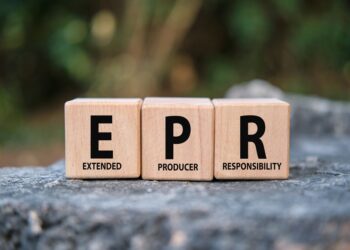
Alexis Bailey, executive director of ANJR, said New Jersey lawmakers are working on legislation that would target recycling of several categories of materials, including tires, paint, mattresses and food waste.
Andriana Kontovrakis, director of EPR solutions for Reverse Logistics Group, added that the state is also considering legislation on packaging and paper, batteries and vapes. She said several states are looking at expanding EPR laws as a solution to materials they view as problematic.
New Jersey currently has several EPR laws on the books, Kontovrakis noted, for mercury switches, dry cell batteries, and EV batteries.
Video games for recycling
Anthony Setaro of New Jersey-based Setaro House stressed that education remains an important piece to the recycling puzzle. “Growing up there was a lot of education around recycling,” he said. “You could adopt a whale if you brought in enough crushed cans to school. We had many colored bins. Now we have single stream, and there is a lot that has been lost to today’s children.”
So Setaro’s company created a video game to engage kids around recycling, in partnership with New Jersey’s Monmouth County. Called Cycle, the game has several different modes, allowing users to drive a recycling truck, sort materials inside a MRF, tour infrastructure or play as a custom-designed superhero that picks up trash.
“Students learn by doing, playing, testing,” said Setaro. “They want to repeat and improve on their score.”
The company also works in VR and AR, and is working with museums on new activations.
“We have optimism for a great future in the state’s recycling,” said Seebode.