




Resource Recycling
  • The Latest
  • Analysis
    • All
    • Certification Scorecard
    • Industry Announcements
    • Opinion
    Apple Watch on product box.

    Wearables are coming and ITAD isn’t ready

    Certification Scorecard — Week of April 13, 2026

    EV Battery Pack - Sergii Chernov-Shutterstock

    Redwood, Rivian deal fuels US infrastructure plans

    Bloom ESG and e-Stewards roll out critical metals metric

    Colorado regulators suggest mid-range EPR scenario

    Why collaboration on plastic waste still matters

    Battery recycler Ascend Elements files for bankruptcy

    Battery recycler Ascend Elements files for bankruptcy

    EPR fees are a market signal. Here’s what they’re telling you.

    EPR fees are a market signal. Here’s what they’re telling you.

    Wolframite ore, the primary ore of tungsten from Altai, Russia

    Tungsten scrap export controls draw industry attention

    Certification Scorecard — Week of April 6, 2026

  • Conferences
  • Publications

    Other Topics

    Textiles
    Organics
    Packaging
    Glass
    Brand Owners

    Metals
    Technology
    Research
    Markets
    Grant Watch

    All Topics

Subscribe
No Result
View All Result
Resource Recycling
  • The Latest
  • Analysis
    • All
    • Certification Scorecard
    • Industry Announcements
    • Opinion
    Apple Watch on product box.

    Wearables are coming and ITAD isn’t ready

    Certification Scorecard — Week of April 13, 2026

    EV Battery Pack - Sergii Chernov-Shutterstock

    Redwood, Rivian deal fuels US infrastructure plans

    Bloom ESG and e-Stewards roll out critical metals metric

    Colorado regulators suggest mid-range EPR scenario

    Why collaboration on plastic waste still matters

    Battery recycler Ascend Elements files for bankruptcy

    Battery recycler Ascend Elements files for bankruptcy

    EPR fees are a market signal. Here’s what they’re telling you.

    EPR fees are a market signal. Here’s what they’re telling you.

    Wolframite ore, the primary ore of tungsten from Altai, Russia

    Tungsten scrap export controls draw industry attention

    Certification Scorecard — Week of April 6, 2026

  • Conferences
  • Publications

    Other Topics

    Textiles
    Organics
    Packaging
    Glass
    Brand Owners

    Metals
    Technology
    Research
    Markets
    Grant Watch

    All Topics

Subscribe
No Result
View All Result
Resource Recycling
No Result
View All Result
Home Analysis Opinion

In My Opinion: Convenient PET collection is key

byLeon Farahnik, CarbonLITE
August 26, 2020
in Opinion
In My Opinion: Convenient PET collection is key
Many in the U.S. may be unfamiliar with reverse vending machines, because only 10 of 50 states have deposit redemption programs. | Karen McFarland/Shutterstock

We’ve read the statistics, over and over.

“Since the 1950s, some 8.3 billion tons of plastic have been produced worldwide, and to date, only 9% of that has been recycled,” The Guardian has noted.

A whopping 91% of plastic isn’t recycled., stated National Geographic.

“Just 8% of plastic waste in the United States is sorted for recycling,” the Break Free from Plastic Pollution Act points out.

No argument here, these percentages are low. China’s 2018 National Sword policy, with its ban on imports of most plastics and other materials, added to a crisis in U.S. recycling, and the pandemic, which saw many recyclers concerned over health and safety temporarily suspend service, hasn’t helped. A report by the Ellen MacArthur Foundation, which promotes a circular economy that reduces waste and keeps products in use, estimates that by 2050, there could be more plastic than fish in the world’s oceans.

Yes, the picture is bleak. Recycling rates must improve. But some of the rhetoric has gotten out of hand. It’s not helping. More to the point: We have got to stop minimizing the contribution that recycling makes.

A line from the important and devastating film, “The Story of Plastic,” goes: “We cannot recycle our way out of this mess.” We believe this insinuates that recycling serves no purpose and it could take the pressure off personal responsibility. Yes, there are those calling for an end to all single-use plastic products. But we need to champion today’s recycling efforts and start saying things like “let’s do better,” instead of rhetorically draining a critical tool of its value.

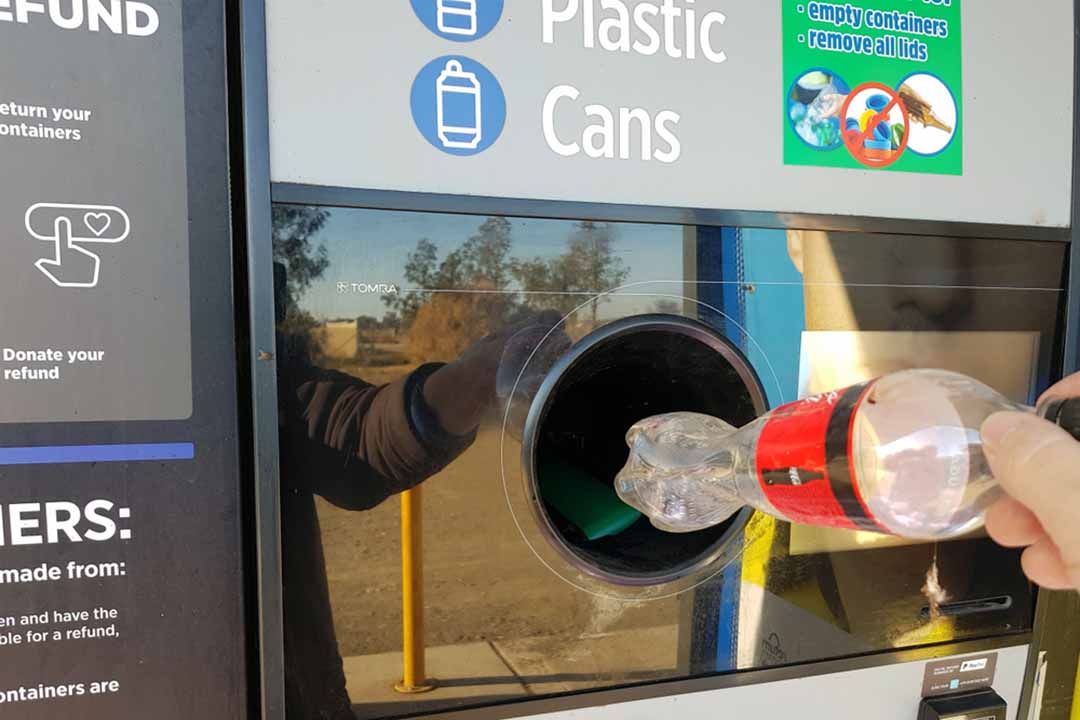
We also need to make recycling easier and more attractive for the consumer, particularly in the COVID-19 era, and there is a way we can do this that may not be familiar to many Americans: reverse vending machines (RVMs).

RVMs accept PET bottles for recycling and give consumers a refund or their container deposit back. Found around the world, they’re an automated way to collect, sort and handle the return of used drink containers. They’ve been around for decades and are typically installed in regions with robust container deposit laws, but many Americans don’t know about RVMs because only 10 of our states have such laws.

But we don’t need legislation. RVMs could be paid for and maintained by beverage companies, who would then offer consumers discount coupons on their various products (not just beverages) inside the very store where the shoppers just recycled their containers. These coupons would have to offer a discount large enough to incentivize RVM use, but that’s the idea: RVMs should sit outside of every superstore and big supermarket in the country, making it easy for and incentivizing consumers to recycle.

I promise you, with that kind of ubiquity, recycling and collection rates would increase.

Why would beverage makers want to voluntarily create a takeback system, without regulation? Because it would help them ensure the supply of material they need to meet their PCR goals. Getting ahead of any legislation, rather than waiting for it, is beneficial as well.

The first RVMs appeared in the 1970s, but, like all things automated, they’ve come a long way since. They are clean and sleek, with high-definition interfaces, and can be linked through an app to an account such as PayPal for payment or even donate your refund to a charity. This video will make you wish for such a machine near you. It features an RVM from Tomra, the world’s largest RVM maker, and we were glad to hear that the company plans to introduce RVMs that can accept 100 beverage containers at a time in various markets in the months ahead. The idea is to avoid waiting in line while others return one bottle at a time.

Additionally, the overall RVM market is forecast to grow from $343.6 million, where it stood in 2018, to $685.1 million by the end of 2025, according to QY Research.

As we tackle the pandemic as well as climate change, this news couldn’t come at a better time. RVMs require no human contact. And, by helping to increase recycling rates, we can make more new bottles from old bottles, cutting our collective carbon footprint and protecting our oceans and waterways from the scourge of plastic pollution.

RVMs can make this as easy as grocery shopping. Let’s make it a reality.

Leon Farahnik is CEO of CarbonLITE Recycling, the world’s largest recycler of plastic beverage bottles with plants in California, Texas and Pennsylvania.

The views and opinions expressed are those of the author and do not imply endorsement by Resource Recycling, Inc. If you have a subject you wish to cover in an op-ed, please send a short proposal to [email protected] for consideration.
 

Tags: CollectionContainer DepositsPET
TweetShare
Leon Farahnik, CarbonLITE

Leon Farahnik, CarbonLITE

Related Posts

Industry group: Help us find the plastic bale volumes we need

PET bales sink further as other grades firm 

byRecyclingMarkets.net Staff
April 15, 2026

Pricing for HDPE and PP bales rose again, while PET bales remained low, film grades have steadied, and paper and...

GFL acquires SECURE Waste for $6.4bn

byStefanie Valentic
April 13, 2026

GFL Environmental has agreed to acquire SECURE Waste Infrastructure Corp. in a $6.4 billion deal that expands the waste hauler's...

Oregon’s battery EPR bill officially charged for implementation

byStefanie Valentic
April 10, 2026

Oregon Governor Tina Kotek signed HB 4144 into law on April 7, setting into motion the mechanics for an extended...

Plastics Recyclers Have the Capacity to Recycle More. Now Let’s Use It.

Study finds most recycling occurs within 30 miles of access

byBrian Clark Howard
April 8, 2026

Researchers at the University at Buffalo also found that Americans produce similar volumes of plastic package waste regardless of economic...

End markets, policy key to RPET viability

End markets, policy key to RPET viability

byAntoinette Smith
April 8, 2026

Longer-term actions support domestic RPET markets and can help prevent the loss of public trust in recycling systems, industry experts...

Minnesota State Capitol

Minnesota watches Oregon as EPR implementation advances

byStefanie Valentic
April 6, 2026

Minnesota's Packaging Waste and Cost Reduction Act passed in 2024 and is still in early implementation, making the infrastructure decisions...

Load More
Next Post
Agilyx moves to produce styrene instead of oil

Institute announces plastics research grant and issues RFP

Leading the Charge in Safe Battery Recycling
Sponsored

Leading the Charge in Safe Battery Recycling

byThe Battery Network
April 13, 2026

We’re connecting people, brands, and communities through one nationwide network built to make battery recycling safer, simpler, and more accessible...

Read moreDetails

More Posts

Battery recycler Ascend Elements files for bankruptcy

Battery recycler Ascend Elements files for bankruptcy

April 13, 2026
EPR fees are a market signal. Here’s what they’re telling you.

EPR fees are a market signal. Here’s what they’re telling you.

April 10, 2026

Bloom ESG and e-Stewards roll out critical metals metric

April 15, 2026

Recycling Partnership CEO stepping down

April 15, 2026

AI surge, dealmaking reshape  ITAD industry 

April 16, 2026
Apple Watch on product box.

Wearables are coming and ITAD isn’t ready

April 16, 2026

Oregon’s battery EPR bill officially charged for implementation

April 10, 2026
Bill to update New Jersey e-scrap program heads to governor

New Jersey recyclers talk EPR

April 9, 2026

COM2 joins TERRA network as solar recycling expands 

April 17, 2026
Industry group: Help us find the plastic bale volumes we need

PET bales sink further as other grades firm 

April 15, 2026
Load More

About & Publications

About Us

Staff

Archive

Magazine

Work With Us

Advertise
Jobs
Contact
Terms and Privacy

Newsletter

Get the latest recycling news and analysis delivered to your inbox every week. Stay ahead on industry trends, policy updates, and insights from programs, processors, and innovators.

Subscribe

Welcome Back!

Login to your account below

Forgotten Password?

Retrieve your password

Please enter your username or email address to reset your password.

Log In

Add New Playlist

No Result
View All Result
  • The Latest
  • Analysis
  • Recycling
  • E-Scrap
  • Plastics
  • Policy Now
  • Conferences
    • E-Scrap Conference
    • Plastics Recycling Conference
    • Resource Recycling Conference
    • Textiles Recovery Summit
  • Magazine
  • About Us
  • Advertise
  • Archive
  • Jobs
  • Staff
Subscribe
This website uses cookies. By continuing to use this website you are giving consent to cookies being used. Visit our Privacy and Cookie Policy.