





Resource Recycling
  • The Latest
  • Analysis
    • All
    • Certification Scorecard
    • Industry Announcements
    • Opinion
    Apple Watch on product box.

    Wearables are coming and ITAD isn’t ready

    Certification Scorecard — Week of April 13, 2026

    EV Battery Pack - Sergii Chernov-Shutterstock

    Redwood, Rivian deal fuels US infrastructure plans

    Bloom ESG and e-Stewards roll out critical metals metric

    Colorado regulators suggest mid-range EPR scenario

    Why collaboration on plastic waste still matters

    Battery recycler Ascend Elements files for bankruptcy

    Battery recycler Ascend Elements files for bankruptcy

    EPR fees are a market signal. Here’s what they’re telling you.

    EPR fees are a market signal. Here’s what they’re telling you.

    Wolframite ore, the primary ore of tungsten from Altai, Russia

    Tungsten scrap export controls draw industry attention

    Certification Scorecard — Week of April 6, 2026

  • Conferences
  • Publications

    Other Topics

    Textiles
    Organics
    Packaging
    Glass
    Brand Owners

    Metals
    Technology
    Research
    Markets
    Grant Watch

    All Topics

Subscribe
No Result
View All Result
Resource Recycling
  • The Latest
  • Analysis
    • All
    • Certification Scorecard
    • Industry Announcements
    • Opinion
    Apple Watch on product box.

    Wearables are coming and ITAD isn’t ready

    Certification Scorecard — Week of April 13, 2026

    EV Battery Pack - Sergii Chernov-Shutterstock

    Redwood, Rivian deal fuels US infrastructure plans

    Bloom ESG and e-Stewards roll out critical metals metric

    Colorado regulators suggest mid-range EPR scenario

    Why collaboration on plastic waste still matters

    Battery recycler Ascend Elements files for bankruptcy

    Battery recycler Ascend Elements files for bankruptcy

    EPR fees are a market signal. Here’s what they’re telling you.

    EPR fees are a market signal. Here’s what they’re telling you.

    Wolframite ore, the primary ore of tungsten from Altai, Russia

    Tungsten scrap export controls draw industry attention

    Certification Scorecard — Week of April 6, 2026

  • Conferences
  • Publications

    Other Topics

    Textiles
    Organics
    Packaging
    Glass
    Brand Owners

    Metals
    Technology
    Research
    Markets
    Grant Watch

    All Topics

Subscribe
No Result
View All Result
Resource Recycling
No Result
View All Result
Home Analysis Opinion

In My Opinion: Embrace tougher standards to drive social impact

byRaffi Schieir, Bantam Materials
November 1, 2022
in Opinion
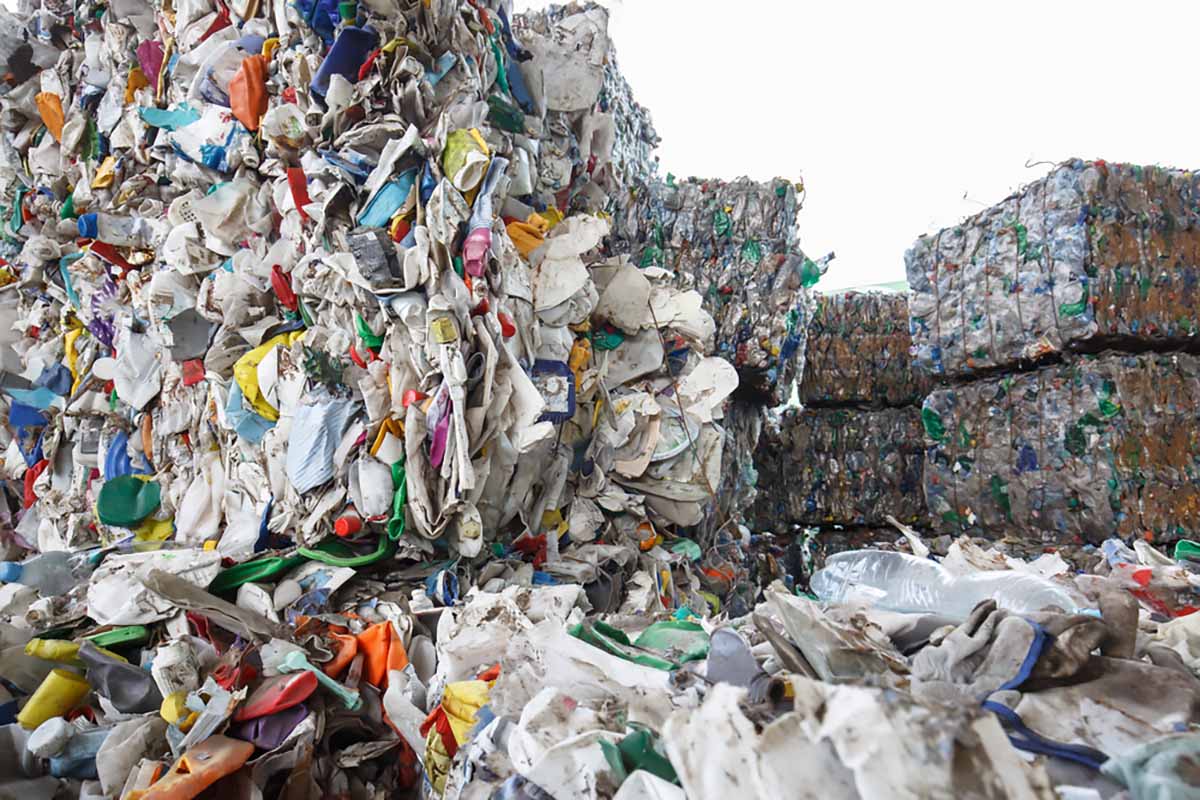
The director of Bantam Materials argues we need stricter standards across the supply chain to reduce ocean-bound plastics. | Rich Carey/Shutterstock

Our oceans are no longer ‘at risk’ from plastic pollution – they are being irrevocably harmed. Marine wildlife is suffering and vital ecosystems are becoming unbalanced. Meanwhile, microplastics are finding their way into our food and as recent research shows, our bodies. At current rates, the annual flow of plastic entering the oceans will triple by 2040, to a staggering 29 million metric tons.

These are just some of the challenges that were discussed at a recent event at Bantam Materials’ Prevented Ocean Plastic research center. The environmental implications of ocean-bound plastic waste are clear and quickly gaining traction in the public psyche – with the Blue Planet effect playing a major role in that. But there are key social challenges that also need to be addressed.

Raffi Schieir

The locations most affected by ocean-bound plastic waste tend to lack basic amenities such as clean water, healthcare and education. There is little to no employment, and while plastic bottle collection provides income for many families, it is often ungoverned, unstructured and unsafe.

Indeed, some 60% of recycled plastic is collected by the informal waste sector, which is largely undocumented and lacks standards. There is also minimal – if any – advocacy for the valuable work of bottle collectors and the potential it has to drive positive change.

These challenges, in turn, exacerbate those faced by the recycling industry, and by extension, manufacturers and retailers. Packaging supply chains are complex and identifying raw material sources is difficult. It’s no surprise, then, that many retailers often don’t know the origins of their new or recycled plastic, or can only be sure of traceability for part of the plastic’s journey. This makes it harder to reach sustainability goals, meet the requirements of legislation (such as the Plastic Packaging Tax) and appease increasingly demanding stakeholders, such as ESG-conscious investors and eco-minded consumers.

However, by connecting the dots between these multiple challenges we can find sustainable solutions that address the problems facing the environment, local communities and industry alike. To do this, we need rigorous standards that go above basic regulation, which is why Prevented Ocean Plastic is launching a new set of standards that will reach all the way down our supply chain to include indirect suppliers at collection centers. This will especially be important as these are historically hidden locations, where traditionally data has not been gathered.

The standards – set to be launched at COP27 – have been developed in accordance with the Ethical Trading Initiative (ETI) base code and follows the Code of Good Practice developed by ISEAL, as well as Bantam Materials’ Good Manufacturing Practice and best-in-class traceability processes. They have also been developed in consultation with 70 leading businesses in the industry to meet the needs of the world’s best recyclers.

Prevented Ocean Plastic has already prevented nearly 1 billion plastic bottles from entering oceans, saving the equivalent of over 61,500 metric tons of carbon dioxide equivalent emissions. Not only does the program provide an obvious environmental win, but it’s helping to mitigate the challenges faced by communities and industry as well. 

Our recycled plastic is used by well-known brands and retailers in the U.K., which enables them to pacify stakeholders, meet sustainability targets and adhere to legislation. Meanwhile, the program creates income and safe employment opportunities for those in the formal and informal waste sectors overseas. We have seen the poverty that is experienced in countries at risk of plastic pollution and know that a safe, reliable income can be life-changing.

With demand for Prevented Ocean Plastic continuing to rise, the standards were created to formalize the way we work with our suppliers to ensure consistency and further increase traceability. This will raise both the quality of the product and the working conditions throughout our supply chain. 

Only 9% of plastics have ever been recycled into new products. There is a huge opportunity here to turn that woeful statistic around for the benefit of everyone. Ensuring high-quality and consistent standards throughout the value chain will be critical to achieving this, and I encourage any interested parties to get in touch to further discuss this much-needed vision for a positive and circular recycled materials industry. 

Raffi Schieir is co-founder and director of Bantam Materials, the supplier of Prevented Ocean Plastic. A social entrepreneur and expert in the recycled plastic industry, Schieir served as chair of Europe’s main plastic recycling conference, ICIS-2017, and from his work with ocean-bound plastics offers a unique perspective on comparative models of recycling in key supply areas.

The views and opinions expressed are those of the author and do not imply endorsement by Resource Recycling, Inc. If you have a subject you wish to cover in an op-ed, please send a short proposal to [email protected] for consideration.


Tags: Industry GroupsLegislation & Enforcement
TweetShare
Raffi Schieir, Bantam Materials

Raffi Schieir, Bantam Materials

Related Posts

Recycling Partnership CEO stepping down

byStefanie Valentic
April 15, 2026

Outgoing CEO Keefe Harrison will remain until August with the organization she built from the ground up.

NERC launches hub to promote PCR demand 

byAntoinette Smith
April 15, 2026

The Northeast Recycling Council's PCR Material Demand Hub offers resources for government procurement, material- and product-specific resources, and certification and...

Reverse Logistics Network launches to support industry

byPaul Lane
April 14, 2026

The reverse logistics community has a new organization to give companies in that sector a place to connect.

Colorado regulators suggest mid-range EPR scenario

Why collaboration on plastic waste still matters

byCrystal Bayliss
April 13, 2026

Six years ago, the U.S. Plastics Pact launched at a moment of rising concern about plastic waste and growing momentum...

Industrial sources drive rise in PVC recycling

byAntoinette Smith
April 13, 2026

Volumes of post-industrial PVC recycled in 2024 rose by 10% from 2019 levels, while post-consumer sources fell and missed a...

Oregon’s battery EPR bill officially charged for implementation

byStefanie Valentic
April 10, 2026

Oregon Governor Tina Kotek signed HB 4144 into law on April 7, setting into motion the mechanics for an extended...

Load More
Next Post

Our top stories from October 2022

Leading the Charge in Safe Battery Recycling
Sponsored

Leading the Charge in Safe Battery Recycling

byThe Battery Network
April 13, 2026

We’re connecting people, brands, and communities through one nationwide network built to make battery recycling safer, simpler, and more accessible...

Read moreDetails

More Posts

Battery recycler Ascend Elements files for bankruptcy

Battery recycler Ascend Elements files for bankruptcy

April 13, 2026
EPR fees are a market signal. Here’s what they’re telling you.

EPR fees are a market signal. Here’s what they’re telling you.

April 10, 2026

Bloom ESG and e-Stewards roll out critical metals metric

April 15, 2026

Recycling Partnership CEO stepping down

April 15, 2026

AI surge, dealmaking reshape  ITAD industry 

April 16, 2026
Apple Watch on product box.

Wearables are coming and ITAD isn’t ready

April 16, 2026

Oregon’s battery EPR bill officially charged for implementation

April 10, 2026
Bill to update New Jersey e-scrap program heads to governor

New Jersey recyclers talk EPR

April 9, 2026
Industry group: Help us find the plastic bale volumes we need

PET bales sink further as other grades firm 

April 15, 2026

COM2 joins TERRA network as solar recycling expands 

April 17, 2026
Load More

About & Publications

About Us

Staff

Archive

Magazine

Work With Us

Advertise
Jobs
Contact
Terms and Privacy

Newsletter

Get the latest recycling news and analysis delivered to your inbox every week. Stay ahead on industry trends, policy updates, and insights from programs, processors, and innovators.

Subscribe

Welcome Back!

Login to your account below

Forgotten Password?

Retrieve your password

Please enter your username or email address to reset your password.

Log In

Add New Playlist

No Result
View All Result
  • The Latest
  • Analysis
  • Recycling
  • E-Scrap
  • Plastics
  • Policy Now
  • Conferences
    • E-Scrap Conference
    • Plastics Recycling Conference
    • Resource Recycling Conference
    • Textiles Recovery Summit
  • Magazine
  • About Us
  • Advertise
  • Archive
  • Jobs
  • Staff
Subscribe
This website uses cookies. By continuing to use this website you are giving consent to cookies being used. Visit our Privacy and Cookie Policy.