




Resource Recycling
  • The Latest
  • Analysis
    • All
    • Certification Scorecard
    • Industry Announcements
    • Opinion
    Apple Watch on product box.

    Wearables are coming and ITAD isn’t ready

    Certification Scorecard — Week of April 13, 2026

    EV Battery Pack - Sergii Chernov-Shutterstock

    Redwood, Rivian deal fuels US infrastructure plans

    Bloom ESG and e-Stewards roll out critical metals metric

    Colorado regulators suggest mid-range EPR scenario

    Why collaboration on plastic waste still matters

    Battery recycler Ascend Elements files for bankruptcy

    Battery recycler Ascend Elements files for bankruptcy

    EPR fees are a market signal. Here’s what they’re telling you.

    EPR fees are a market signal. Here’s what they’re telling you.

    Wolframite ore, the primary ore of tungsten from Altai, Russia

    Tungsten scrap export controls draw industry attention

    Certification Scorecard — Week of April 6, 2026

  • Conferences
  • Publications
    • E-Scrap News
    • Plastics Recycling Update
    • Policy Now
    • Resource Recycling
    • Other Topics
      • Brand Owners
      • Grant Watch
      • Markets
      • Organics
      • Packaging
      • Research
      • Technology
      • Textiles
      • All Topics
Subscribe
No Result
View All Result
Resource Recycling
  • The Latest
  • Analysis
    • All
    • Certification Scorecard
    • Industry Announcements
    • Opinion
    Apple Watch on product box.

    Wearables are coming and ITAD isn’t ready

    Certification Scorecard — Week of April 13, 2026

    EV Battery Pack - Sergii Chernov-Shutterstock

    Redwood, Rivian deal fuels US infrastructure plans

    Bloom ESG and e-Stewards roll out critical metals metric

    Colorado regulators suggest mid-range EPR scenario

    Why collaboration on plastic waste still matters

    Battery recycler Ascend Elements files for bankruptcy

    Battery recycler Ascend Elements files for bankruptcy

    EPR fees are a market signal. Here’s what they’re telling you.

    EPR fees are a market signal. Here’s what they’re telling you.

    Wolframite ore, the primary ore of tungsten from Altai, Russia

    Tungsten scrap export controls draw industry attention

    Certification Scorecard — Week of April 6, 2026

  • Conferences
  • Publications
    • E-Scrap News
    • Plastics Recycling Update
    • Policy Now
    • Resource Recycling
    • Other Topics
      • Brand Owners
      • Grant Watch
      • Markets
      • Organics
      • Packaging
      • Research
      • Technology
      • Textiles
      • All Topics
Subscribe
No Result
View All Result
Resource Recycling
No Result
View All Result
Home E-Scrap

Feds fund R&D for rare earths and other e-scrap metals

byJared Paben
March 17, 2022
in E-Scrap
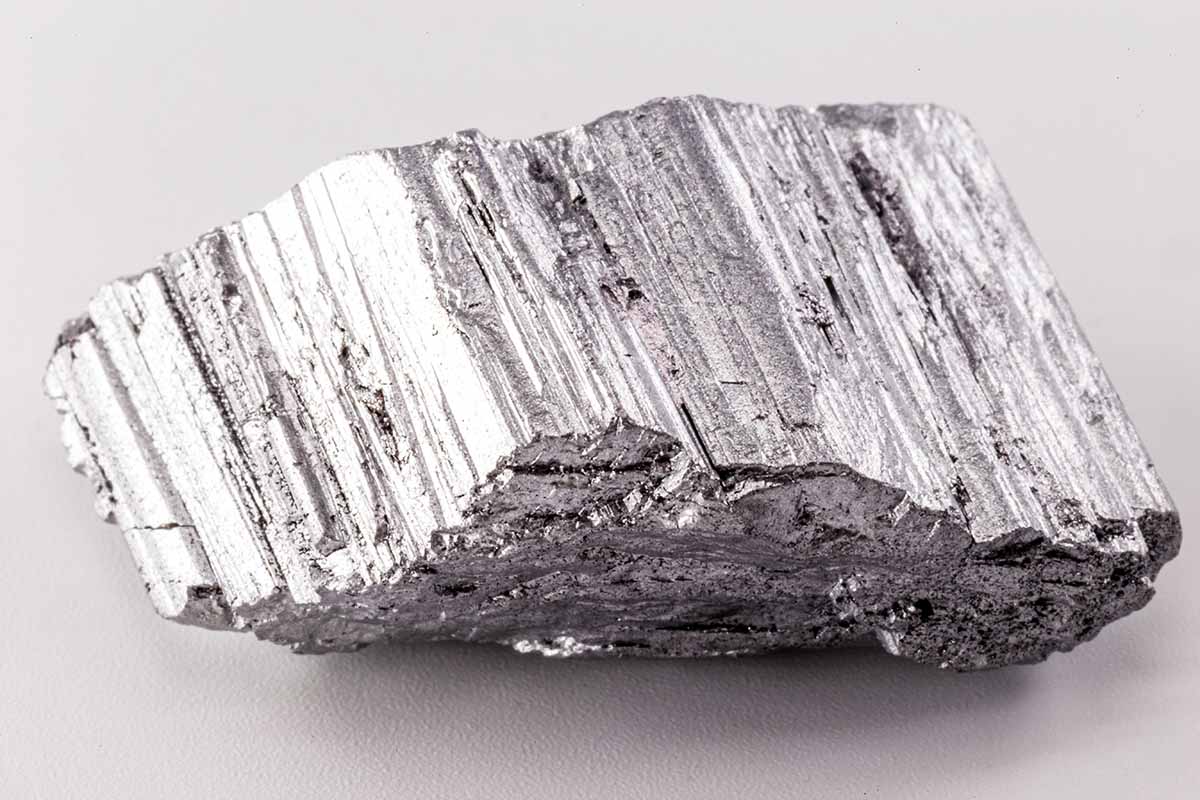
Neodymium-RHJPhtotoandilustration-Shutterstock

The U.S. military has kickstarted a $5 million project to research and develop technologies for recovering critical metals from e-scrap.

The Defense Advanced Research Projects Agency (DARPA) is accepting R&D proposals from several teams focused on recovering rare earth elements and other critical metals found in electronics.

The move is aimed at bolstering supply chains for metals that are crucial for components used in defense and civilian hardware, particularly metals for which the U.S. is largely dependent on China. DARPA’s project, called the Recycling at the Point of Disposal (RPOD) Disruption Opportunity (DO), comes as the Biden administration has announced a number of new efforts to shore up domestic supply chains.

Last year, the White House published a report, “Building resilient supply chains, revitalizing American manufacturing, and fostering broad-based growth,” that called for investments in recovery of rare earth elements from e-scrap.

In February, the U.S. Department of Energy (DOE) announced it would spend $2.91 billion to fund battery materials refining and production plants, battery cell and pack manufacturing facilities and recycling facilities, according to a press release, which noted that national security is among the concerns driving the effort. The money was appropriated by the infrastructure law that passed Congress last year with support from members of both parties. On Feb. 14, the DOE announced $140 million to support technologies to recover rare earth elements from industrial waste streams, including waste from mining.

Targeting low-volume elements

DARPA’s project is focused on recovering gallium, indium, tantalum, neodymium, praseodymium, europium and dysprosium, according to the call for proposals. DARPA envisions some of those low-volume elements would be entirely separated, and some could be “co-extracted” in groups of two or three.

“We’re focused on the selective list of materials that are there in the DO announcement, because of their criticality to our supply chain,” Vishnu Sundaresan, a program manager at DARPA’s Defense Sciences Office, said in an interview with E-Scrap News.

The RPOD project is for high-risk, very early stage research proposals that still show promise for being technically feasible, he said.

The DO request for proposals document notes that industry standard pyrometallurgical and hydrometallurgical recycling techniques were originally developed for the extraction of a single element from mined ores at industrial scale, but they’re ill-suited for recovering multiple low-volume elements from e-scrap.

The document notes other technologies are being explored to better target at least two or more precious metals and rare earth elements (REEs), including thermal microreactors, electroacoustic techniques, flow electrochemical cells and fractional separation microcolumns.

DARPA held an information session on the project on Feb 8. Proposals from research teams were due on Friday, March 4, Sundaresan said. And DARPA expects to select projects for funding in mid-May.

DARPA has $5 million total for four or five research efforts, each receiving up to $1 million. Participants could include other public agencies, academia or private companies.

R&D efforts will continue over 18 months, provided they continue to make progress toward the project’s goals, he said.

According to the DO document, the projects will be broken into two phases. At the end of the first, the project participants will need to demonstrate that their automated process can extract the critical elements with a yield of over 20 grams per hour, at over 50% recovery and 80% purity. They’ll also need to estimate the amount of energy required for the separation and co-extraction, as well as identify possible supply chain avenues for the recovered materials.

At the end of the second phase, they’ll need to demonstrate their RPOD technology can produce at least twice the yield it was required to meet in phase one, with over 70% recovery and 95% purity. Again, they’ll need to estimate the energy required for the process.

“At the end of Phase 2, performers may be required to demonstrate RPOD technology continuously for 2 hours using government provided e-waste,” according to the document.

The technologies could include the use of machine vision and robotics, as well as equipment for size-reducing and chemically processing e-scrap, Sundaresan said.  

If successful, DARPA could launch its own project to further the effort, Sundaresan said, or it could hand it off to another branch of government or the private sector. He noted that the Department of Defense could use the technology at sites run by the Defense Logistics Agency, which handles scrap disposition for the military.

“There are a lot of avenues for this,” he said.
 

Tags: Critical MineralsResearch
TweetShare
Jared Paben

Jared Paben

Related Posts

EV Battery Pack - Sergii Chernov-Shutterstock

Redwood, Rivian deal fuels US infrastructure plans

byStefanie Valentic
April 15, 2026

Batteries that are no longer ideal for powering a vehicle still have substantial capacity left. Automobile manufacturer Rivian and battery...

Bloom ESG and e-Stewards roll out critical metals metric

byDavid Daoud
April 15, 2026

The two groups announced the upgrade to their jointly developed Environmental Benefits Calculator.

Amazon, DOE partner on critical materials recovery

byScott Snowden
April 13, 2026

DOE and Amazon will study recovery of graphite from textiles and gallium from IT hardware, aiming to strengthen US supply...

German demo plant targets lithium recovery from battery scrap

byScott Snowden
April 10, 2026

Tozero has opened a demo plant processing 1,500 metric tons of battery scrap yearly, recovering lithium, graphite and nickel-cobalt to...

Wolframite ore, the primary ore of tungsten from Altai, Russia

Tungsten scrap export controls draw industry attention

byDavid Daoud
April 9, 2026

Businesses that rely on tungsten are urging the U.S. Department of Commerce to consider export controls on tungsten scrap.

Rice researchers use lemon juice to boost battery recycling

byScott Snowden
April 9, 2026

Rice researchers reported a battery recycling process that uses plasma and mild solvents to recover most metals from black mass...

Load More
Next Post
Reviewing business documents.

Sims repurposes more material and grows revenue by 9%

Leading the Charge in Safe Battery Recycling
Sponsored

Leading the Charge in Safe Battery Recycling

byThe Battery Network
April 13, 2026

We’re connecting people, brands, and communities through one nationwide network built to make battery recycling safer, simpler, and more accessible...

Read moreDetails

More Posts

Quebec PRO reflects on first year of packaging EPR

March 30, 2026
Policy Now | December 2025 – Year-end nears, policy talks continue

Policy Now | December 2025 – Year-end nears, policy talks continue

December 1, 2025

Certification scorecard – Week of March 23, 2026

March 24, 2026
Bottle cap design: No need to ‘reinvent the wheel’

Bottle cap design: No need to ‘reinvent the wheel’

June 25, 2025
MRF equipment firm Machinex wins patent fight with rival

Judge blocks four groups from joining Oregon Recycling Act injunction

April 7, 2026

Diversion Dynamics: Secondhand exports slow down fast fashion

March 5, 2026
Emerging US EPR programs spark harmonization talks

Washington designates CAA to lead EPR implementation

March 4, 2026
WM Facility

Modern recycling meets AI 

December 18, 2025
Basel e-scrap rules disrupt larger metal sector

Basel e-scrap rules disrupt larger metal sector

June 26, 2025
RPET minimum content bill fails

How new California law is ‘putting the industry on notice’

July 7, 2022
Load More

About & Publications

About Us

Staff

Archive

Magazine

Work With Us

Advertise
Jobs
Contact
Terms and Privacy

Newsletter

Get the latest recycling news and analysis delivered to your inbox every week. Stay ahead on industry trends, policy updates, and insights from programs, processors, and innovators.

Subscribe

Welcome Back!

Login to your account below

Forgotten Password?

Retrieve your password

Please enter your username or email address to reset your password.

Log In

Add New Playlist

No Result
View All Result
  • The Latest
  • Analysis
  • Recycling
  • E-Scrap
  • Plastics
  • Policy Now
  • Conferences
    • E-Scrap Conference
    • Plastics Recycling Conference
    • Resource Recycling Conference
    • Textiles Recovery Summit
  • Magazine
  • About Us
  • Advertise
  • Archive
  • Jobs
  • Staff
Subscribe
This website uses cookies. By continuing to use this website you are giving consent to cookies being used. Visit our Privacy and Cookie Policy.