





Resource Recycling
  • The Latest
  • Analysis
    • All
    • Certification Scorecard
    • Industry Announcements
    • Opinion
    Apple Watch on product box.

    Wearables are coming and ITAD isn’t ready

    Certification Scorecard — Week of April 13, 2026

    EV Battery Pack - Sergii Chernov-Shutterstock

    Redwood, Rivian deal fuels US infrastructure plans

    Bloom ESG and e-Stewards roll out critical metals metric

    Colorado regulators suggest mid-range EPR scenario

    Why collaboration on plastic waste still matters

    Battery recycler Ascend Elements files for bankruptcy

    Battery recycler Ascend Elements files for bankruptcy

    EPR fees are a market signal. Here’s what they’re telling you.

    EPR fees are a market signal. Here’s what they’re telling you.

    Wolframite ore, the primary ore of tungsten from Altai, Russia

    Tungsten scrap export controls draw industry attention

    Certification Scorecard — Week of April 6, 2026

  • Conferences
  • Publications
    • E-Scrap News
    • Plastics Recycling Update
    • Policy Now
    • Resource Recycling
    • Other Topics
      • Brand Owners
      • Grant Watch
      • Markets
      • Organics
      • Packaging
      • Research
      • Technology
      • Textiles
      • All Topics
Subscribe
No Result
View All Result
Resource Recycling
  • The Latest
  • Analysis
    • All
    • Certification Scorecard
    • Industry Announcements
    • Opinion
    Apple Watch on product box.

    Wearables are coming and ITAD isn’t ready

    Certification Scorecard — Week of April 13, 2026

    EV Battery Pack - Sergii Chernov-Shutterstock

    Redwood, Rivian deal fuels US infrastructure plans

    Bloom ESG and e-Stewards roll out critical metals metric

    Colorado regulators suggest mid-range EPR scenario

    Why collaboration on plastic waste still matters

    Battery recycler Ascend Elements files for bankruptcy

    Battery recycler Ascend Elements files for bankruptcy

    EPR fees are a market signal. Here’s what they’re telling you.

    EPR fees are a market signal. Here’s what they’re telling you.

    Wolframite ore, the primary ore of tungsten from Altai, Russia

    Tungsten scrap export controls draw industry attention

    Certification Scorecard — Week of April 6, 2026

  • Conferences
  • Publications
    • E-Scrap News
    • Plastics Recycling Update
    • Policy Now
    • Resource Recycling
    • Other Topics
      • Brand Owners
      • Grant Watch
      • Markets
      • Organics
      • Packaging
      • Research
      • Technology
      • Textiles
      • All Topics
Subscribe
No Result
View All Result
Resource Recycling
No Result
View All Result
Home Recycling

Report details how to make CA textile recycling work

byPaul Lane
February 16, 2026
in Recycling
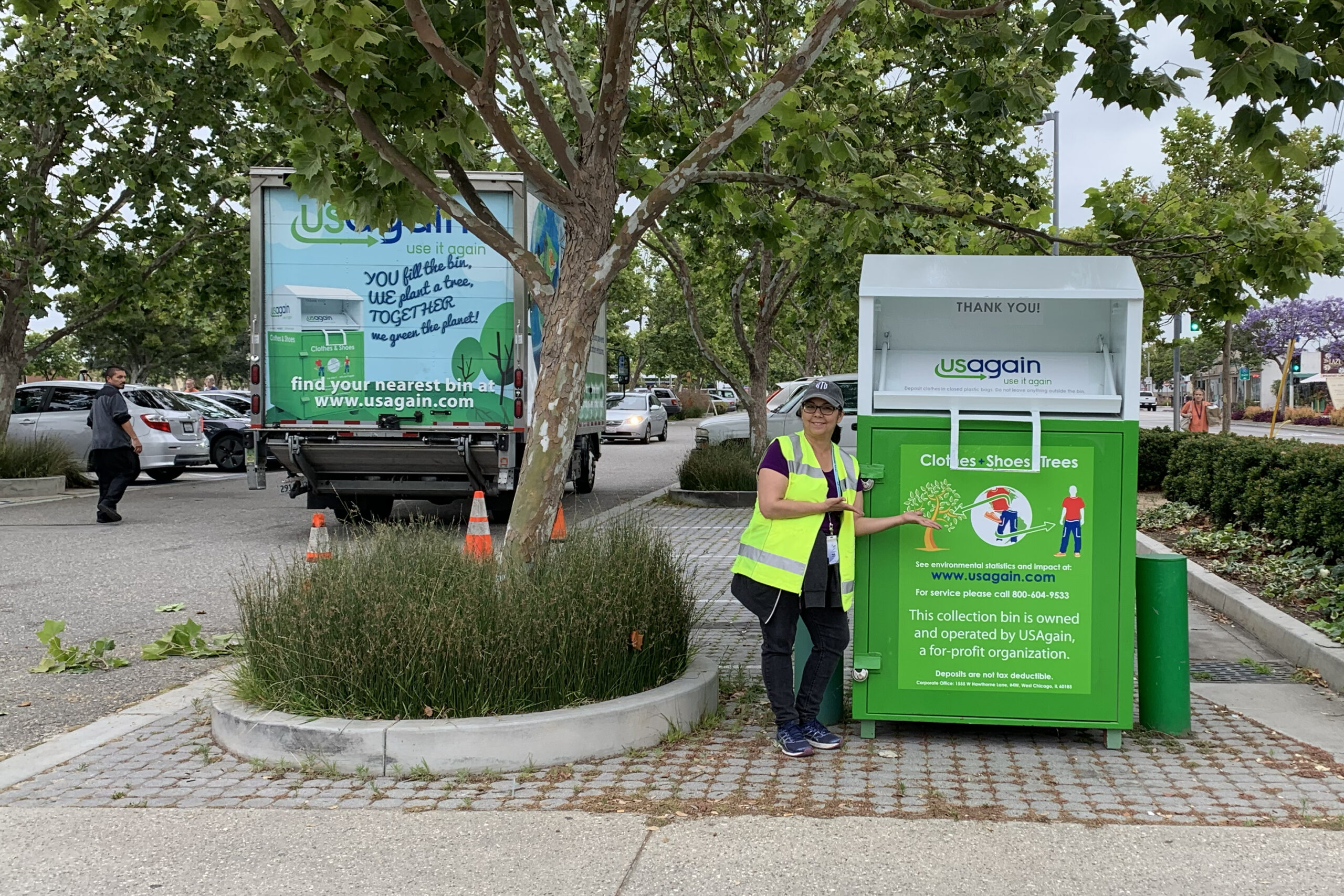
Textile clothing bins

Courtesy USAgain

Editor’s Note: Textile recovery implementation — along with a presentation of this report — will be featured in sessions at the 2026 Textile Recovery Summit, Feb. 23-25 in San Diego, California. Register now!

A new report confirms the sentiment that led to a new textile recovery law in California, detailing just how much clothing-related material ends up in the waste stream and how it could be removed from the waste stream.

The report, California Textiles EPR Study, released by USAgain and researched and written by Cascadia Consulting Group, found nearly 1.2 million tons of textiles were sent to landfills across California, costing residents nearly $99 million per year in disposal-related costs. USAgain is a nonprofit that works to put clothes back into the reuse cycle rather than have them disposed of; it operates textile collection programs in 15 states, including California.

The organizations collaborated on the report to help implement California’s Responsible Recovery Act (SB 707), which will require clothing and other textile companies to fund and operate a statewide recovery and recycling system. USAgain has no official role in the law’s implementation but wanted to offer guidance on how to do so.

“We are living in a world facing a mounting crisis of textile overproduction and waste driven by fast fashion,” said Mattian Wallander, USAgain CEO. “We undertook this study to better understand how collection systems can scale in the real world and to generate the evidence needed to support policymakers and partners in implementing SB 707 effectively.”

 The organizations used quantitative scenario modeling and on-the-ground research to conduct the study. Among its findings was the fact that diverting 24% of textiles from landfills could create 2,500 jobs and save up to 1.7 million metric tons of carbon dioxide emissions. Getting more textiles back into reuse would be a big help toward that, but the report also found an existing infrastructure that might not be able to accommodate such a push:

●  Municipal zoning laws might hamper the collection density needed to meet SB 707’s requirements, especially in areas with few collection options. These laws may limit the use of collection bins, which the study found to be the easiest, most scalable collection method.

●  Convenience standards set forth in the law include a minimum number of collection sites per county. But these sites must be balanced with the fact that clothes should be reused rather than recycled, whenever possible, to maximize circularity and not overstrain recycling sites.

●  Per-producer fee levels required by the law haven’t been specified, which could strain the system’s finances,

The law could also serve as a model elsewhere. The most recent figures from the U.S. Environmental Protection Agency indicate about 17 million tons of textiles were made in 2018 nationally and the textile recycling rate was 14.7% (2.5 million tons). The 11.3 million tons of textile sent to landfills in 2018 represented 7.7% of all material landfilled. But according to estimates from the New York Department of Environmental Conservation, about 95% of textiles can be recycled or reused.

“This matters to Californians and to all Americans because it affects landfill capacity, climate pollution and green job growth,” Wallander said. “It also determines whether residents can actually do the right thing with unwanted textiles.”

The report finds citizens, among other groups, have a role to play in the law’s success. Residents can use collection sites as much as possible and encourage municipal leaders to update their ordinances to expand access. City planners can be receptive to these pleas and make sure their rules don’t hamper the law’s intended effects. Producers can quickly make the investments they need to, hire experienced partners and help normalize donation.

“California has a strong foundation to build on,” said Julie Cerenzia, Cascadia’s director. “The biggest win will be designing a system that works in the real world … With the right implementation, SB 707 can become a landmark circular economy success.”

Adds Wallander: “We would consider the report successful if it helps SB 707 translate policy ambition into measurable, real-world change. That means informing the design and implementation of the extended producer responsibility (EPR) framework.”

Wallander said the study’s findings can be used in the other 12 states in which USAgain works to guide EPR efforts nationally.


Tags: EPRLegislation & EnforcementTextiles
TweetShare
Paul Lane

Paul Lane

Related Posts

Oregon’s battery EPR bill officially charged for implementation

byStefanie Valentic
April 10, 2026

Oregon Governor Tina Kotek signed HB 4144 into law on April 7, setting into motion the mechanics for an extended...

EPR fees are a market signal. Here’s what they’re telling you.

EPR fees are a market signal. Here’s what they’re telling you.

byChristine Yeager
April 10, 2026

EPR is not asking companies to be perfect, but rather to be honest about what their packaging costs the system,...

Bill to update New Jersey e-scrap program heads to governor

New Jersey recyclers talk EPR

byBrian Clark Howard
April 9, 2026

At the Association of New Jersey Recyclers’ spring meeting industry representatives discussed the state and future of the sector.

AF&PA states disappointment over Oregon EPR decision

byStefanie Valentic
April 8, 2026

The American Forest & Paper Association is responding after a federal judge blocked the trade group's bid to intervene in...

End markets, policy key to RPET viability

End markets, policy key to RPET viability

byAntoinette Smith
April 8, 2026

Longer-term actions support domestic RPET markets and can help prevent the loss of public trust in recycling systems, industry experts...

MRF equipment firm Machinex wins patent fight with rival

Judge blocks four groups from joining Oregon Recycling Act injunction

byStefanie Valentic
April 7, 2026

A judge has shut the door on four industry groups seeking to join NAW's Oregon EPR injunction and clarified who's...

Load More
Next Post
UN trade data, tools aim to shape plastics treaty talks

UN trade data, tools aim to shape plastics treaty talks

Leading the Charge in Safe Battery Recycling
Sponsored

Leading the Charge in Safe Battery Recycling

byThe Battery Network
April 13, 2026

We’re connecting people, brands, and communities through one nationwide network built to make battery recycling safer, simpler, and more accessible...

Read moreDetails

More Posts

Policy Now | December 2025 – Year-end nears, policy talks continue

Policy Now | December 2025 – Year-end nears, policy talks continue

December 1, 2025

Quebec PRO reflects on first year of packaging EPR

March 30, 2026

Certification scorecard – Week of March 23, 2026

March 24, 2026
Bottle cap design: No need to ‘reinvent the wheel’

Bottle cap design: No need to ‘reinvent the wheel’

June 25, 2025
MRF equipment firm Machinex wins patent fight with rival

Judge blocks four groups from joining Oregon Recycling Act injunction

April 7, 2026

Diversion Dynamics: Secondhand exports slow down fast fashion

March 5, 2026
Basel e-scrap rules disrupt larger metal sector

Basel e-scrap rules disrupt larger metal sector

June 26, 2025

Here’s what is (and isn’t) becoming law in California

October 16, 2019

Full plastic bag ban passes California Senate

June 4, 2024
Aduro losses nearly double on year

Aduro losses nearly double on year

April 15, 2026
Load More

About & Publications

About Us

Staff

Archive

Magazine

Work With Us

Advertise
Jobs
Contact
Terms and Privacy

Newsletter

Get the latest recycling news and analysis delivered to your inbox every week. Stay ahead on industry trends, policy updates, and insights from programs, processors, and innovators.

Subscribe

Welcome Back!

Login to your account below

Forgotten Password?

Retrieve your password

Please enter your username or email address to reset your password.

Log In

Add New Playlist

No Result
View All Result
  • The Latest
  • Analysis
  • Recycling
  • E-Scrap
  • Plastics
  • Policy Now
  • Conferences
    • E-Scrap Conference
    • Plastics Recycling Conference
    • Resource Recycling Conference
    • Textiles Recovery Summit
  • Magazine
  • About Us
  • Advertise
  • Archive
  • Jobs
  • Staff
Subscribe
This website uses cookies. By continuing to use this website you are giving consent to cookies being used. Visit our Privacy and Cookie Policy.