





Resource Recycling
  • The Latest
  • Analysis
    • All
    • Certification Scorecard
    • Industry Announcements
    • Opinion
    Apple Watch on product box.

    Wearables are coming and ITAD isn’t ready

    Certification Scorecard — Week of April 13, 2026

    EV Battery Pack - Sergii Chernov-Shutterstock

    Redwood, Rivian deal fuels US infrastructure plans

    Bloom ESG and e-Stewards roll out critical metals metric

    Colorado regulators suggest mid-range EPR scenario

    Why collaboration on plastic waste still matters

    Battery recycler Ascend Elements files for bankruptcy

    Battery recycler Ascend Elements files for bankruptcy

    EPR fees are a market signal. Here’s what they’re telling you.

    EPR fees are a market signal. Here’s what they’re telling you.

    Wolframite ore, the primary ore of tungsten from Altai, Russia

    Tungsten scrap export controls draw industry attention

    Certification Scorecard — Week of April 6, 2026

  • Conferences
  • Publications

    Other Topics

    Textiles
    Organics
    Packaging
    Glass
    Brand Owners

    Metals
    Technology
    Research
    Markets
    Grant Watch

    All Topics

Subscribe
No Result
View All Result
Resource Recycling
  • The Latest
  • Analysis
    • All
    • Certification Scorecard
    • Industry Announcements
    • Opinion
    Apple Watch on product box.

    Wearables are coming and ITAD isn’t ready

    Certification Scorecard — Week of April 13, 2026

    EV Battery Pack - Sergii Chernov-Shutterstock

    Redwood, Rivian deal fuels US infrastructure plans

    Bloom ESG and e-Stewards roll out critical metals metric

    Colorado regulators suggest mid-range EPR scenario

    Why collaboration on plastic waste still matters

    Battery recycler Ascend Elements files for bankruptcy

    Battery recycler Ascend Elements files for bankruptcy

    EPR fees are a market signal. Here’s what they’re telling you.

    EPR fees are a market signal. Here’s what they’re telling you.

    Wolframite ore, the primary ore of tungsten from Altai, Russia

    Tungsten scrap export controls draw industry attention

    Certification Scorecard — Week of April 6, 2026

  • Conferences
  • Publications

    Other Topics

    Textiles
    Organics
    Packaging
    Glass
    Brand Owners

    Metals
    Technology
    Research
    Markets
    Grant Watch

    All Topics

Subscribe
No Result
View All Result
Resource Recycling
No Result
View All Result
Home E-Scrap

Safety, recycling and OSHA: Can they all get along?

Lacey EvansbyLacey Evans
November 9, 2016
in E-Scrap

The Occupational Safety and Health Administration isn’t the reason a recycling firm should be concerned about safety. An industry expert said recycling companies of all kinds – from e-scrap processors to materials recovery facilities – should make safety a priority because it’s the right thing to do. But even with that said, it’s important to be prepared for OSHA.

In a recent webinar hosted by insurance and risk-management expert John Schumacher, senior vice president of insurance agency Assurance, participants received a highlight of OSHA safety guides and procedures.

While not meant to be a complete training guide, the webinar revealed the most common OSHA citations and how they can be prevented.

Common problems

OSHA is looking for specific things within a recycling facility, according to Schumacher, especially administrative records that show the company has a written safety program and has documented safety training.

Inspectors will also look for personal protective equipment, and they’ll look to see whether it’s being properly used. A hazard assessment is also important. For example, does the company have a written policy stating why workers must wear reflective vests inside the materials recovery facility (MRF)? Or why workers must wear safety glasses? Schumacher said these forms and guides are easily found on the internet.

Violations related to respiratory protection are some of OSHA’s most common citations. Schumacher recommended an evaluation by an industrial hygienist, who can decide whether people should be wearing respirators. OSHA inspectors will look to see if the respirators fit properly and if employees have been shown how to use them correctly. This all needs to be documented, he said. Even if a hygienist determines workers don’t need to wear masks, but they want to, they must be shown how to wear them.

Common solutions

Lockout and tagout issues are the most significant safety program a recycling facility can have, said Schumacher. Related injuries are severe and can even lead to amputation or death. If it can move, it can hurt you, Schumacher said, and lockout/tagout is needed. OSHA inspectors will look for proof of annual training, equipment-specific procedures and a written program. The most common reason for a citation in this area is because a facility isn’t using a specific lock for a lockout. A standard padlock used to secure a gym locker or shed won’t cut it.

In addition to the written lockout/tagout training, Schumacher recommended documenting every time the procedure is used, no matter how many times a day it happens. For example, an employee at a single-stream MRF might have to go onto the screen several times a day to remove material clogging the system. That should be documented every time.

Machine guarding is something else OSHA inspectors will look for in a recycling facility. Basically, are workers protected from putting their hands into a moving machine? Schumacher provided several examples of how this can easily be avoided, including by installing a safety rail to prevent someone from falling onto a conveyer belt, or preventing people from reaching up and hitting overhead equipment by guarding all machinery that is 10 feet off the ground or lower. Schumacher said 10 feet is industry best practice – the OSHA rule is seven feet – but other safety experts agree that going beyond the minimum is necessary.

Finally, OSHA inspectors will look at air quality and noise levels. Dust is a primary concern, especially in electronics recycling facilities where there is the potential for heavy metals in the air.

Consequences and benefits

Schumacher said OSHA fines can easily add up and hurt a company’s bottom line. For example, if a facility is cited for contaminants in the air, each contaminant found is a separate fine, possibly equaling hundreds of thousands of dollars.

Schumacher added that a company’s reputation is also at risk during OSHA investigations, which means it is best to always be ready for inspections. A company has 15 days to respond to any violations, but, in the meantime, OSHA will publish a press release, said Schumacher. While OSHA likely does it with the intent to promote safety, a retraction is never issued if the violation is eliminated or changed.

OSHA can show up at anytime if there is imminent danger to employees, a severe injury or death, or a worker complaint or referral from another entity. Inspectors can also show up anytime OSHA is conducting a targeted inspection. As Schumacher points out in the webinar, facility managers have the right to turn OSHA inspectors away. But, he stressed, they will return with a warrant.

In the end, Schumacher said, it’s best to treat safety proactively. He recommended reaching out to an insurance carrier or a third-party consultant for advice. He said safety not only leads to increased well-being among employees, but it can also lead to insurance savings and profits for the company.


Tags: Critical MineralsProcessors
TweetShare
Lacey Evans

Lacey Evans

Lacey Evans was a staff writer at Resource Recycling, Inc. until January 2017.

Related Posts

EV Battery Pack - Sergii Chernov-Shutterstock

Redwood, Rivian deal fuels US infrastructure plans

byStefanie Valentic
April 15, 2026

Batteries that are no longer ideal for powering a vehicle still have substantial capacity left. Automobile manufacturer Rivian and battery...

Bloom ESG and e-Stewards roll out critical metals metric

byDavid Daoud
April 15, 2026

The two groups announced the upgrade to their jointly developed Environmental Benefits Calculator.

German demo plant targets lithium recovery from battery scrap

byScott Snowden
April 10, 2026

Tozero has opened a demo plant processing 1,500 metric tons of battery scrap yearly, recovering lithium, graphite and nickel-cobalt to...

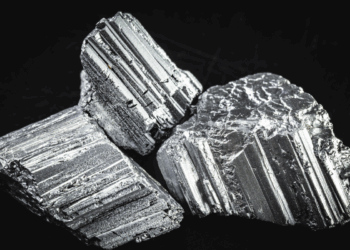
Wolframite ore, the primary ore of tungsten from Altai, Russia

Tungsten scrap export controls draw industry attention

byDavid Daoud
April 9, 2026

Businesses that rely on tungsten are urging the U.S. Department of Commerce to consider export controls on tungsten scrap.

Rice researchers use lemon juice to boost battery recycling

byScott Snowden
April 9, 2026

Rice researchers reported a battery recycling process that uses plasma and mild solvents to recover most metals from black mass...

Trafigura signs $1.1b deal for recycled battery metals

byScott Snowden
April 8, 2026

Trafigura entered the agreement to expand access to recycled critical materials, supporting efforts to build more resilient battery supply chains...

Load More
Next Post
Cleanup from fire at e-scrap recycling site

Cleanup begins at burned-out e-scrap recycling site

Leading the Charge in Safe Battery Recycling
Sponsored

Leading the Charge in Safe Battery Recycling

byThe Battery Network
April 13, 2026

We’re connecting people, brands, and communities through one nationwide network built to make battery recycling safer, simpler, and more accessible...

Read moreDetails

More Posts

Battery recycler Ascend Elements files for bankruptcy

Battery recycler Ascend Elements files for bankruptcy

April 13, 2026
EPR fees are a market signal. Here’s what they’re telling you.

EPR fees are a market signal. Here’s what they’re telling you.

April 10, 2026

Bloom ESG and e-Stewards roll out critical metals metric

April 15, 2026

Recycling Partnership CEO stepping down

April 15, 2026

AI surge, dealmaking reshape  ITAD industry 

April 16, 2026
Apple Watch on product box.

Wearables are coming and ITAD isn’t ready

April 16, 2026

Oregon’s battery EPR bill officially charged for implementation

April 10, 2026
Bill to update New Jersey e-scrap program heads to governor

New Jersey recyclers talk EPR

April 9, 2026
Industry group: Help us find the plastic bale volumes we need

PET bales sink further as other grades firm 

April 15, 2026

COM2 joins TERRA network as solar recycling expands 

April 17, 2026
Load More

About & Publications

About Us

Staff

Archive

Magazine

Work With Us

Advertise
Jobs
Contact
Terms and Privacy

Newsletter

Get the latest recycling news and analysis delivered to your inbox every week. Stay ahead on industry trends, policy updates, and insights from programs, processors, and innovators.

Subscribe

Welcome Back!

Login to your account below

Forgotten Password?

Retrieve your password

Please enter your username or email address to reset your password.

Log In

Add New Playlist

No Result
View All Result
  • The Latest
  • Analysis
  • Recycling
  • E-Scrap
  • Plastics
  • Policy Now
  • Conferences
    • E-Scrap Conference
    • Plastics Recycling Conference
    • Resource Recycling Conference
    • Textiles Recovery Summit
  • Magazine
  • About Us
  • Advertise
  • Archive
  • Jobs
  • Staff
Subscribe
This website uses cookies. By continuing to use this website you are giving consent to cookies being used. Visit our Privacy and Cookie Policy.